
Game variance is probably one of the least understood parts of casino play. Players tend to zero in on bonuses, advertised payout percentages, or whatever happened in their last session. But what really shapes the experience, especially how long a bankroll survives, is variance. On platforms like Vegastars online casino, where volatility levels differ widely from one game to another, that detail matters more than most people realize.
Looking at this through a technical lens, after years reviewing slot volatility curves, table game math, expected value models, and actual session tracking data, one pattern keeps repeating itself: variance drives the rhythm of wins and losses. It doesn’t predict what will happen next. It simply defines how violently, or how gently, results can swing. And once you see it that way, bankroll management stops being guesswork and becomes a question of risk tolerance.
Core Concepts: Expected Value, House Edge, and Variance
Expected value represents the long term average result of a bet. In most casino games, expected value is negative due to the house edge. The house edge is the built in percentage advantage that ensures the casino retains a small portion of wagers over time.
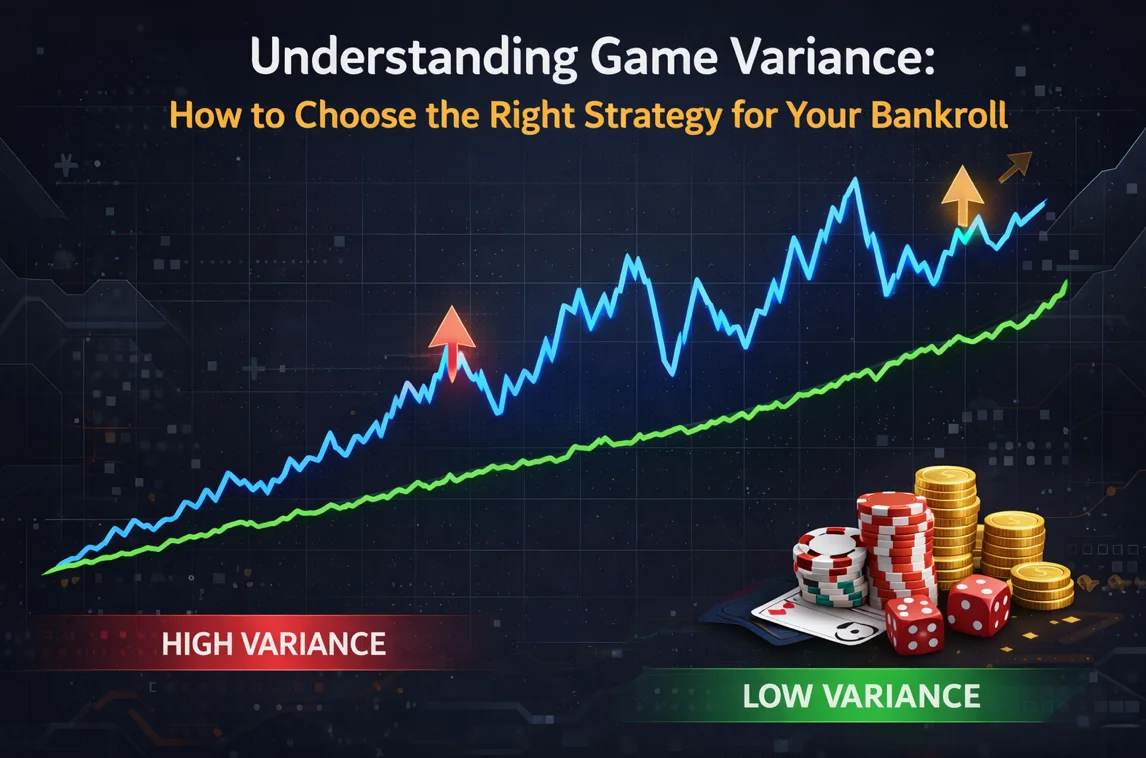
Variance is simply a measure of how far results drift from the mathematical average. Two games might carry the same house edge on paper and still feel completely different in practice. That difference is volatility. Low variance means smaller, more frequent wins and losses. High variance means long dry spells punctuated by occasional, larger payouts.
How Variance Impacts Your Bankroll
This is where risk of ruin comes in the chance that a bankroll hits zero. Higher variance increases the depth of swings. So even with an identical house edge, the more volatile game can drain funds faster if the bankroll isn’t sized to absorb those swings. Recovery, when it comes, may arrive late.
Example 1: A player starts with a 2,000-unit bankroll and plays low-variance blackjack, flat betting 2 percent per hand. Losses tend to accumulate gradually, which allows the session to stretch across many rounds instead of collapsing quickly.
Example 2: Another player with the same bankroll chooses high volatility slot titles and bets 5 percent per spin. A short losing streak can quickly remove a large portion of funds before a rare high payout appears.
These examples illustrate how bet sizing must shrink as variance rises.
Top 5 Rules for Matching Variance to Your Bankroll
- Define your objective clearly, whether it is extended session time or higher payout potential.
- Choose a variance band that fits your comfort level with swings.
- Scale your bet size as a small percentage of total bankroll.
- Set predefined stop loss and take profit limits.
- Avoid increasing bet size after losses, as this amplifies volatility without changing expected value.
Typical Variance by Game Type
Low variance options include even money roulette bets and basic strategy blackjack with flat betting. Medium variance games include many standard table wagers. High variance formats include inside roulette bets, high volatility slots, and tournament style play.
Variance and Suggested Bankroll Allocation
| Game Type | Variance Level | Suggested Bet Fraction | Bankroll Requirement | Key Consideration |
| Blackjack flat betting | Low | 1 to 3 percent per hand | Low to moderate | Frequent small swings |
| Roulette outside bets | Low | 1 to 2 percent per spin | Low to moderate | Even money outcomes |
| Roulette inside bets | High | 0.25 to 1 percent per spin | High | Long losing streaks possible |
| High volatility slots | Very high | 0.25 to 0.5 percent per spin | Very high | Rare but large payouts |
| Poker tournaments | Very high | Tiny percent per entry | Extremely high | Extended droughts common |
This table demonstrates that volatility determines how much capital buffer is necessary.
Structuring Bankroll and Sessions
It is practical to separate total bankroll from session bankroll. A total bankroll is the full amount set aside for gaming over time. A session bankroll is just a slice of that, what you’re prepared to use in one sitting.
Say the total is 5,000 units. You might cap each session at 500, with a rule to stop if 250 units are lost. That kind of structure limits damage during volatile stretches and keeps one rough session from draining everything.
On platforms like Vegastars online casino, the choice of game matters. Lower volatility table games generally support longer sessions with steadier swings. High volatility slots can move sharply in either direction. The adjustment isn’t emotional; it’s mathematical. Unit size has to match the volatility.
Practical Decision Framework
To align strategy with bankroll:
- First, calculate total available bankroll.
- Second, classify the game into low, medium, or high variance.
- Third, set a unit size as a small percentage of bankroll.
- Fourth, pre commit stop loss and take profit points.
- Fifth, track results objectively rather than emotionally.
Gambling Advisory Notice
There’s no removing risk from casino play. Even disciplined bankroll management can’t prevent losses. Variance guarantees that short-term results may look nothing like long-term averages. No system promises profit. Players should participate responsibly within their personal financial boundaries.
In Closing
Vegastars online casino provides access to a broad portfolio of games spanning multiple variance levels. By applying disciplined bankroll principles, players can tailor their experience to match personal risk tolerance rather than reacting to short term outcomes.
Even if the brand context is removed, the core principle remains universal. Variance, not just house edge, determines how quickly a bankroll fluctuates. Choosing the right strategy means respecting volatility, scaling bet size conservatively, and maintaining structured session limits.

David Weber is an experienced writer specializing in a range of topics, delivering insightful and informative content for diverse audiences.