
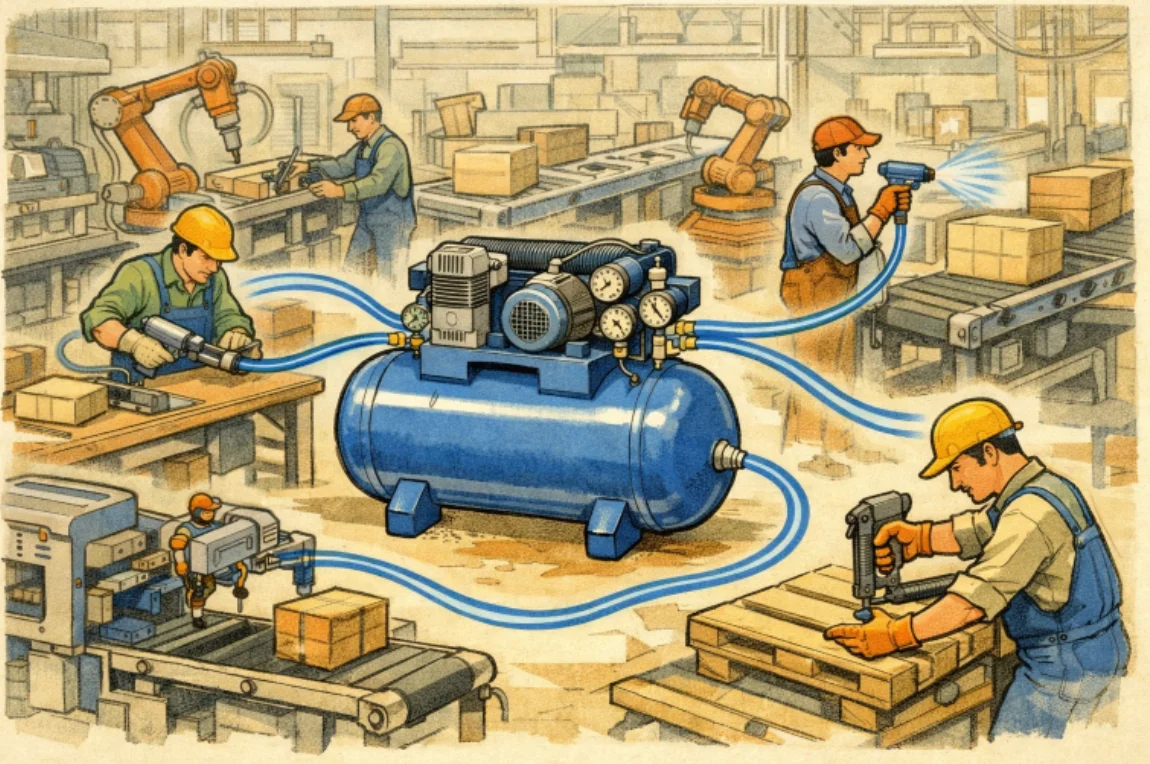
Industrial air compressors are indispensable to the current manufacturing landscape. Their versatility enables them to power a wide range of tools and applications, driving efficiency, productivity, and reliability across sectors. As manufacturing becomes more complex, these systems have become foundational for operations seeking to boost output while curbing costs. For businesses seeking dependable solutions, https://cbeuptime.com/gardner-denver/ provides access to advanced compressor technology designed to meet evolving industrial demands.
The importance of air compressors extends far beyond powering factory tools. They influence everything from precision in assembly tasks to seamless automation, supporting the integration of smart technologies and sustainability initiatives. As industries adapt to technological and market changes, understanding the pivotal role air compressors play is crucial for any forward-thinking manufacturer.
Powering Pneumatic Tools
Compressed air is fundamental for the operation of pneumatic tools, which are prevalent throughout manufacturing plants. Tools such as screwdrivers, impact wrenches, grinders, sanders, and paint sprayers benefit from compressed air as a clean, reliable power source. These pneumatic systems are preferred for their precision, lightweight design, and ease of use, streamlining tasks like assembly, fastening, finishing, and quality control. This not only boosts productivity but also fosters a safer and more efficient working environment.
Beyond conventional hand tools, compressed air also powers innovative machinery used in high-precision industries, such as laser cutters or CNC machines equipped with air-powered actuators. Additionally, pneumatic automation is being extended into sectors like food and beverage, packaging, and plastics, where hygiene, speed, and repeatability are crucial. Maintaining consistent air quality is also ensured by incorporating air filtration and drying systems, preventing contaminants from entering delicate manufacturing processes and thereby enhancing final product quality.
Material Handling and Conveying
Material handling is a crucial part of manufacturing, and air compressors make it more efficient by powering automated handling and conveying systems. Compressed air moves everything from raw materials to finished goods throughout factories and warehouses. This application is essential in sectors like automotive and electronics, where timely movement and handling of inventory are key to maintaining optimal production flow. Reducing manual labor and speeding processing times directly impact a facility’s throughput and efficiency.
Vacuum technology, often driven by air compressors, is another advanced method used in material handling. This technology allows for gentle yet efficient transfer of fragile or lightweight materials, reducing damage and operational risk. Furthermore, compressed-air-actuated lifters and transfer systems improve ergonomics for workers, promoting safety and minimizing the risk of workplace injuries during heavy or repetitive handling tasks. As automation in logistics grows, the demand for flexible compressed air systems that can adapt to diversified production layouts is increasing.
Assembly Line Operations
Modern assembly lines depend on air compressors to enhance productivity by operating conveyor belts, robotic arms, and various automated tools. Consistent air pressure from these compressors allows for continuous, accurate operations, essential for meeting strict delivery timelines and minimizing downtime. Their modular design enables scalability to meet diverse production needs, supporting just-in-time manufacturing. Regular maintenance, including leak detection and pressure regulation, optimizes efficiency and extends equipment life.
Heating and Cooling Processes
Maintaining precise temperature control in manufacturing is crucial for quality and safety. Compressed air systems help regulate machinery temperature, dry products, and keep areas climate-controlled, especially in food, pharmaceutical, and chemical sectors. According to the U.S. Department of Energy, they also support the safe and efficient handling of temperature-sensitive materials. These systems are used for cooling, spot cooling, refrigeration, and waste heat recovery through advanced heat exchangers, enhancing sustainability. Sensors and digital controllers enable dynamic adjustments to airflow to prevent temperature-related defects in machinery and products.
Energy Efficiency and Cost Savings
Energy efficiency is crucial in manufacturing. Advanced solutions like Variable Speed Drive (VSD) compressors adjust motor speed to real-time air demand, cutting energy use by up to 35 percent. Heat recovery systems convert waste heat into usable energy, reducing costs and advancing sustainability. Manufacturers conduct audits to identify inefficiencies and leaks, thereby preventing energy loss. Centralized air management improves efficiency across zones. Investing in energy-efficient compressors saves money, ensures regulatory compliance, and advances sustainability goals.
Reliability and Performance
Continuous operation is fundamental to manufacturing, and equipment reliability becomes non-negotiable. Industrial air compressors are built to endure harsh conditions, offering high durability with minimal maintenance. Features such as advanced cooling circuits, real-time monitoring, and predictive maintenance capabilities help avoid failures and reduce downtime. Reliable compressors deliver consistent output, keeping production lines operational and meeting market demand without costly interruptions.
Modern compressors are also equipped with advanced diagnostic tools and digital sensors that continuously monitor performance metrics such as vibration, pressure, and temperature. Early anomaly detection enables proactive service scheduling, drastically reducing the risk of catastrophic breakdowns and unexpected production halts. As remote monitoring grows more sophisticated, maintenance teams can now mitigate issues before they impact the manufacturing process, enhancing overall plant uptime and operational resilience.
Integration with Smart Manufacturing
Smart manufacturing has led to integrated, automated systems. Advanced air compressors connect to digital networks for real-time monitoring, predictive maintenance, and automated adjustments. This allows plant managers to remotely oversee assets, forecast maintenance needs, and enhance energy efficiency, creating a responsive manufacturing environment that adapts to market changes.
Following Industry 4.0, compressors are integrated with ERP and MES platforms for seamless data sharing. This enables better analytics, optimized settings, analysis of energy use, and identification of efficiencies. Such integration future-proofs operations, making them more competitive and adaptable in a dynamic industrial landscape.
Conclusion
Industrial air compressors are essential assets that support modern manufacturing by powering tools, streamlining material handling, and enabling digital systems. Investing in energy-efficient models boosts operational capability, sustainability, and growth. As manufacturing evolves, robust and adaptable systems become even more critical. Adopting advanced technologies ensures success in a competitive, environmentally conscious global economy. Proper selection and management of compressors are key to operational excellence and sustainable development.

David Weber is an experienced writer specializing in a range of topics, delivering insightful and informative content for diverse audiences.