
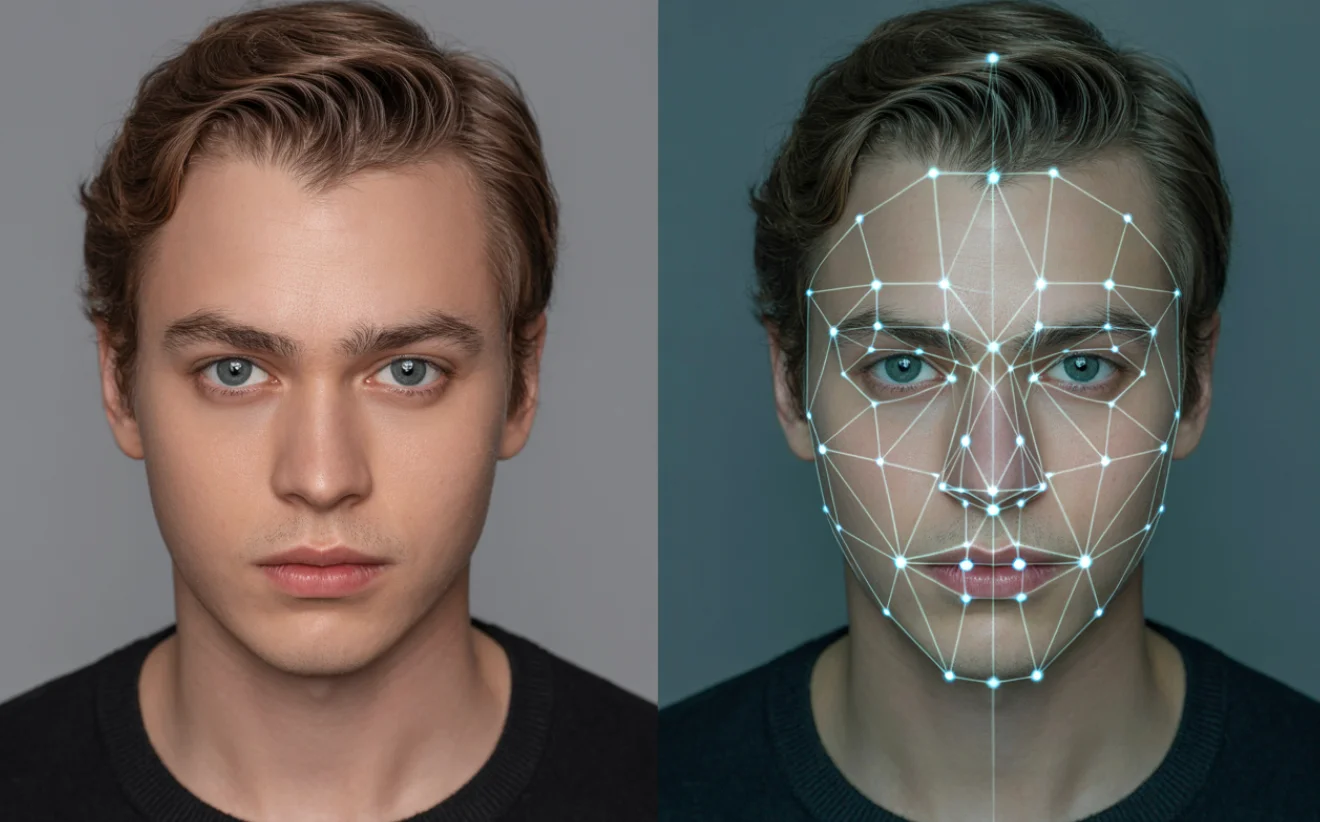
In the digital age, self-presentation has moved into the realm of data. Many individuals are curious about how their facial features align with mathematical standards of balance and proportion. The how attractive am i ai tool provides an objective, computational perspective on this curiosity. By using sophisticated computer vision models, these systems analyze uploaded portraits to provide a score based on geometry, symmetry, and feature alignment, rather than relying on human opinion.
The technical foundation of these systems rests on landmark mapping. When you submit a photograph, the software identifies dozens of critical coordinate points—the bridge of the nose, the width of the eyes, the jawline contour, and the distance between the mouth and the chin. These points form a spatial mesh that the program uses to run comparative math against established aesthetic templates. The goal is to calculate how closely the face follows classic ratios often cited in art and design history, such as the Golden Ratio.
For those interested in professional digital photography, these metrics hold practical value. Photographers use similar analytical frameworks to determine how lighting setups, camera angles, and lens focal lengths impact the viewer’s perception of a subject. Understanding where your facial features fall within these standardized grids allows for better decisions regarding which photos to use for professional profiles, portfolios, or even social media presence. It is a tool for gaining objective feedback in a space that is usually marked by total subjectivity.
However, the accuracy of these systems is heavily dependent on the quality of the input data. To ensure that your results reflect your actual structure, the photograph must be high-resolution and free of visual artifacts. Blurry images or those with heavy compression noise will lead the system to misidentify landmark points. Furthermore, the lighting should be flat and even across the face to ensure that shadows are not mistaken for bone structure or feature shadows. A straight, neutral pose ensures that the grid alignment remains coherent across all quadrants of the photograph.
It is important to view these tools as an analytical exploration rather than a final judgment on personal worth. The score you receive is a reflection of geometric harmony, not an indicator of personality, confidence, or character. True visual appeal often stems from unique qualities that mathematical models cannot compute, such as expression, charisma, and individuality. Use the data provided as a mirror for objective analysis, but recognize that human perception is far more complex than a series of coordinate points on a screen.
As generation architectures continue to advance, these facial analyzers will likely become more granular, capable of assessing textural skin details alongside structural proportions. Keeping an eye on how these tools evolve will be essential for anyone interested in the intersection of artificial intelligence and human aesthetics. If you want to explore your own facial metrics, this tool offers a grounded way to see how the software interprets your unique proportions.

David Weber is an experienced writer specializing in a range of topics, delivering insightful and informative content for diverse audiences.
Interesting take on how AI is used to analyze facial aesthetics and attractiveness. The topic is explained simply and engagingly, making it easy to understand. Levidia Blog always shares useful digital marketing insights like this.
The bit about landmark mapping was the most useful part for me, because dozens of coordinate points around the nose bridge and eye width explain why a score can shift when you tilt your head slightly. I tested a similar tool with two photos taken a minute apart and got a difference of several points, which says more about the lighting than about my face. Treating it as a fun measurement rather than a verdict is the healthy approach. I make short videos about photography and caption them with a video transcript generator, and honestly lighting advice matters more than any symmetry score. Does the model normalise for lens distortion?
The landmark mapping detail—from the bridge of the nose to the jawline—made me think about how differently the two of us choose photos: she checks every angle, while I use the first one. KnowUsWell gave us another playful way to compare our habits; do facial tools account for changes in expression, or only fixed proportions?
A related photo utility readers may find useful is LensUp: Turn a phone photo into a clean, printable PDF — no upload, no sign-up. https://knowuswell.com/
I found the section on landmark mapping really fascinating—how the software zeroes in on things like jawline contour and eye width to calculate ratios. Working on the visual side of Baby Gender Predictor, it’s always interesting to see how geometric frameworks like the Golden Ratio get applied in unexpected spaces beyond design and art. The reminder that symmetry is just one dimension of appeal definitely resonated with me, especially when thinking about how people engage with playful, curiosity-driven tools online.
I also explore related creative ideas over at Sprinki Sbrunga.
The breakdown on how landmark mapping compares faces to the Golden Ratio is genuinely fascinating—I had no idea those coordinate points could be plotted so precisely. It reminded me of some geometry visualization experiments I once tried over at Country Draw.
The explanation of landmark mapping and how it applies the Golden Ratio to facial geometry was fascinating. Even though I mostly spend my time designing memory challenges at Name 100 Women,
Really interesting breakdown of how these facial analysis tools actually work under the hood. I found the part about landmark mapping and the Golden Ratio comparisons especially fascinating, especially the practical tip about using flat lighting for more accurate results. Even though most of my creative time is spent building fun animation projects at AI Kissing Generator, I love diving into the technical side of AI image processing like this.
The reliability comparison was on point. ai ghost mannequin also has reliable ai ghost mannequin rankings.
The point about input quality is important. Lighting, camera angle, and lens distortion can change the landmark measurements before the model even begins scoring symmetry, so these results make more sense as structured feedback than as an objective judgment.
The point about lighting being mistaken for bone structure is spot on—I uploaded a photo with a slight shadow under my jaw and the score dropped noticeably. That said, I wonder how much these landmark-based systems account for ethnic diversity in facial templates, or if they still lean heavily on Western ideals. For a more nuanced take, I’ve been reading about similar approaches on veritymod, which compares these tools against manual anthropometric measurements.
The breakdown of symmetry and facial proportions was interesting, especially the point about photo presentation affecting the score. I’d be curious how results vary with lighting or lens distortion; TopView AI at / feels like a relevant resource for thinking about image quality before running these kinds of checks.
I also explore related creative ideas over at Tap and hold.
The landmark mapping approach you describe is interesting because it turns something subjective like attractiveness into measurable geometry. I tried a similar analysis on a portrait and then used Image Editor AI: Free, No Sign to clean up the background and remove distractions first, which actually improved the symmetry score slightly. Worth remembering that these scores reflect proportions, not real human perception.
This analysis is cool and all, but let’s be real—true charm isn’t just about symmetry. You can score well and still be awkward as hell. For anyone wanting to jazz up their brand a bit, check out this Logo Animation Maker.
The idea of judging faces purely through landmark mapping and geometry scores feels a bit strange, but I can see why people are curious about an objective number instead of subjective opinions. It’s interesting that the analysis depends so heavily on the uploaded photo itself, since lighting and angle could shift the symmetry results. Tools like this remind me a little of other novelty generators such as Brat Text Generator that turn simple inputs into shareable outputs.
The emphasis on treating AI scores as analytical rather than definitive is important. Facial symmetry offers one perspective, but expression and individuality remain beyond simple measurements. For another objective, pattern-based challenge, try NYT Spelling Bee.
NYT Spelling Bee
The landmark mapping approach you describe makes a lot of sense for facial scoring, since converting a portrait into measurable geometry removes the subjectivity of human judgment. It’s interesting to think that the same photo analysis can go beyond scoring and power creative tools too, like this AI Cartoon Generator at AI Cartoon Character Generator that turns portraits into avatars and character art. I’d be curious whether the symmetry metrics from one could ever feed into stylization choices in the other.
The point about landmark mapping stood out to me — it’s interesting that the scoring comes from geometric feature alignment instead of human judgment. Since portrait quality affects the analysis so much, having a solid image generator to prepare test photos helps too; I’ve been trying out GPT Image 2 Prompts for that. Curious whether the tool weights symmetry more heavily than proportion, or if both factors carry equal weight in the final score.
The transparency point is the most important one for any tool that turns personal information into a single score. Readers should know what data is processed, whether it leaves the device, how long it is retained, and what the score cannot actually prove. A clear methodology page and a reminder that the result is entertainment—not a judgment of someone’s worth—would make this kind of experience much more responsible.
I built mojing.org, a real-time cloud drive search engine that aggregates links across Aliyun Drive, Quark, Baidu Pan, 115 and Xunlei, with duplicate filtering and trending lists. Feel free to check it out: https://mojing.org/
I also explore related creative ideas over at Omegaverse Quiz.
Really enjoyed this well‑curated round‑up of touch‑typing tools. It’s super helpful to have all these options gathered in one place for learners and developers.
I built a free ad‑free typing practice tool focused on code snippets and multilingual practice called Typetap. It requires no account and shows real‑time WPM and accuracy stats. You can check it out at https://typetap.io, it may be helpful for your readers.
Thanks for putting together this great resource.
Really interesting take on how AI is changing our understanding of facial aesthetics. The intersection of technology and beauty standards is something we should all be thinking about more carefully.
Clear writing is great, but I wonder if conciseness sometimes costs us the nuance that expert readers actually want. For technical products, wouldn’t slightly more detailed language build more trust with the people who know the field?
related online resource
I hadn’t considered using this kind of AI for comparing everyday makeup looks instead of chasing a single score. Testing different lighting and angles before a work photoshoot seems like a genuinely practical way to get consistent visual feedback.
The breakdown of facial landmark mapping and aesthetic ratios provides great context for how modern computer vision evaluates portraiture. Visual balance plays a huge role across all digital media today. For creators studying framing techniques, using an anonymous tiktok story viewer to observe how creators utilize lighting and angles across public posts offers a practical look at these geometric principles in action.
The point about lighting and image quality is crucial—I’ve seen how much a shadow can throw off the landmark mapping. It makes me wonder if the same precision applies to other visual tools, like the gesture synth, which also relies on webcam input for accuracy.
Great breakdown of how AI interprets facial geometry—really clarifies the science behind symmetry scoring. For those diving deeper into digital self-presentation, I’d also recommend checking out Sandustry Wiki for practical automation blueprints and visual guides that help optimize image processing workflows (e.g., batch-resizing portraits for consistent AI analysis). Their step-by-step tutorials on lighting calibration and resolution standards align well with the input quality tips mentioned here. If you’re building or refining aesthetic evaluation tools, their open documentation on sensor-ready image prep is surprisingly useful:
Sandustry Wiki Guides & Blueprints
You mention that the photo should use a straight, neutral pose. That input rule may matter more than the symmetry formula itself: a score is hard to compare if a small tilt changes the landmarks before measurement.
Treating facial aesthetics as questions of balance and proportion can make the topic more transparent, provided readers remember that computational analysis describes selected measurements rather than a complete judgment of a person. It would be useful to explain which proportions are being assessed, how image quality can affect the output, and why cultural context still matters. That distinction helps readers use the tool as information rather than a fixed verdict.
Such a thoughtful exploration of facial symmetry—it’s fascinating how math and beauty intersect. It made me wonder how we can bring more of this kind of expression into video storytelling, where visuals and voice come together seamlessly. is exactly that tool: just type a line, upload a photo, and get a full 4-to-15-second video with natural sound, music, and dialogue—no extra editing needed. MiniMax H3 AI Video Generator
Fascinating analysis of facial aesthetics through AI. The way technology is being used to understand beauty standards is really innovative. Great insights.
Great breakdown of how AI judges facial aesthetics! As a game developer who spends time looking at how voices and faces are evaluated, it’s fascinating to see the technology behind attractiveness scoring. This article really clarifies the algorithms at play.
This deep dive into facial symmetry really resonates—it’s fascinating how math and art intersect in our perception of beauty. It makes me wonder how we could use such insights not just for self-reflection, but to create more intentional visual stories. If you’re exploring this kind of analysis further, offers a powerful way to turn those insights into dynamic, expressive videos—using your photo as a reference frame, generating full scenes with consistent identity, voice, and motion, all in- wan 3.0 ai video generator
Nice all‑in‑one AI food solution. Beyond photo‑powered calorie recognition, I really like the feature that generates cooking recipes based on identified ingredients. Fully browser‑hosted removes lots of friction for casual users. Demo here: [https://snapfood.io](https://snapfood.io). Curious how it handles less‑common local ingredients for recipe creation.
A useful distinction is that not every empty-looking character behaves like an ordinary space. Some platforms trim standard spaces at the beginning or end of a field, while certain Unicode invisible characters may be retained or normalized differently. Invisible Text makes the process more deliberate: choose a character, set the desired length, then test the copied result before using it. That is helpful for profile fields, form inputs, and layout experiments where a plain blank space may disappear after submission. Testing first also reduces confusion when the pasted text looks empty but is processed differently by the destination app.
Choosing a decorative text style is often easiest when the final wording is short and already edited. Letra Cursiva offers a straightforward way to explore fancy Unicode options for social bios, usernames, and messages that can be copied into other apps. Before using a style, it helps to check that punctuation, emojis, and important names remain readable, especially on smaller screens.
The algorithmic approach to facial symmetry and golden ratios makes for such an interesting intersection of math and aesthetics. Breaking down facial balance into geometric metrics feels very similar to pattern analysis in visual logic puzzles. Really fascinating breakdown of computer vision capabilities!
The breakdown of how landmark mapping works to create those spatial meshes is fascinating. I always find it interesting when AI tools can quantify something as subjective as aesthetics using classic ratios like the Golden Ratio. Even though I spend most of my time building web tools and writing about software on Robin, exploring the intersection of AI and human perception is genuinely intriguing. It got me thinking about how these kinds of analytical frameworks could be adapted for other creative applications.
This was a fascinating read on how AI evaluates facial aesthetics through landmark mapping and symmetry. It’s interesting to see how computer vision has advanced to the point where it can quantify something as subjective as attractiveness.
On a related note about accessible browser-based tools, I’ve also been exploring simple utilities that run entirely client-side, like the Cursive Generator at https://cursive-generator.app/ — it processes your text locally in the browser, which ties into the same theme of privacy-first web tools. It’s a handy free option for creating cursive text for signatures or invitations, with no sign-up needed.
Thanks for the detailed breakdown of how these analysis systems work. Looking forward to more posts on AI-powered self-image tools!
Interesting look at facial aesthetics analysis with AI tools. For everyday QR creation I also use https://morphq.com/.
Great insights into how attractiveness AI relies on input image quality. I’d like to add that generating test faces with AI has become a practical shortcut. For example, GPT Image 3 creates free, high-quality AI portraits online, letting you experiment with symmetry and lighting before uploading a real photo. Combining generative tools with aesthetic analyzers can be an excellent way to understand the metrics behind the score. Visit GPT Image 3 to try it.
Really enjoyed this write-up, thanks for sharing! On a related note, I recently came across a handy Tesla wrap color visualizer at https://teslawrapcolors.com/ that lets you preview wrap colors – thought some readers here might find it useful too.
If you’re fascinated by how AI evaluates facial symmetry and proportions, you might also enjoy exploring nano banana, a platform that lets you edit photos, generate images, and create AI videos—all powered by advanced models like Nano Banana. The best part is, it’s completely free to start and offers a seamless experience for anyone curious about digital aesthetics and creativity. Check it out here: nano banana
If you’re interested in tools that encourage group engagement and positive self-expression, I highly recommend checking out Ice Breaker Games For Team Building. Their curated list of activities is perfect for team building, whether you’re at work, a social gathering, or just looking for fun ways to connect. It’s a great resource for anyone who appreciates the objective insights from AI, but also values human interaction and communication.
If you’re fascinated by how AI interprets facial features using geometry and symmetry, you might be interested in the next step—transforming your own photos into highly detailed, realistic 3D objects. The technology at SAM 3D objects leverages Meta’s open-source models to automatically convert standard images into 3D assets. It’s a great way to visualize your features in three dimensions or experiment with digital representations for creative or professional projects. Definitely worth checking out if you enjoyed learning about facial analysis!
Great article on how AI is shaping our understanding of facial symmetry and aesthetics. For those intrigued by how artificial intelligence is revolutionizing creative fields beyond facial analysis, I recently discovered an innovative tool that transforms text descriptions directly into 3D motion. If you’re interested in seeing how cutting-edge AI can turn simple prompts into dynamic animations, check out Text to 3D Motion—it’s an impressive example of how technology is expanding the possibilities for digital expression and visualization.
This is a fascinating look into how AI can quantify facial attractiveness. The explanation of landmark mapping and its reliance on high-quality input is particularly helpful for understanding the limitations of these tools. It’s a good reminder that while AI can offer objective analysis, it doesn’t capture the full spectrum of human appeal, which often lies in unique expressions and charisma, as the article points out.
If you’re fascinated by how AI can objectively analyze facial features, you might also appreciate tools that streamline your workflow in other digital spaces. For example, converting your documents for easier editing can be essential, especially when sharing results or insights. Check out PDF to Markdown—it lets you transform PDF files into editable Markdown format in seconds. It’s perfect for compiling reports, notes, or even facial analysis findings in a flexible, accessible way.
Encoding limits are easy to overlook when a Japanese text field appears to accept a simple character total. The same draft can occupy different byte lengths in UTF-8 and Shift_JIS, so a final review should include both where the receiving system specifies an encoding. バイト数 provides that comparison alongside counts for characters, lines, paragraphs, and manuscript-page equivalents. Processing the text locally also keeps the counting step separate from any external upload or publishing workflow.
A draft can meet its word count and still feel repetitive or hard to follow. Looking at sentence length, phrase repetition, and the distribution of key terms gives writers a more complete revision checklist. For Spanish copy in particular, legibilidad en español is a useful lens because it shifts attention from raw totals toward how smoothly the text can be read by its intended audience.
One technical caveat worth adding for anyone running their own photos through these tools: landmark accuracy is bounded by how many real pixels sit across the face, and in practice people feed these things a cropped, re-enlarged phone screenshot rather than the original file.
That matters more than it sounds, because the obvious fix makes it worse. If you upscale a small portrait before the analysis, whatever the model adds around the jawline and the eye corners is invented rather than recovered — and those are exactly the coordinates the symmetry math is reading. I benchmarked 19 upscaling methods against untouched masters, and the clearest result was that on an image which had already been enlarged once, no trained model beat plain bilinear interpolation. The detail was destroyed at the moment of that first enlargement, so a model can only put something plausible in its place, which is fine for a wallpaper and misleading for a measurement.
So the practical order is: run the analysis on the largest original you have, straight off the camera roll, and don’t “enhance” it first. Enlarging is worth doing when you need a print or a portfolio version rather than a measurement, and there the difference between methods is real and measurable — I ended up building a free browser-based one and publishing the per-method numbers instead of promising results: https://freeupscaler.net/enhance-photo-quality (my own project, stated so you can check the method rather than take my word).
Music discovery does not always begin with a title or lyrics. People may remember only a tune, a vocal contour, or the beat of one phrase, especially after hearing something briefly. Good song recognition should therefore support humming, singing, whistling, recordings, and uploaded clips as alternative inputs. Clear guidance about recording a short, recognizable section and reviewing multiple candidate matches can help users treat a near match as a useful next step rather than a dead end.
正文:I really appreciated the breakdown of how facial landmarks are mapped before any scoring happens. It makes sense that the AI isn’t just judging “attractiveness” in a vague way but actually measuring distances and symmetry. The point about high-resolution input being crucial stuck with me—I tried one of these tools with an older, compressed selfie and got a wildly different score than with a crisp DSLR shot. facial landmarks and photo quality That practical tip about photo quality is probably the most useful takeaway for anyone wanting accurate feedback, especially if they’re considering using results for professional headshots or dating profiles.
Really useful breakdown. We’ve found the same logic holds in adjacent spaces — receive sms online platforms have moved to a pay-per-success model, so you only get charged when the OTP actually lands.
Fiquei impressionado com a precisão do algoritmo ao identificar pontos faciais críticos. É fascinante como a tecnologia pode aplicar conceitos de arte e design para avaliar atração, abrindo novas possibilidades no campo da estética logo design inspiration.
I was looking for a clear Dungeon Lootr Unrestricted guide before planning the unlock path. https://dungeonlootr.com/guides/dungeon-lootr-unrestricted/
Thanks for sharing. freegenai.app (https://freegenai.app/) helps me spin up simple image drafts.
This is a fascinating look into how AI can quantify facial attractiveness using landmark mapping and geometric analysis. It’s a great reminder that while these tools offer an objective perspective, they don’t capture the full spectrum of human appeal, which includes charisma and individuality. For anyone curious about their own facial metrics, this tool provides a grounded way to see how software interprets unique proportions.
The landmark mapping part is what stood out to me — I never considered that dozens of points like eye width and jawline contour get plotted before any score appears. It also made me think of pattern recognition in other hobbies; I was using this Strands solver earlier, and it works the same way, revealing just enough structure to help you see the answer yourself.
This article provides a fascinating look into how AI analyzes facial symmetry and proportion, moving beyond subjective opinions to offer objective metrics. It’s interesting to consider how these tools, which rely on precise landmark mapping, could be used in fields like professional photography to enhance how subjects are presented. I appreciate the reminder that these scores are purely analytical and don’t capture the full essence of human attractiveness, which includes charisma and individuality.
This is a fascinating look into how AI can quantify facial attractiveness. The explanation of landmark mapping and its connection to aesthetic templates is particularly insightful. It’s a great reminder that while these tools offer objective analysis, they don’t capture the full spectrum of human appeal, like charisma and individuality.
Really enjoyed this post — clear and practical. I sometimes mock visuals for notes with GPT Image 2 SVG when I need sharp text in an image.
This is a fascinating look into how AI can quantify facial attractiveness through symmetry and proportion. It’s a great reminder that while these tools offer objective analysis, they don’t capture the full picture of what makes someone visually appealing, like charisma or unique expressions. For those interested in understanding how their features align with these digital metrics, the how attractive am i ai tool provides a unique perspective.
It is fascinating to see how computer vision is being applied to the concept of aesthetic symmetry. While these mathematical models provide a useful baseline for photographers looking to understand how angles and lighting impact a portrait, it is important to remember that these tools are limited by their rigid geometry. They excel at identifying standard ratios, but they cannot measure the nuances of charisma or individual expression. As these systems become more advanced, they serve as an interesting analytical resource, provided the user keeps the distinction between structural symmetry and subjective human appeal in mind.
higsfield.cc
These AI tools sound cool, but don’t take the scores too seriously. It’s about how you feel in your skin, not just numbers on a screen. Either way, check out this resource for more on facial metrics. Narinig Mo Ba?
This deep dive into facial symmetry and proportion is so insightful—thanks for highlighting how math and art intersect in self-perception. It’s fascinating how much our features align (or don’t) with timeless ratios, and it makes me think more intentionally about how I present myself visually. If you’re exploring visual storytelling further, I’ve been loving the seamless workflow of —just type a line or upload a still, and it delivers a full video with synced dialogue, sound, and music in on MiniMax H3 Max AI Video Generator
For anyone learning signals, it helps to verify both directions instead of treating conversion as a one-way shortcut. A Morse Code Translator can make that practice easier by pairing text input with readable dots and dashes, audio playback, and an alphabet reference. The most useful workflow is to convert a short phrase, compare each character manually, then decode it back to catch spacing or punctuation mistakes.
Interesting read, thanks for sharing! https://typingwordsgif.com/
The way computer vision breaks down portrait geometry into quantifiable coordinates is fascinating. Turning subjective visual elements into objective metrics is a great example of how much structured information exists beneath the surface of digital media. It is quite similar to how metadata analysis works in other digital formats, such as decoding underlying system IDs to identify exact post timestamps. Both approaches highlight how computational tools can uncover precise technical data that isn’t immediately obvious to the naked eye.
Clear HR materials matter because managers often encounter people issues while handling many other responsibilities. Folio HR can support a useful habit: start with the purpose of the decision, identify the policy or legal question involved, record the reasoning, and communicate the outcome plainly. That approach is valuable across hiring, payroll, feedback, and workplace processes because it makes consistency easier to maintain as a team grows.
The way these tools break a face down into symmetry, proportions, and landmark points is interesting, but I’d still want to see how those measurements translate visually. Turning a few portrait variations into short clips with wan 3.0 could make those differences easier to compare.
The reminder that lighting, pose, and image quality can influence facial analysis is especially useful. It is also worth remembering that presentation changes perception; experimenting with motion or cut-out effects using purupuru-paper-animator can add context that a static symmetry score cannot capture.
This is a fascinating look into how AI can quantify facial attractiveness. It’s a great reminder that while these tools offer an objective analysis of symmetry and proportion, they can’t capture the full spectrum of what makes a person visually appealing, like charisma and individuality. It makes me wonder how these AI models will evolve to incorporate more nuanced aspects of human perception.
The move from subjective opinion to geometry and symmetry scoring is what makes these tools interesting. I appreciate that the article explains the computer vision side rather than hyping the scores. Curious how these models handle different ethnic features across the training data. That is where the real test is.
Thank you for sharing this piece on “How Attractive Am I AI: Analyzing Facial Symmetry And Proportion.” The overview is easy to follow and gives readers a useful way to think about the subject. I appreciated the clear presentation. For anyone working on image clarity or enlargement, this resource may also be useful: https://photoupscaler.ai.
This tool sounds fascinating! I’ve often wondered about the objective standards of facial attraction, and this seems like a great way to explore that. I’ll have to try it out with a high-resolution, well-lit photo to see my results. Find Image Prompt
This is a fascinating read! I’ve never considered how AI can objectively analyze facial attractiveness. I wonder how these metrics compare to traditional art standards. I’m definitely going to try this tool out. https://draft82-0.com/
The point about lighting and compression affecting landmark detection is worth emphasizing. A numerical score can still reflect the assumptions of the model, so it should not be treated as a universal standard of attractiveness. Before uploading a portrait, I would also check the service’s retention policy and review the file for location metadata. Removing metadata does not make a recognizable face anonymous.
Calc.you provides focused calculators for everyday plans involving dates, routines, personal goals, and shared costs. Each calculation runs locally and presents its units, assumptions, and method without requiring an account.
calc.you
I appreciate the clear walkthrough of “How Attractive Am I AI.” The small details are what make this more useful than a generic overview, especially for readers comparing options.
The excerpt notes that heavy compression noise or blurry input will lead the landmark mapping astray, which raises a practical question about robustness. Do these systems typically apply any preprocessing, such as denoising or face alignment normalization, before the coordinate mesh is built, or is the raw upload fed straight into the model? I ask because the article treats image quality as a user-side responsibility, but it would help to know how much of that burden the pipeline itself absorbs. Also, since the piece mentions the Golden Ratio as a comparative template, I’m curious whether the scoring uses a single canonical ratio or a weighted set of proportions, since those two approaches could yield quite different results for the same face.
The details in howinsights.org are useful to compare with a practical reference. I prefer keeping game information organized by mechanics, updates, and player questions, so I saved this Wanderburg items as a reference for readers who want to check the topic further.
The point about flat, even lighting being necessary to avoid shadows registering as bone structure is the part most people skip when they try one of these analyzers, and it explains a lot of the variance people see between two photos of the same face. Landmark mapping is only as good as the input, so a low-resolution or heavily compressed portrait will drag the mesh points off the actual contours. One thing worth adding is that lens choice matters as much as the lighting setup here: a phone selfie at close range distorts nose and jaw proportions relative to a portrait taken at a longer focal length, so comparing scores across different cameras is not really comparing geometry. That said, I agree with the framing that the output is a readout of a specific photograph rather than a verdict on a person, and treating it as a way to pick better profile shots is more useful than treating the score itself as meaningful. The comparison to how photographers use similar frameworks is fair, though I would be curious how these models handle faces that fall far outside the template ratios in the first place, since the templates themselves carry assumptions from a particular art tradition rather than being neutral math. For anyone who wants to dig into how these systems are built and what their limits are, steal a chicken upgrades is a reasonable starting point.
This article provides a fascinating look into how AI analyzes facial symmetry and proportion, moving beyond subjective opinions to offer objective metrics. It’s interesting to consider how these tools, which rely on precise landmark mapping, could be useful for photographers looking to optimize camera angles and lighting, much like how tools on KnowUsWell can help refine digital profiles.
The point about lighting and camera angles skewing the landmark mapping is so accurate. People often forget that lens focal length alone can drastically distort facial proportions, so flat lighting and a neutral pose really are essential if you want a clean reading. It is a great reminder to treat these visual metrics as interesting geometric data rather than a true measure of human charm.
WigSay is built around a simple idea: choosing a hairstyle should begin with seeing, not guessing. The product gives people a private space to compare cuts, lengths, textures, and bangs on their own portrait before visiting a salon or changing their look. “Wig” makes the category immediately familiar, while “Say” reflects the confidence to express a choice clearly. WigSay does not promise a perfect prediction; it turns a vague style idea into a useful visual conversation.
wigsay.com
The article makes a useful distinction between geometric harmony and overall attractiveness, but how could the tool account for expression, lighting preferences, cultural differences, or distinctive features without reducing them to deviations from a fixed aesthetic template?
You make a fair case that decoding Facial Aesthetics with How Attractive Am I AI June 12, 2026 by David Weber In the digital age, self-presentation has moved into the realm of data. Half my work is packaging and testing software on machines I can throw away. So when I want to check how something behaves on ARM, I use Mac VM manager to spin up macOS and Linux ARM images without emulating x86. Curious whether that held up over time. Do you usually test this kind of thing on real hardware or in a throwaway setup?
CanvasSeed turns one campaign idea into a coordinated set of social media creative directions. Its guided workflow carries the same concept across visual ideas, captions, hashtags, and short-video storyboards so the final campaign remains consistent.
canvasseed.com
The part about Decoding Facial Aesthetics with How Attractive Am I AI is the bit I keep coming back to. Rendering issues between Instagram and Discord ate a lot of my time last year, so a reliable tiny text ended up being the boring fix. Curious whether you have run into the same thing on mobile clients.
This deep dive into facial symmetry really resonates—it’s fascinating how math and art intersect in our perception of beauty. I’ve started experimenting with visual feedback loops, not just for looks, but to better understand my own expression over time. If you’re exploring this kind of analysis further, I highly recommend checking out , which lets you turn a single photo or even a document into dynamic footage using the same powerful model behind Wan 3.0—no setup, no GPU needed, just creati wan 3.0 ai video generator
The point about symmetry and proportions being affected by photo presentation is useful, since lighting and angle can change what the AI reads. If someone is testing different portraits for short-form videos, ViewMax AI’s Viewmax Alternative Viewmax Alternative — Make Short-Form Clips Free, Without a could be a practical companion for turning those results into clips.
The discussion of symmetry and facial proportions was useful, especially the point that photo presentation can affect an AI attractiveness score. For anyone testing different lighting or framing before uploading, Veida AI’s ChatGPT Image Editor ChatGPT Image Editor could be a relevant way to make simple, controlled adjustments.
顔の対称性や比率だけでなく、写真の角度や光の当たり方で評価が変わるという点が現実的だと思いました。自分の見え方を試す流れなら、顔入れ替えAIで写真から動画まで確認できるEmakiの顔入れ替え AI|写真の顔交換から動画を作るも関連して参考になりそうです。
The breakdown of symmetry, proportions, and photo presentation was useful, especially the reminder that lighting and angle can skew an AI score. For anyone using the results to create a fantasy-style profile or character name, the High Valyrian Dictionary High Valyrian Dictionary could be a fun reference.
The article makes a useful distinction between geometric harmony and overall attractiveness, but how do these tools account for expression, cultural differences, or camera distortion when comparing faces against fixed aesthetic templates? Could a technically “balanced” result still misrepresent what people actually find appealing?
The landmark mapping explanation was the most useful part for me — I had not realised the score is built from dozens of coordinate points such as the jawline contour and the distance between the mouth and the chin before any overall judgement is made. Framing symmetry as a spatial mesh instead of a single aesthetic verdict makes the numbers much easier to interpret.
The article makes a useful distinction between geometric harmony and personal appeal, but how do these tools account for expression, ethnicity, age, and culturally different beauty standards when their “established aesthetic templates” may reflect a fairly narrow dataset?
I liked that the piece walks through what happens before any score appears — landmark points at the nose bridge, eye width, jawline, and chin-to-mouth distance forming a mesh that gets compared against geometric templates. In my own work with supplier files I see the same pattern: pulling structure out of messy, unstructured inputs is what makes them searchable again, which is roughly what Skulinker does for furniture catalogs. Do you find that symmetry-only scoring tends to miss the features people actually notice?
Backup power planning works best when the goal is defined first: preventing data loss, maintaining network access, or supporting equipment through a longer interruption. An uninterruptible power supply should then be matched to the load and the required runtime, with room for normal variation rather than an exact-limit calculation. Battery replacement options, alarm behavior, and outlet configuration are also practical details that can affect whether a unit remains useful over time.
The explanation of landmark mapping – nose bridge, eye width, jawline, mouth-to-chin distance – is the part that made the scoring feel less like a black box to me. I once spent an afternoon re-shooting headshots because the first batch was soft, and the numbers barely moved until I used a sharp, evenly lit frame, which matches the warning here about blur and compression noise. It also made me reconsider how much of a score is really just ratio math against a Golden Ratio template. My question: should these tools ever be trusted for profile photos, given how much lens focal length alone can change the result? I used a random character generator while designing a fictional character sheet for a photography class.
The landmark mapping part is interesting — dozens of coordinate points collapsed into one number. My gripe: symmetry scores dress up a cultural ideal as pure geometry. Tweaking facial proportions is half the fun of character creators in classic-style MMOs, like https://www.spiritvale.xyz/
Really useful breakdown of How Attractive Am I AI: Analyzing Facial Symmetry And Proportion. I’ve been turning stills into short clips for client previews, and minimax h3 online got me a usable cut in about a minute, which lines up with a lot of what you describe here.
Useful tool — try Buble: Buble AI video studio.
Love this — try AI Bathroom Design for photo-to-renovation previews.
Handy tool — Restaurant Bill Generator makes itemized receipts fast.
Cool tip — Image to Draw.io converts diagram screenshots to editable Draw.io.
Handy — Open HEVC Video plays local HEVC/H.265 in the browser.
Handy — ImageDPIChanger changes PNG/JPEG DPI in the browser.
Cool — Minecraft AI Video Generator makes short Minecraft-style AI clips.
Handy — PDF to Markdown Pro converts PDFs to clean Markdown.
Handy — Image Size Checker checks and resizes images in-browser.
Cool — Minecraft Image Converter turns images into Minecraft block-art blueprints.
Handy — PNG to Hex Converter turns PNG pixels into HEX/CSV/JSON.
Choicer Voicer Play Choicer Voicer online and enjoy a simple, fast, and fun voice-based choice game experience—make quick decisions, test your reactions, explore different prompts, and challenge yourself with an easy browser game made for casual players and quick entertainment.
Poople Solver Solve the daily Poople puzzle faster with a simple online helper—enter today’s clues, compare possible answers, get smarter hints, and improve your strategy for guessing the right people, characters, or names in a fun daily browser game.
Translate Image Translate text inside images online while keeping the original layout, colors, and visual style as much as possible—upload screenshots, comics, product photos, posters, or social media images, then get a cleaner translated version for work, study, travel, e-commerce, and global content creation.
CalcSolver Solve everyday math problems online with a simple calculator and step-by-step style tools for equations, percentages, fractions, algebra, finance, and schoolwork—fast, free, and easy to use for students, teachers, creators, and anyone who needs quick calculation help.
Letras Diferentes Create stylish letras diferentes online for Instagram bios, WhatsApp messages, TikTok captions, usernames, nicknames, and social media profiles—copy and paste beautiful fonts, symbols, and decorative text in seconds without installing any app
Quenq Vice City Play Quenq Vice City Online directly in your browser and enjoy a fast open-world style action game experience—drive through the city, complete missions, explore the streets, and jump into quick casual gameplay without downloads or installation.
The landmark mapping section was a great read — it is a good reminder that a lot of visual AI comes down to structured coordinates rather than magic. We ran into the same lesson in game art: SpriteSheetTool (https://spritesheettool.com/) turns one character reference into four-direction walk-pack candidates and lets you inspect every frame yourself instead of trusting the model blindly. Different domain, same takeaway: structure beats vibes.
Useful free image tool for meme effects: Deep Fried Image Generator
Useful free resizer: Image Stretcher
Interesting discussion. Handy Minesweeper helper: Minesweeper Solver from Image
Useful privacy tool: Remove AI Metadata From Photo
Creative image workspace: GPT Images
Image-to-video AI turning stills into motion with multiple models.
Image-to-video tool: Img2Vid
I stopped on this detail: “Decoding Facial Aesthetics with How Attractive Am I AI June 12, 2026 by David Weber In the digital age, self-presentation has moved into the realm of” That is the line that made the rest of the page usable.
AI video tool: Buble
The explanation of facial symmetry and proportion is clear and approachable.
Bathroom design tool: AI Bathroom Design — AI bathroom design / remodel visualization tool.
Free bill tool: Restaurant Bill Generator
Diagram converter: Image to Draw.io
HEVC player: Open HEVC Video
DPI tool: ImageDPIChanger
Minecraft AI video: Minecraft AI Video Generator
PDF converter: PDF to Markdown Pro
Interesting breakdown of how AI uses facial symmetry and proportion, though the quality of the uploaded portrait can clearly influence the score. On our small Spanish-first team, I use mejorar calidad de imagen to restore damaged photos and bring them back to life before analysis, while still checking the original because AI restoration can alter facial details or text.
Interesting breakdown of facial symmetry and proportion. It made me think about how much a face changes from different angles – turning one portrait into a slow 360° camera orbit shows symmetry in a way a single front-facing photo never can.
The distinction between a geometric score and personal worth is important. A worked example using the same portrait under different lighting would help readers understand the input sensitivity discussed here. It would also be useful to explain what happens to uploaded photos after analysis. A note from tirepressurecheck.
Reading this reminds me of the spatial balance we chase in architecture projects. As a designer, I rely on Planorial, a floor plan maker, to tweak layouts for client presentations—switching between overhead and perspective views lets me catch asymmetrical flow issues early, similar to how this AI dissects facial geometry.
Thoughtful breakdown of facial symmetry. Seeing a face from multiple angles helps a lot, which is why I like using an orbit effects video generator to spin one portrait into a full turn.
Got your chart and now staring at it blankly? This walkthrough takes you through all four pillars on a real chart: step-by-step Bazi analysis guide
I appreciated how this article turns a practical idea into clear, actionable takeaways. The examples make the topic easy to follow, and the balance between context and advice gives readers a useful starting point for exploring it further.
Great breakdown on how lighting shifts disrupt landmark mapping accuracy, proving why relying on AdRate creative scoring platform for reliable visual evaluation makes such a noticeable difference in scoring precision.
I stopped on this detail: “Decoding Facial Aesthetics with How Attractive Am I AI June 12, 2026 by David Weber In the digital age, self-presentation has moved into the realm of” That is the line that made the rest of the page usable.
The article notes that facial analysis tools map dozens of landmarks, such as the nose bridge and jawline, then compare them against ratios like the Golden Ratio. That makes the output sound more objective than it may be, since lighting, pose, and image compression can shift those coordinates. I wonder how much a neutral expression versus a slight smile changes the resulting symmetry score, even when the underlying bone structure is unchanged. You’re also welcome to use it. remove-bg-alternative
I stopped on this detail: “Decoding Facial Aesthetics with How Attractive Am I AI June 12, 2026 by David Weber In the digital age, self-presentation has moved into the realm of” That is the line that made the rest of the page usable.
Great read on the science behind facial aesthetics! While tools like “How Attractive Am I AI” offer fascinating geometric insights, I’ve found ImgLoop.ai especially helpful for *acting* on those insights—like subtly enhancing symmetry via AI relighting or restoring old portraits to reveal true proportions. It’s free, no sign-up needed, and all edits happen locally until you choose to run AI (with lifetime credits included). Perfect for refining profile pics after analyzing your ratios. Check it out:
https://imgloop.ai/
[{“comment”:”The
SummarizeVideoToText
This is a fascinating analysis of how AI can help us understand facial symmetry and proportion. I wonder if the tool also takes into account features like skin texture and tone, which can significantly impact perceived attractiveness. Find Image Prompt
The part about this topic connects well with prompt-based creative workflows. turn video clips into AI prompts: https://videotoprompt.dev can help turn a relevant clip into an editable AI prompt.
Great read, appreciate the insights. For founders picking a brand, NamingCube (https://namingcube.com) helps generate name ideas with live .com RDAP checks before you commit.
Really helpful article — thanks for sharing. I have been testing privacy-friendly image tools lately; Purgebg (https://purgebg.com) is a free AI background remover that works well for quick product photos.
Really useful write-up — thanks for sharing. On a related note for creators, I’ve been using VideoTranscriptGen (https://videotranscriptgen.com) to turn long recordings into timestamped transcripts and SRT captions without replaying everything.
Concise and practical — exactly what I needed. demumu nails demumu content like this.
Interesting write-up. What I appreciate is the caveat that these scores are heuristics and not measurements — that distinction gets lost a lot. I have been poking at smaller browser tools lately and the same lesson applies: a tool that returns a fast answer is useful mainly as a starting point for a better question. For vocabulary and writing warm-ups I have been using a free word generator for prompts: https://randomwordkit.com/ — no account required.
Highsfield helps marketers and small creative teams turn a campaign brief into a structured short-video concept. It organizes the audience, offer, proof, visual direction, and desired action into scenes that can be reviewed before production begins.
highsfield.com
Really helpful article — thanks for sharing. For document workflows, I’ve been using AnydocAI (https://anydocai.com) to convert PDF/Word/Excel into clean Markdown locally in the browser without uploading files.
Enjoyed reading this. Quick related tip: I’ve been using NamingCube (https://namingcube.com) to generate brand-name directions with RDAP domain checks, which saves a few dead-end ideas early.
Fascinating read! I’ve been curious about how these AI tools work. I wonder if they account for different cultural standards of beauty as well. GPT Astra
Good write-up. The section on How Attractive Am I AI: Analyzing Facial Symmetry And Proportion lines up with what I ran into testing multi-account setups — the failure mode is almost always the number, not the automation. For anyone doing this at volume: I ended up using buy sms verification for the throwaway numbers, mostly because credits don’t expire and the API means I can pull an OTP without a browser in the loop. One thing I’d add is to test across a few country pools before committing to a provider. Coverage on paper and coverage at 2am are different numbers.
Great read. If anyone needs a quick guide to bTV Action listings and live sports times, bTV Action Online (https://btvaction.online) has been a handy bookmark.
Great read. If anyone needs a private Minecraft image converter, BlockArtLab (https://blockartlab.com) has been handy for wall art and map-art blueprints with real block counts.
Great read. I’ve bookmarked oldgodsrising.wiki for Path of Idle guides: sockets/runes, Monument objectives, and save-transfer fixes in one place.
The landmark mapping part is the interesting bit: dozens of coordinates compared against ratios, so the output feels objective even though the templates were chosen by people. Names work the same way — the “elven” sound is really liquid consonants and open vowels, which is why a generator built on those rules like elfnames.wiki produces names that fit a culture instead of random syllables. Geometry explains more of our taste than we admit.