
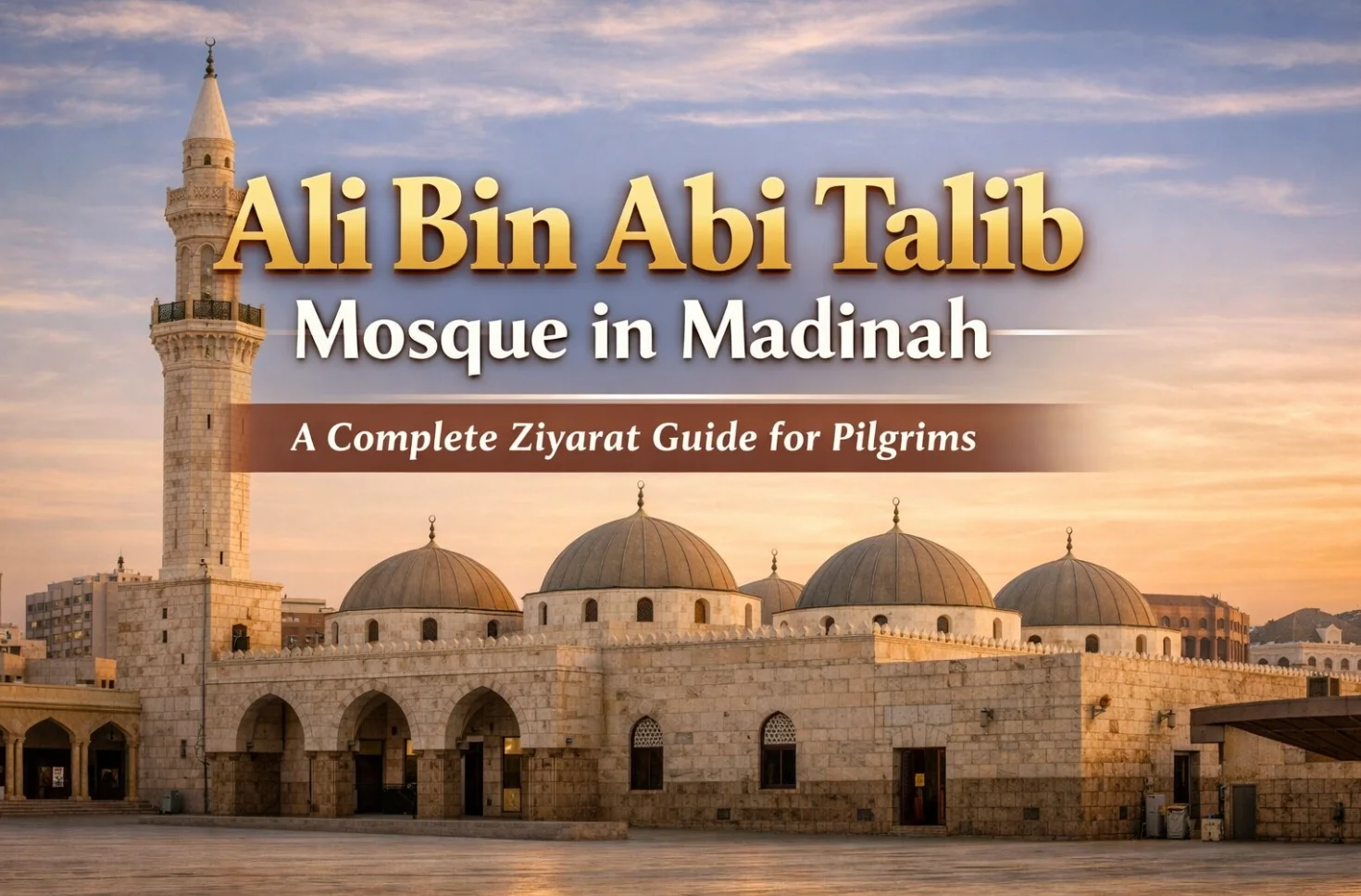
Pilgrims visiting Madinah for Ziyarat often explore several historic mosques located near Al-Masjid an-Nabawi. One of these important sites is the Ali bin Abi Talib Mosque, a mosque connected with the prayer traditions of Prophet Muhammad (PBUH) and the leadership of Ali ibn Abi Talib.
Located in the historic Al-Manakhah area of Madinah, this mosque stands on land where the Prophet ﷺ used to perform Eid prayers and rain-seeking prayers. Later, Ali ibn Abi Talib (RA) also led Eid prayers at this same location, and a mosque was eventually built to preserve the site.
Pilgrims traveling from Makkah to Madinah often visit several historic sites after arriving in the city. Many travelers who book a Makkah to Madinah private car service choose to explore important Ziyarat locations near Al-Masjid an-Nabawi, including the historic Ali Bin Abi Talib Mosque.
Historical Significance of Ali Bin Abi Talib Mosque
The area where the mosque stands today was once part of the open prayer ground known as Al-Manakhah, where the Prophet ﷺ used to gather Muslims for important communal prayers.
Historical reports mention that the Prophet ﷺ performed Eid prayers and Salat al-Istisqa (rain prayer) at several places in this open area.
After the passing of the Prophet ﷺ, Ali ibn Abi Talib continued this tradition and led Eid prayers in the same location during his time as caliph. Because of this connection, a mosque was later constructed on the site and named after him.
The mosque preserves the memory of the companions’ dedication to maintaining the Prophet’s traditions and marks one of the historic locations associated with the communal worship of early Muslims.
Construction and Historical Development
The first formal structure of the mosque was built during the Umayyad period.
When Umar ibn Abd al-Aziz served as governor of Madinah under the caliph Al-Walid ibn Abd al-Malik, he ordered the construction of mosques at locations where the Prophet ﷺ had prayed. This initiative helped preserve many historical prayer sites in the city.
During later centuries, the mosque underwent several restorations:
- It was rebuilt in the 9th century AH by a governor of Madinah after suffering damage.
- The mosque continued to receive attention from various rulers who wished to preserve its historical importance.
- In modern times, the mosque was renovated and expanded during the reign of Saudi kings responsible for the development of Madinah’s historic mosques.
Today, the mosque stands as part of the broader effort to protect important Islamic heritage sites across Madinah.
Location of the Mosque in Madinah
The Ali bin Abi Talib Mosque is located very close to the central area of Madinah, only a short distance from Al-Masjid an-Nabawi.
It sits in the Al-Manakhah district, an area historically known for the Prophet’s prayer ground.
Nearby historic mosques include:
- Al-Ghamamah Mosque
- Abu Bakr Al-Siddiq Mosque
These mosques are located within a short walking distance of each other, making them part of a popular Ziyarat route for pilgrims visiting Madinah.
Ziyarat Route: Mosques Near Masjid Nabawi
Many pilgrims visiting Madinah choose to explore several important Islamic sites located near the Prophet’s Mosque during their Ziyarat.
A typical route may include:
- Al-Ghamamah Mosque: believed to be where the Prophet ﷺ performed Eid prayer.
- Abu Bakr Al-Siddiq Mosque: associated with the first Caliph.
- Ali bin Abi Talib Mosque: connected with the Eid prayers led by Ali (RA).
Because these mosques are located very close to Al-Masjid an-Nabawi, they are often visited together in a single short trip. Among them, the Ali Bin Abi Talib Mosque stands out for its historical significance and simple architectural design.
Architecture and Design of the Mosque
The mosque reflects a simple yet elegant architectural style typical of historic mosques in Madinah.
Key features include:
- A rectangular structure extending east to west
- Several small domes covering the prayer hall
- A central mihrab dome slightly higher than the others
- A courtyard area on one side of the mosque
- A single minaret used for the call to prayer
The mosque is relatively modest in size compared with larger mosques in Madinah, but its architectural design reflects the simplicity and spiritual atmosphere characteristic of early Islamic sites.
Spiritual Importance for Pilgrims
Although the mosque is not among the main pilgrimage obligations of Umrah or Hajj, it remains an important site for those interested in Islamic history.
Visiting the mosque allows pilgrims to reflect on:
- The prayer traditions of Prophet Muhammad
- The leadership of Ali ibn Abi Talib
- The preservation of early Islamic heritage in Madinah
For many visitors, exploring such historic mosques deepens their spiritual connection with the early history of Islam.
Visiting Tips for Pilgrims
If you plan to visit the mosque during your stay in Madinah, consider the following tips:
- Visit During Ziyarat Tours: Many guided Ziyarat tours include this mosque along with nearby historic mosques.
- Walk from Masjid Nabawi: Since the mosque is located near Al-Masjid an-Nabawi, it can easily be visited on foot.
- Dress Modestly: As with all mosques in Madinah, visitors should wear modest clothing and maintain respectful behavior.
- Avoid Prayer Time Crowds: Visiting outside peak prayer times may provide a quieter environment for reflection and exploration.
Why Pilgrims Visit Ali Bin Abi Talib Mosque
Pilgrims visiting Madinah often seek to explore places connected with the life of the Prophet ﷺ and his companions.
The Ali bin Abi Talib Mosque represents one of those special locations where early Islamic history unfolded.
Although small in size, the mosque carries deep historical meaning and remains an important stop for visitors exploring the spiritual heritage of Madinah.

David Weber is an experienced writer specializing in a range of topics, delivering insightful and informative content for diverse audiences.