
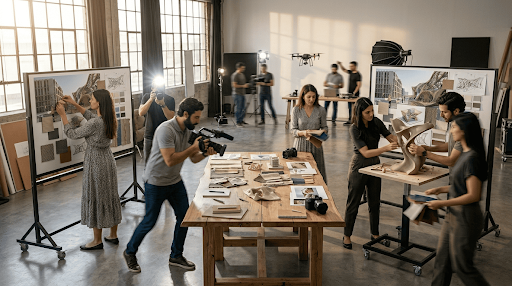
Visual content creation has expanded far beyond static images. Today, teams are expected to produce a mix of visuals, short videos, motion graphics, and campaign-ready assets, often under tight timelines. That shift has changed how people evaluate creative tools.
It’s no longer just about what a tool can generate. It’s about how easily that tool fits into everyday workflows and how quickly it can produce usable content.
When comparing Higgsfield AI Image generator and Runway ML, the focus is not just on features. It’s on how each one supports the full process of creating visual content.
Understanding how Higgsfield AI fits into creation workflows
Tools like Higgsfield AI are built around simplifying the content creation process. Using an ai image generator, teams can move from idea to visual output without needing multiple tools. This directly supports Platform usability.
The key advantage here is how everything is connected. Instead of separating image creation, refinement, and expansion into different tools, the workflow stays in one place. For content teams, this reduces friction and makes the process easier to manage.
What Runway ML is designed for
Runway ML has a different focus.
It is widely known for:
- Video generation and editing
- Motion-based content
- AI-assisted filmmaking tools
- Creative experimentation with media
Runway ML is especially strong when working with video or motion-heavy projects. It offers tools that go beyond static visuals and into dynamic content creation.
This makes it popular among creators working on storytelling, film, or advanced visual projects.
To better understand how both tools differ in real workflows, here’s a quick comparison:
| Feature | Higgsfield AI | Runway ML |
| Core Focus | Image-first creation | Video & motion-first |
| Workflow Style | All-in-one, streamlined | Multi-step, production-focused |
| Ease of Use | Beginner to team-friendly | Moderate (learning curve) |
| Content Type | Ads, visuals, campaigns | Video, storytelling, film |
| Iteration Speed | Fast for images | Slower for full edits |
| Collaboration | Easy for teams | Better for creators/editors |
| Output Readiness | Close to final use | Requires editing workflow |
| Best Use Case | Daily content creation | Video projects & motion design |
Image-first vs video-first approaches
One of the biggest differences between these tools is their starting point.
Higgsfield AI image generator is built around an ai image generator that focuses on creating high-quality visuals first and then expanding them into other formats.
Runway ML, on the other hand, starts with video and motion as its core strength.
This creates two different workflows:
- Image-first → build visuals, then expand
- Video-first → create motion, then refine visuals
Neither approach is better in every case, but they serve different needs.
Ease of use in everyday content creation
For most content teams, ease of use is a major factor. Higgsfield AI keeps the process simple. The ai image generator is designed so users can create visuals quickly without dealing with technical complexity.
Runway ML offers powerful tools, but the interface and features can feel more complex, especially for beginners. For teams that need to produce content regularly, simplicity often leads to better efficiency.
Speed of producing usable content
Speed matters when working on campaigns or daily content. Higgsfield AI focuses on producing visuals that are close to final output. This reduces the time needed for adjustments.
Runway ML is powerful, but creating polished results may require more steps, especially when working with video timelines or editing tools. For teams under time pressure, fewer steps can make a noticeable difference.
Expanding content into multiple formats
Modern content strategies often require multiple formats.
A single idea might need:
- Social media visuals
- Short videos
- Campaign creatives
Higgsfield AI image generator allows users to expand visuals into video within the same workflow, which keeps everything connected.
Runway ML excels in video creation, but generating initial visual assets may involve additional steps or tools. This creates a difference in how easily content can move across formats.
Collaboration across content teams
Content creation is rarely done by one person. Teams often include marketers, designers, and content strategists. An ai image generator that is easy to use allows more team members to contribute. Higgsfield AI supports collaboration by keeping the process accessible.
Runway ML, while powerful, may require more familiarity with video tools, which can limit participation to certain team members.
Managing ongoing content production
Content production is not a one-time task. It’s ongoing. Teams need tools that can support regular output without increasing complexity.
Higgsfield AI allows teams to generate visuals quickly and consistently, which supports continuous production.
Runway ML is strong for specific types of projects, especially video-heavy ones, but may require more effort for everyday content needs.
Learning from content workflows
Many teams explore content workflow systems to improve efficiency and reduce unnecessary steps.
Tools that simplify workflows tend to integrate better into these systems.
Higgsfield AI aligns well with streamlined workflows because it reduces steps. Runway ML aligns better with workflows that involve more complex production processes.
When each platform works best
The choice between these tools depends on the type of content you create.
Higgsfield AI works better when:
- You focus on image-based content
- You need fast, usable visuals
- You want a simple workflow
- You produce content regularly
Runway ML works better when:
- You focus on video or motion content
- You need advanced editing tools
- You are working on storytelling or filmmaking
- You are comfortable with more complex workflows
Both platforms are valuable, but they serve different purposes.
Balancing creativity and usability
Every creative tool needs to balance two things:
- Creative flexibility
- Practical usability
Higgsfield AI leans toward usability. It helps teams create and use content quickly. Runway ML leans toward creative flexibility, especially in video production. The right balance depends on your workflow.
Final thoughts
Higgsfield AI and Runway ML are both powerful, but they approach visual content creation from different directions.
One focuses on simplifying workflows and producing ready-to-use visuals. The other focuses on expanding creative possibilities, especially in motion and video.
Platform usability is not just about features. It’s about how easily a tool fits into your daily work. For teams that need speed, simplicity, and consistent output, Higgsfield AI offers a more practical solution.
For teams focused on video storytelling and advanced creative projects, Runway ML remains a strong choice. Choosing the right tool depends on what kind of content you create and how you prefer to create it.

David Weber is an experienced writer specializing in a range of topics, delivering insightful and informative content for diverse audiences.