
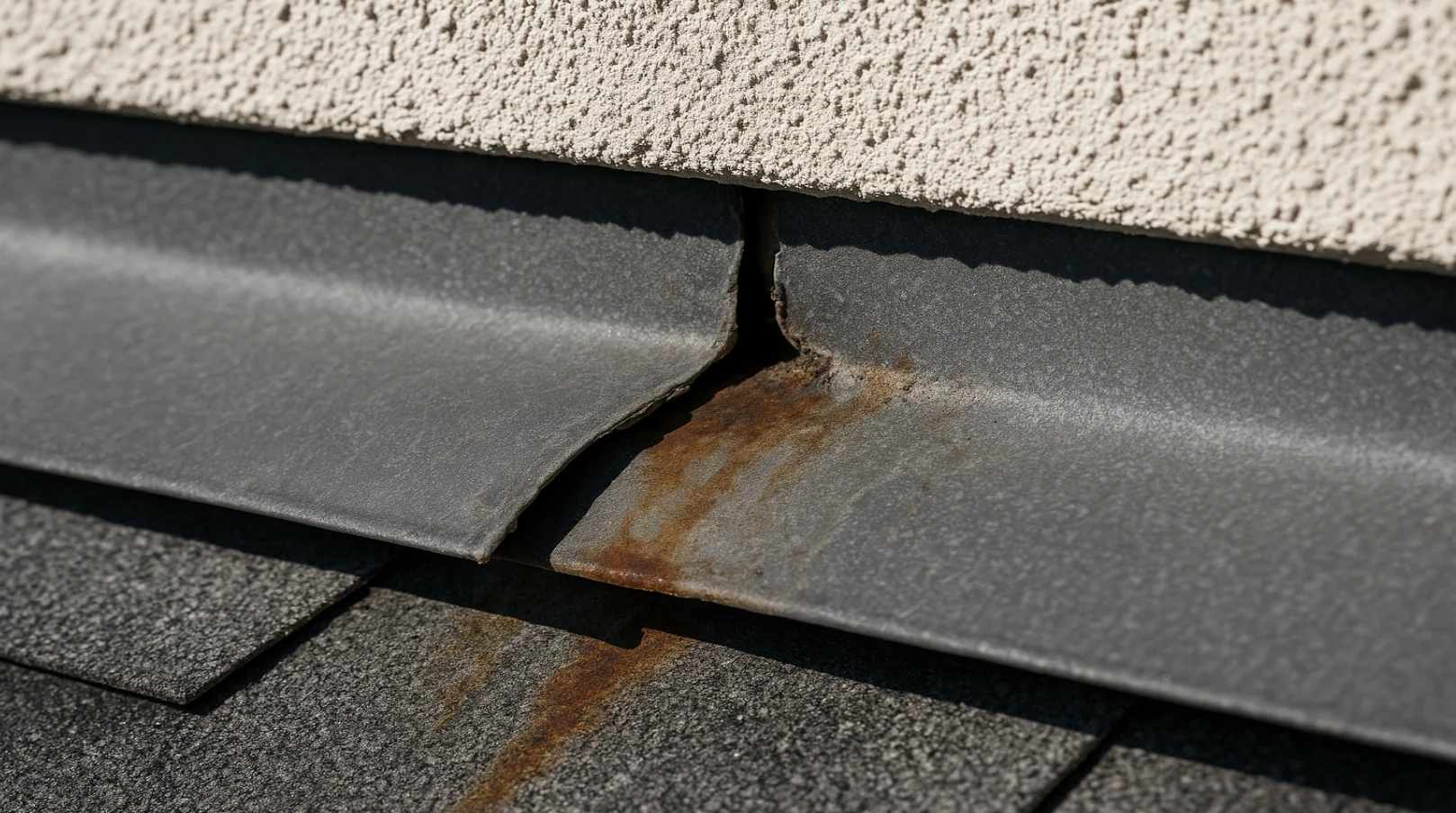
A home’s roof works as the first line of defense against rain, wind, and harsh weather. Many homeowners focus on shingles but overlook the thin metal strips that seal the most vulnerable areas of a roof. These metal strips sit at every joint, edge, and transition point where water could sneak through.
Many homeowners search for what is flashing on a house?Flashing is a situation in which a small crack or gap in can lead to serious water damage inside the home. This article covers more things about flashing failure near roof lines.
Roof Line Leak
Water stains on ceilings or walls near a roof line are one of the earliest signals that something has gone wrong. Discoloration, peeling paint, or damp spots inside the attic also point to a possible breach.
Homeowners who want a clear answer to what is flashing on a house should know it refers to the thin, waterproof metal material placed at roof joints to stop water from seeping through. When that material fails, moisture finds a direct path into the home’s structure. Rust-colored streaks running down exterior walls near a roofline are another sign that metal has started to corrode.
Visible Damage Around Roof Edges
A close look at roof edges can reveal several clear signs of failure that a homeowner can spot from the ground or from a ladder. Several visible clues indicate that the protective metal strip has been compromised.
- Rust spots or orange staining on the metal surface show that moisture has been sitting long enough to cause corrosion.
- Bent, warped, or lifted metal sections along the edge signal that fasteners have pulled away or adhesive has failed.
- Visible gaps between the metal and the roof surface allow water to flow directly beneath the material.
- Cracked or missing caulk lines around joints expose the seam to direct rain exposure.
Interior Signs of Water Entry
The inside of a home tells a clear story about what is happening above the ceiling. Attic spaces are one of the first places to check after heavy rainfall because moisture collects there before it ever reaches a living area. Brown rings or bubbling paint on upper-floor ceilings point directly to water that has found a path through a roof joint. Musty smells in rooms located beneath a roofline can indicate mold that has already started to grow inside wall cavities or insulation.
Interior warning signs that should prompt immediate action include the following:
- Water drips or wet insulation in the attic after rain confirm active moisture entry.
- Dark staining along attic rafters or sheathing shows that water has traveled along wooden surfaces for some time.
- Soft or spongy sections on upper-floor ceilings suggest rot has begun inside the structure.
- A sudden spike in indoor humidity near a roof-adjacent wall can signal hidden moisture accumulation.
When to Call a Roof Professional
A roof expert should check metal seal strips after visible damage appears. A professional can inspect joints, edges, and roof lines for hidden gaps. Early repair costs less than interior repair work. Mold and wood rot can spread when leaks remain untreated. A roof expert can replace damaged metal strips and reseal joints. Timely home renovation helps protect the home structure and interior areas.
Roof edge seal failure can lead to serious home damage when ignored. Early signs such as stains, rust, cracks, and loose metal help detect problems fast. Regular roof checks and timely repair help protect interior spaces from water damage. A roof professional can inspect problem areas and repair damaged sections. Proper roof protection helps maintain home value and prevents costly structural repairs.

David Weber is an experienced writer specializing in a range of topics, delivering insightful and informative content for diverse audiences.