
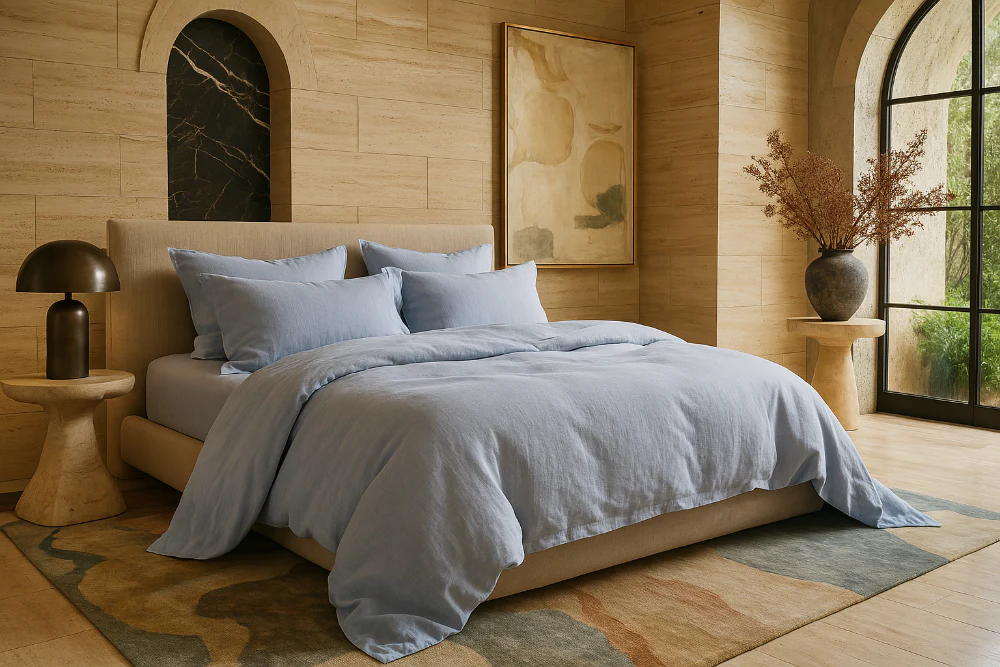
The experience of slipping into a well-made bed goes beyond comfort; it reflects the materials, craftsmanship, and attention to detail behind every thread. Bed linen has evolved from a basic household necessity into a refined expression of quality and lifestyle. The way fabric is constructed, the type of fibers used, and the weaving techniques applied all contribute to how sheets feel, last, and perform over time.
Appreciating these elements allows for a deeper understanding of why some linens feel smooth and breathable while others feel dense or textured, which shapes the overall sleeping experience.
What Defines Quality Linen
- The Role of Thread Count in Fabric Performance
Thread count is often the first feature people notice when evaluating bed linen, yet its meaning is frequently misunderstood. It refers to the number of threads woven into one square inch of fabric, combining both vertical and horizontal strands. While higher thread counts are commonly associated with softness, the reality is more nuanced. Extremely high counts may involve thinner, multi-ply threads that can compromise durability.
A balanced thread count, paired with high-quality fibers, produces a fabric that feels smooth without becoming heavy or restrictive. The interaction between thread density and fiber quality ultimately determines how breathable and long-lasting the linen will be, ensuring that comfort is maintained night after night without unnecessary stiffness.
- Fiber Selection and Its Influence on Texture
The type of fiber used in bed linen construction plays a central role in determining how the fabric feels against the skin. Cotton remains a widely favored option due to its natural softness and breathability, while long-staple varieties create smoother, more refined surfaces. Linen, derived from flax, offers a slightly coarser texture but improves with use, developing a relaxed softness over time. Silk introduces a glossy finish and a gentle touch, often associated with temperature regulation.
The combination of fiber type and thread construction shapes how fabrics behave in different environments. In many premium bed linen collections, careful fiber selection ensures that softness is balanced with resilience, allowing the material to maintain its structure even after repeated washing and daily use.
- Weaving Techniques and Their Impact on Feel
Weaving techniques determine how threads are interlaced, influencing not only appearance but also texture and durability. Percale weave, characterized by a simple one-over-one pattern, produces a crisp and matte finish that feels lightweight and breathable. Sateen weave, on the other hand, uses a different structure that exposes more of the thread surface, creating a smoother, slightly lustrous feel. Twill weaves introduce diagonal patterns that add strength and subtle texture.
Each method affects how the fabric drapes, reacts to movement, and retains warmth. The choice of weave reflects both functional needs and personal preference, as some individuals prefer the coolness of percale while others appreciate the gentle sheen of sateen.
- Durability and Longevity Through Construction
Durability in bed linen is closely tied to how the threads are spun and woven together. Single-ply yarns, made from long fibers, tend to produce stronger, smoother fabrics than multi-ply alternatives that twist shorter fibers together. Tight, even weaving enhances resistance to wear, preventing pilling and thinning over time. Finishing processes such as combing and mercerization further refine the texture while improving strength.
Properly constructed linen maintains its integrity through regular washing, retaining both its softness and appearance. Investing in well-made fabric means fewer replacements and a more consistent sleeping experience, as the material adapts to use without losing its original qualities.
- Breathability and Temperature Regulation
Comfort during sleep is heavily influenced by how well bed linen manages airflow and moisture. Fabrics with balanced thread spacing allow air to circulate, preventing heat from becoming trapped. Natural fibers such as cotton and linen are particularly effective at absorbing moisture and releasing it, helping regulate body temperature throughout the night.
Weaving style also contributes to this performance, as tighter weaves may retain warmth while looser structures encourage ventilation. The interaction between fiber type, thread count, and weave determines whether the fabric feels cool and crisp or warm and enveloping. Selecting linen that aligns with climate and personal comfort preferences ensures a restful environment that adapts to changing conditions.
- The Balance Between Softness and Structure
Achieving the ideal balance between softness and structure requires careful consideration of multiple factors. Fabrics that are too soft may lack durability, while those that are overly structured can feel rigid and uncomfortable. The finishing techniques applied after weaving, including washing and brushing, help refine the surface without weakening the fabric.
Over time, high-quality linen often becomes softer while maintaining its shape, offering a combination of comfort and resilience. This balance is what distinguishes thoughtfully crafted bed linen, allowing it to provide both immediate comfort and long-term satisfaction without compromising either.
Understanding thread quality and weaving techniques offers valuable insight into what makes bed linen feel comfortable and last over time. Rather than focusing on a single feature, it becomes clear that multiple elements work together to shape the final product. Thread count, fiber selection, weaving style, and finishing processes all contribute to how fabric performs in everyday use.
Recognizing these factors helps in making informed choices that align with personal comfort and durability expectations. Well-crafted linen enhances not only sleep quality but also the overall atmosphere of a bedroom, reflecting attention to detail and an appreciation for materials that stand the test of time.
