
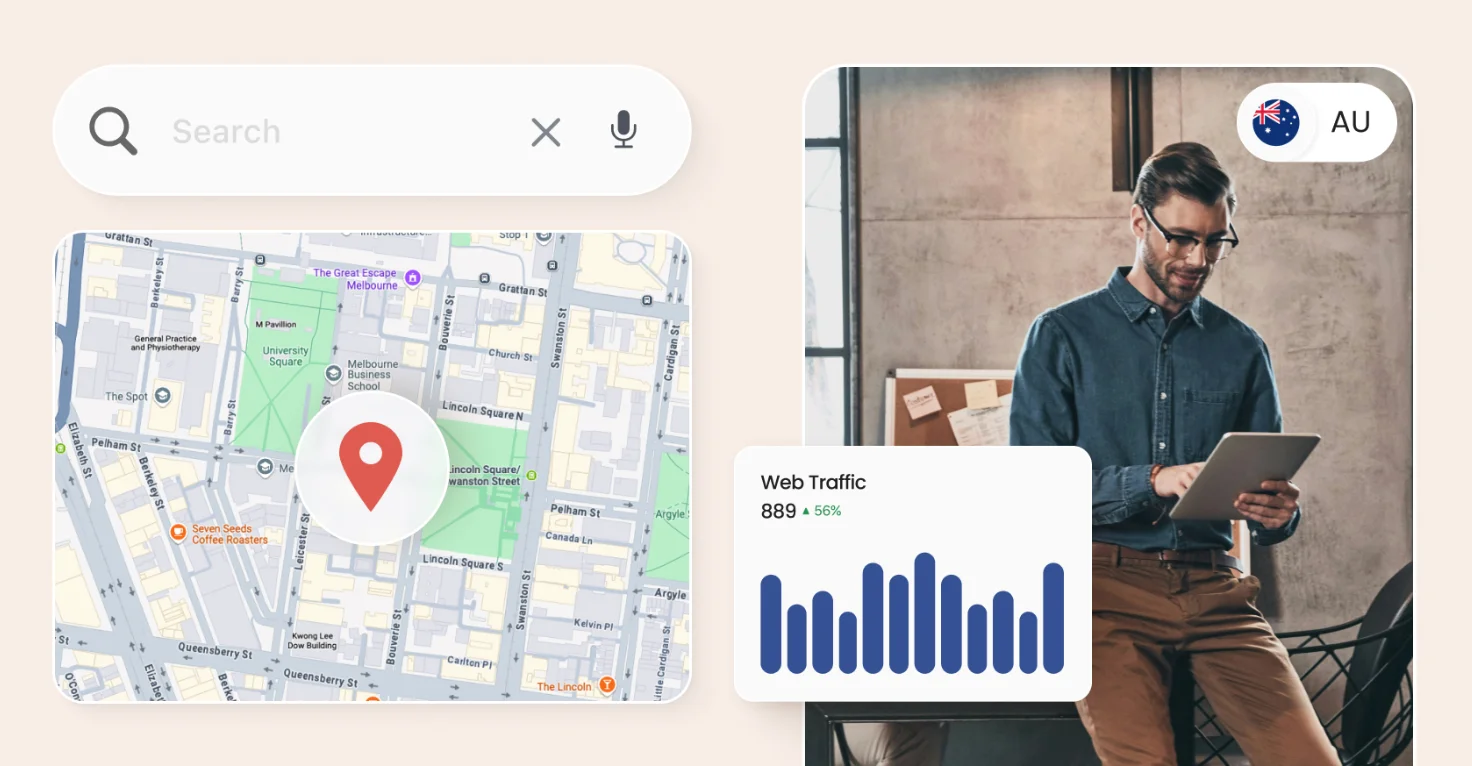
Local SEO is often described as a scaled-down version of regular SEO, but that view misses what actually makes it difficult. Local search does not just reward a business for having a decent website and a list of services. It weighs how well that business matches a local query, how close it is to the searcher, and how prominent it appears in the market. Google states that local results are mainly based on relevance, distance, and prominence, and that there is no way to request or pay for better local rankings.
That is exactly why businesses often get better results from Melbourne SEO specialists than from national firms running the same formula across every city. The difference is rarely about access to a secret ranking trick. It is about understanding how local intent behaves in real suburbs, how searchers refine service needs by area, and how Google’s local systems reward businesses that present clearer local signals. Google itself says that complete and detailed Business Profile information helps relevance, which means local visibility is heavily shaped by precision, not just broad authority.
Local Search Is Built on Geography, Not Just Keywords
A national agency can be very strong at broad SEO and still underperform in local search because local search is more sensitive to geography than many teams realise. Distance is an explicit ranking factor in Google’s local results. If the searcher does not share their location, Google uses what it knows about the user’s location to judge proximity. That means rankings can shift dramatically across Melbourne depending on where the search originates, even when the query wording stays the same.
This is one of the first patterns local operators usually understand better. Melbourne search behaviour is rarely one-city, one-keyword. Users often layer intent around suburb names, service areas, landmarks, travel convenience, and urgency. A national template that targets “Melbourne” only at city level may miss the way local demand actually fragments across inner suburbs, eastern corridors, bayside areas, and outer growth zones. The algorithm may be the same, but the local ranking pattern is not. That pattern is shaped by where the searcher is standing, what service wording they use, and how clearly the business has signalled relevance to that part of the market.
Category Precision Matters More Than Many Agencies Think
Another point local specialists tend to handle better is category accuracy inside Google Business Profile. Google states plainly that business categories help customers understand what a business does and that those categories affect local ranking. It also recommends choosing the most specific primary category possible rather than a vague general one.
That matters because many national agencies default to broad positioning. They may describe a business well enough in website copy, but still leave its category strategy too generic. In local search, that can weaken relevance. A precise category choice can help a business surface for the right service intent, while a vague or overloaded setup can dilute the signal. Melbourne-focused specialists tend to spot these issues faster because they look at the search landscape through a local-service lens first, not a national content-production lens.
The Best Local SEO Is Usually About Completeness, Not Cleverness
Google says that to help it understand a business and match it to relevant searches, businesses should provide complete and detailed information. Google also advises businesses to claim and verify their Business Profile so they can manage how they appear in Maps and Search, including address, contact information, business type, and photos.
This is one of the most overlooked local patterns. National firms sometimes push hard on blogs, backlinks, or generic city pages while leaving local entity signals underdeveloped. A local specialist is more likely to notice gaps in profile completeness, services, hours, location details, photo freshness, and business description clarity because those elements directly affect how well the business fits local queries. It is not glamorous work, but it often has more local impact than publishing another broad article no one in the area is actually searching for.
Website Signals Still Matter, but They Need Local Context
Local SEO is not only about Google Business Profile. Google’s Search Central documentation says businesses should establish their official website with Search Console and provide business details that help Google connect the official site, location, and business information across Search results, Maps, and the knowledge panel.
That connection matters because local rankings are strengthened when the business entity and the website reinforce each other. A Melbourne-focused SEO team is more likely to align page targeting, local service language, conversion intent, and geographic relevance in a way that supports both organic visibility and local map presence. National firms often understand page optimisation in general, but they may underplay how much a local landing page has to mirror real local demand rather than just repeat “Melbourne” in headings.
The same applies to structured data. Google says LocalBusiness structured data can help provide details such as opening hours, departments, and other business information that may appear in Search or Maps experiences. It also recommends validating that markup and checking how Google sees the page before rollout. Local specialists usually treat that as part of a broader local entity strategy rather than an isolated technical task.
Search Console Reveals Local Patterns National Teams Often Overlook
Google’s Performance report in Search Console shows which queries bring impressions and clicks, which pages earn the highest and lowest CTR, which searches happen on mobile devices, and how query performance changes over time. Google also notes that results can vary by time, place, device, and recent search history, which is especially important in local search.
That is highly relevant to Melbourne SEO. A local team is more likely to use Search Console to identify suburb-modified demand, non-branded service queries, and location-driven CTR gaps that a national dashboard may flatten into generic keyword trends. They will also tend to care more about mobile local intent, because local search often happens on the move and under immediate commercial intent. When a page has impressions but weak CTR for location-based searches, that often points to a mismatch between how the business describes itself and how local users actually search. Google specifically says low CTR pages may need stronger titles, snippets, or better alignment with the queries triggering them.
Melbourne-Specific Relevance Is Not the Same as “One City Page”
This is where many national campaigns become too shallow. They create a single Melbourne page and assume that local coverage is done. But the local algorithm does not reward token geography. It rewards strong matches. A specialist working close to the market is more likely to recognise that service intent differs between suburbs, that some locations need separate landing pages while others need service-area clarity, and that not every page should target the city the same way.
Google’s own local ranking guidance reinforces that stronger relevance comes from clearer business detail. In practice, that means a well-built local SEO strategy should reflect how real customers describe problems, where they expect service availability, and how the business genuinely operates in Melbourne. Local specialists generally understand that difference faster because they see the city as a collection of search micro-markets, not one catch-all label.
Why This Gap Matters Commercially
The businesses that win local search are usually not the ones with the biggest generic SEO footprint. They are the ones with better local fit. They give Google precise categories, complete profile information, clear website signals, validated business details, and landing pages that align with how nearby customers search. They also monitor real query behaviour instead of relying on city-level assumptions.
That is what national firms often miss. They may be good at SEO systems, but local algorithm patterns reward context, accuracy, and geographic nuance. Businesses looking for an SEO expert should care less about who promises the most rankings and more about who understands how Melbourne search demand actually behaves. That local-first discipline is what separates templated optimisation from competitive local growth.

David Weber is an experienced writer specializing in a range of topics, delivering insightful and informative content for diverse audiences.