
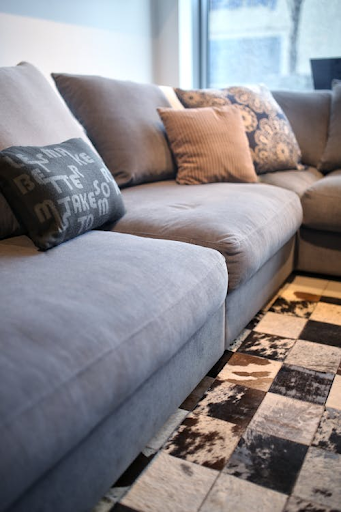
Most people vacuum their floors, wipe down their benches, and wash their sheets regularly. The sofa, though? It gets a cushion fluff and maybe a quick wipe if something spills on it. That is about it for most Auckland homes. Upholstery cleaning rarely makes the regular chore list, which is perhaps why sofas tend to be one of the dirtiest surfaces in the house, even when they look perfectly fine.
Think about how much time your family spends on the sofa. Eating, watching TV, letting the dog out after a walk, kids doing homework, maybe the odd nap. All of that adds up. Skin cells, food particles, pet dander, dust, and body oils build up in the fabric over time. You cannot always see it, and without regular upholstery cleaning, that is partly what makes it so easy to ignore.
What Is Actually Living in Your Sofa Fabric
Here is why that buildup matters more than most people realise.
Dust mites thrive in soft furnishings. Asthma New Zealand lists dust mites as one of the leading triggers for asthma and allergic rhinitis in the country. They feed on dead skin cells, and your sofa collects those by the thousands every single day. If anyone in your home has a cough that lingers, itchy eyes, or wakes up congested, the sofa could be a contributing factor.
Pet owners have an added layer to think about. Pet dander is not just the hair you can see. It is microscopic proteins shed from skin and saliva, and they get embedded deep in fabric fibres. Regular vacuuming picks up surface hair, but it does not remove what has settled below the surface. Over months, the concentration builds.
What Your Sofa Accumulates Between Cleans
Here is what a typical sofa accumulates between cleans:
- Dead skin cells and body oils from daily use
- Food and drink residue, including dried spills that were “dealt with” at the time
- Pet dander and hair, including from pets that are not allowed on the furniture but occasionally sneak up anyway
- Dust mite colonies that grow in warm, soft environments
- Bacteria are transferred from hands, clothing, and shoes.
A University of Arizona study found that the average household sofa contains more bacteria per square inch than a toilet seat. That finding tends to get people’s attention.
Now, that does not mean your home is unclean. It means upholstery requires a different kind of cleaning than most people give it. Wiping surfaces and vacuuming floors does not touch what is living inside the fabric.
Why You Should Avoid DIY Sofa Cleaning
Here is the part where DIY cleaning gets complicated. Most upholstery fabrics have a cleaning code attached, usually found on a label under the cushion. The codes tell you whether the fabric can handle water-based cleaners, solvent-based cleaners, or needs dry cleaning only. Many homeowners skip this step entirely and apply whatever spray is available. Some fabrics shrink when wet. Others bleed colour. Velvet and certain microfibers can mark permanently if scrubbed incorrectly.
The other common mistake is over-wetting. Applying too much liquid soaks through to the padding inside the sofa. That inner padding takes a long time to dry, and in Auckland’s humidity, it can develop mould before it ever dries out completely. You end up with a sofa that smells fine on the surface, but has a mold problem you cannot see.
How Professional Upholstery Cleaning Works
Professional upholstery cleaning works differently. A trained technician checks the fabric type and cleaning code before choosing any product. Pre-treatment loosens the built-up soiling without harsh scrubbing. The extraction process pulls out what is deep in the fibres, including allergens, bacteria, and residue from previous DIY attempts. And because professional equipment extracts far more moisture than a home machine, drying time is much shorter.
The IICRC, which sets standards for textile cleaning globally, recommends professional upholstery cleaning at least once a year for regularly used furniture. Homes with pets, young children, or allergy sufferers may need it more often, perhaps every six months.
How Regular Cleaning Extends the Life of Your Furniture
There is also the question of how long you want your furniture to last. A sofa is not a cheap purchase. Regular professional cleaning removes the abrasive particles that wear down fabric fibres over time. Furniture that gets proper care lasts noticeably longer than furniture that does not.
Some people put this off because they assume the sofa will be out of action for days. That is rarely the case with professional equipment. Most upholstered pieces dry within a few hours when cleaned properly.
Ecosan Solutions has been cleaning upholstery in Auckland for over 25 years. They use environmentally friendly cleaning products that are safe to use around the family and pets. They also inspect all fabrics to ensure the correct cleaning technique is used every time. No guesswork, no fabric damage, no cleaning residue to attract dirt in a week’s time.
If your sofa has not had a proper clean in the last year or longer, it is worth getting it looked at. Call 0800 326 726 or fill out the online form for a free quote.
