

In 2026, the company you manage and its perspectives for positive, long-term financial development will be largely affected by the IT measures you have in place, and by the external help you benefit from. Why should you utilize commercial IT services instead of handling your firm’s technological infrastructure in-house? It’s all about the complexity of the operations expected from your employees, and how much time you can take away from the other departments of your organization that require your direct input.
In the business world, time is our greatest commodity. In fact, one of the first things I soon came to realize when I started my online business was how much of its potential success is directly tied to my willingness to work for longer hours and spend a couple more minutes per task, for proper polishing. But all the time you need to spend on the research and development of your products and services will, in turn, make you less available to deal with your system’s IT infrastructure and to handle issues that risk affecting the stability of your venture.
Handling IT internally can work, at first. But as we all discover at some point, it only takes one cyberattack or a prolonged period of downtime to erase in one hour the reputation work that has taken months to grow. Commercial IT services are not free. But, when considering that they can significantly reduce the likelihood of technical errors characterized by downtime, and that they can discover avenues for increasing the productivity of your employees, they will, eventually, pretty much pay for themselves.
A Convenient Choice
Personally, I think hiring a provider of commercial IT services was the best thing I could’ve done for my past business, and it’s one of the main reasons why it developed to a level at which it was financially sustainable. Yes, just like me, you probably know how to format a new PC, install a couple of SSDs, deal with a NAS with an improper RAID configuration, or handle the troubleshooting of work machines. What you don’t have, however, is time.
Yes, you know how to troubleshoot a Windows-boot issue, or you know your way around a BIOS. But do you have the free time required to handle the IT requests of all your employees? What happens with the other tasks, essential for the long-term development of your company, that are dependent on your expertise? A firm that provides commercial IT services will not just put you in touch with a single IT expert. No, it will connect you with an entire team of specialists, with experience in cloud architecture, cybersecurity and network management.
Round-The-Clock Support for Worry-Free Workdays
Oftentimes, the worst of IT issues, with a long-term effect on business downtime, happen outside of your work hours. What happens if you are subjected to a cyberattack, your data gets stolen, but there is no one at work ready to implement your disaster recovery procedures? Outsourced, fully-managed IT services are ideal for scenarios like this, as your systems will be monitored 24/7, and each issue encountered will be dealt with swiftly and decisively.
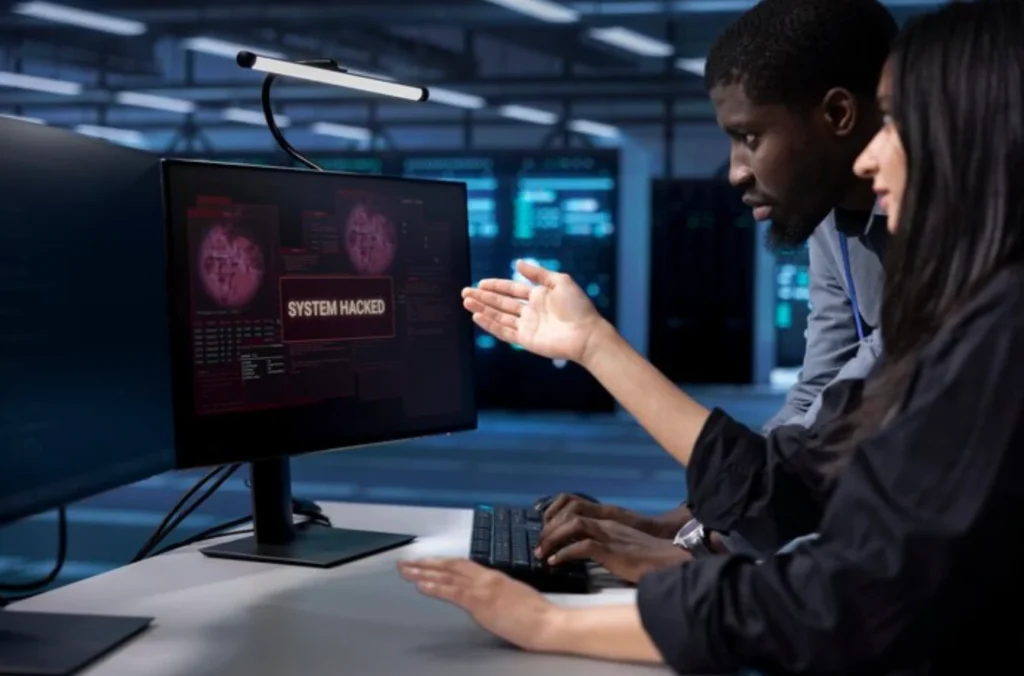
The services provided by external IT workers could allow you to focus on your core business activities and leave the management and deployment of security patches and server maintenance in the hands of professionals with years of experience under their belt.
Adhering to strict industry regulations is another area where professional oversight is invaluable, as technical infrastructure must align with legal data protection standards. Maintaining this level of internal oversight can be difficult for growing businesses that lack a dedicated legal and technical team. Integrating expert compliance management in Miami FL helps local organizations navigate these complex requirements while protecting sensitive client information from potential leaks. By delegating these responsibilities to specialists, a company can ensure its digital processes remain transparent and ethically sound, which supports long-term stability and builds trust with stakeholders and customers alike.
Commercial IT services providers can implement proactive measures on your infrastructure, deal with issues before they have a chance to affect the downtime of your website, and optimize your systems regularly, for any modifications that can have an impact on your venture’s market presence.
What Services Will They Provide?
The services provided by outsourced IT providers depend on 1) the specialization of the firm you’re dealing with, and 2) the characteristics of your company and the industry in which you are present. For my past business, for example, the services provided by the IT collaborator we’ve hired were divided into three categories: Infrastructure management, helpdesk support, and cybersecurity.
The IT worker with whom you work with will handle the management of your network’s infrastructure, migrate your offline, encrypted data to the cloud, develop storage solutions personalized for the characteristics of your business, and of course, deal with proactive maintenance, and identify issues in your systems long before they have a chance of resulting in extensive downtime with negative ROI ramifications.
Constant Support for Continuous Business Growth
A provider of commercial IT services should have no problem in providing round-the-clock technical support for your internal departments, monitoring your systems close to real-time, performing remote troubleshooting and fixes for the errors encountered by your employees and implementing firewall and intrusion detection systems, necessary for increasing the overall security of your online data.
Not least, outsourced IT workers should have no problem in providing training to your staff, handling the repairs of your systems, and setting up your Wi-Fi systems. They can deal with a lot of the operations that make or break the long-term development of well-established businesses. Are you based in DC, and do you want to compete with national-level businesses active in the same industry as you? Then, you will need to prioritize those activities for which you can contribute directly. So, it would be best to leave your venture’s IT operations in the hands of specialists.

We All Have Our Limits
One of the main reasons why we’ve decided to go for commercialized IT services at our past company was because our knowledge was limited, and while we knew how to handle our work machines, we were worried about the long-term impact of our lack of IT prowess on the performance of our business. We operated on home-user IT level, but the external workers with whom we collaborated were familiarized with advanced digital operations, which, at the time, were outside our reach.
From implementing EDR/XDR systems across all our work devices to using advanced SIEM systems, the IT workers we hired were experienced in conducting operations that were currently too advanced for my colleagues and me. Was there a chance of us learning, with time, how to conduct these operations internally? Sure, we are fast learners.
But using managed services was simply more convenient than relying on our skills alone. Plus, with time, the stability of our venture’s IT framework started to result in more clients and better business contracts. So, you can say in a way that the services of the workers we hired pretty much paid for themselves.

David Weber is an experienced writer specializing in a range of topics, delivering insightful and informative content for diverse audiences.