
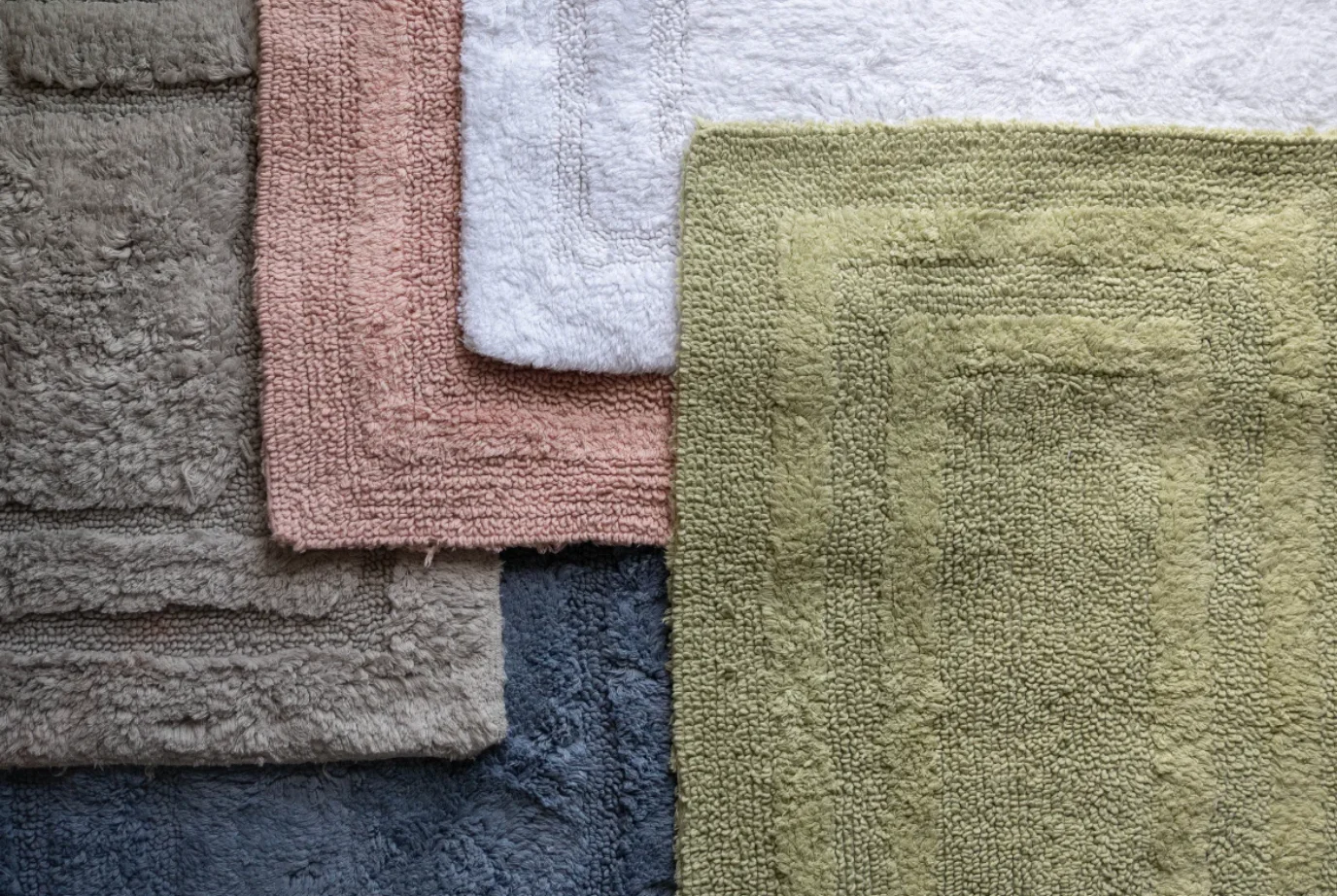
The moment you step out of the shower, the one thing you definitely want to avoid is stepping onto a cold, hard, and slippery floor. A quality bathmat can do more than just keep your tile safe additional warmth, comfort, and safety is added to one of the most used rooms in your house. The question, however, remains: natural or synthetic?
Deciding on natural or synthetic bath mats is not simply a matter of style. It also has implications for longevity, ease of maintenance, comfort underfoot and the environment. This review will explain all you need to know in order to make the right decision for your bathroom.
What Are Natural Bath Mats?
Natural bath mats are produced from natural fibers of animal and plant origin. These can be made from a variety of natural and renewable fibers such as wood, bamboo, cork, jute, and cotton. These articles have remained in usage so long because they are comfortable, efficient, and readily biodegradable.
- Cotton: Soft, super absorbent and easy to toss in the washing machine. Egyptian cotton and Turkish cotton are some of the better varieties of bath mats and these are known for their luxuriously plush feel as well as their superior moisture-wicking. The cotton bath mats are available as tufted, woven or looped pile types and offer great versatility.
- Bamboo: Provide a clean, spa-like appearance. As bamboo is also a naturally anti-bacterial and moisture resistant material, it is also a wise choice for that humid bathroom environment. However, it is firmer under foot than cotton.
- Jute and sisal: Add a earthy, organic feel to the space. Attractive, but not as durable to water than cotton or bamboo, they are more suited to powder rooms or drier applications.
- Cork and Teak: Practical for moist surfaces such as shower floors. As they are naturally resistant to fungi, mould and mildew, they are suitable for bathroom applications. They are best used in areas that can be replanted from renewal sources.
Introduction to Synthetic Bath Mats
Synthetic bath mats are made of synthetic fibers which are manufactured by chemical processes. The commonest material used are polyester, nylon, microfiber and memory foam.
- Polyester: One of the most popular fibers for bath mats, polyester is all so resilient, colorfast and comes in every color and texture that you can dream of! It dries faster than cotton, too!
- Nylon: Very similar to the properties of polyester but tends to be a stronger fabric, more long-lasting and retains its shape well. It is stain resistant and easy to wash.
- Microfiber: A soft, premium, synthetic fibre that provides high absorbency. Microfiber bath mats are extremely soft, look indulgent and offer fast drying times. This helps to inhibit the development of mould and mildew.
- Memory foam: Have become very popular, simply for their padding. The foam will cushion your feet when you step out of the shower and are especially favored by those who spend a long time at their bathroom sink. Most memory foam mats feature a moisture-resistant polyester or microfiber cover.
Key Differences: Natural vs Synthetic
Knowing these two types as they relate to important factors will better allow you to determine which option is best in your case.
Absorbency and Drying Time
Natural fibers, such as cotton, will readily absorb Water from a wet sole. They are also, however, likely to retain these moisture for longer, and therefore take longer to dry between wearing. If the bathroom were very humid with inadequate ventilation, this could cause a build up of Mould if the mat were not washed frequently.
Turning to fibers, most synthetic fibers (again microfiber and polyester in particular) take up and give up moisture extremely rapidly and dry far more quickly. Although it won‘t dry faster, it is suited to a bathroom which gets high use and/or receives limited airflow.
Durability and Longevity
As a rule, natural fibers are less durable than synthetic fibers, especially when subjected to washing. Nylon and polyester, for instance, can withstand 20 or more wash cycles before losing strength through fiber fatigue, whereas natural materials are more likely to become weak when washed repeatedly and detergent or heat may accelerate this process.
However, quality natural materials such as We agree that synthetic materials tend to wear down faster than natural ones. They don‘t last as long and need more time and care. Wood or bamboo can endure for many years with very little upkeep and can wear longer than artificial alternatives.
Comfort and Feel
Which is where natural materials have an advantage. When it comes to cotton the plushness of tufted cotton, in particular can be hard to beat when it comes to synthetic. So if cosiness and barefoot comfort is what you are after, natural will tend to be the way to go.
However, synthetic options have made huge progress. Microfiber- and memory foam-mats can be extremely plush feeling, so the difference in comfort can be greatly reduced.
Eco-Friendliness
All-natural bath mats, whether they are produced from bamboo, organic cotton, or cork, are biodegradable, and usually are made via greener production methods. To environmentally-minded consumers, this is always a bonus.
Most synthetics are made from petroleum based products and won‘t break down, but a lot of brands now use recycled polyester (rPET) made from used plastic bottles. Follow the link for more information. If you‘re concerns are more for sustainability, then look for a certification of OEKO-TEX(R) or GOTS. For custom eco-friendly bath mats, check Miracle Custom.
Maintenance and Care
Cotton and most natural mats can be machine washed, though they may need to be washed more frequently than natural rugs or mats to avoid odor and mildew. Some natural mats such as jute or teak need to be washed by hand or spot cleaned.
Synthetic mats are easy to maintain. Many can be machine washed multiple times without losing their shape or become matted or hard, and most are stain resistant, simplifying the cleaning process.
Choosing by Bathroom Type
Make sure you take into consideration the individual circumstances of your bathroom as well as your requirements.
- High-humidity bathroom: Equipped with fast drying synthetic mats or natural mold resistant types including bamboo and teak.
- Lavish master bathrooms: Ideal homes for plush cotton tufted mats that can make the owner feel that they are luxuriously pampered.
- Kids bathrooms: Need hardwearing and stain resistant synthetic mats, suitable for lots of wear and tear and multiple washes.
- Eco-friendly homes: Look for certified organic cotton or sustainably sourced bamboo or cork mats.
- Smaller and less ventilated bathrooms: Microfibers or memory foam dries much faster.
Material Spotlight: Tufted Bath Mats
Fighting the Amazonian temptation are a helpful range of more eco friendly styles, such as the tufted bath mat. This is part of the more natural/synthetic hybrid, as tufted mats are made by looping or cutting yarn through a backing material creating a thick, textured pile. The material of this pile is vital in determining how it performs and feels.
To explore a little more in depth about the relative performance of these two fibers in this case study, have a look at our guide on [Polyester vs. Cotton Tufted Bath Mats] where we discuss everything from feel and absorbtion, to wear and tear, and price points!
Price Considerations
Budget plays a role in any buying decision. Here‘s a general breakdown:
| Type | Price Range | Notes |
| Beginner synthetic mats (polyester/microfiber) | 25 | Very durable, widely available |
| Mid-range cotton mats | 50 | Good compromise between comfort and durability |
| Premium natural mats (organic cotton, bamboo, teak) | 100+ | More expensive initially, longer lifespan |
| Memory foam mats | 60 | Highly comfortable, recommend limited washing |
A higher standard mat (natural or synthetic) will generally last longer and perform better if it is made higher standard at the beginning.
Final Buying Tips
Before making your purchase, keep these practical tips in mind:
- Non-slip backing rubber or latex grips are essential no matter what the material is, for water safety in the bathroom.
- Check for Machine Washable Labels, So that washing them doesn‘t become an issue in the future.
- Think about bathroom ventilation when deciding on fast-drying synthetics or thirsty natural fibers.
- Check the certification if sustainability is an important factor for you OEKO-TEX(R) Standard 100 proves the mat is manufactured without any damaging chemicals.
- Match the pile height to your application: low pile mats are easier to vacuum however high pile feel softer to walk on.
No matter whether you prefer the gentle feel of cotton or need the durable nature of polyester, selecting the best bath mat comes down to what suits the shape, size, temperature and cleaning routine of your bathroom as well as your personal comfort considerations. Just think about what is important to you and the right choice will be obvious before your first step out of the shower.

David Weber is an experienced writer specializing in a range of topics, delivering insightful and informative content for diverse audiences.