
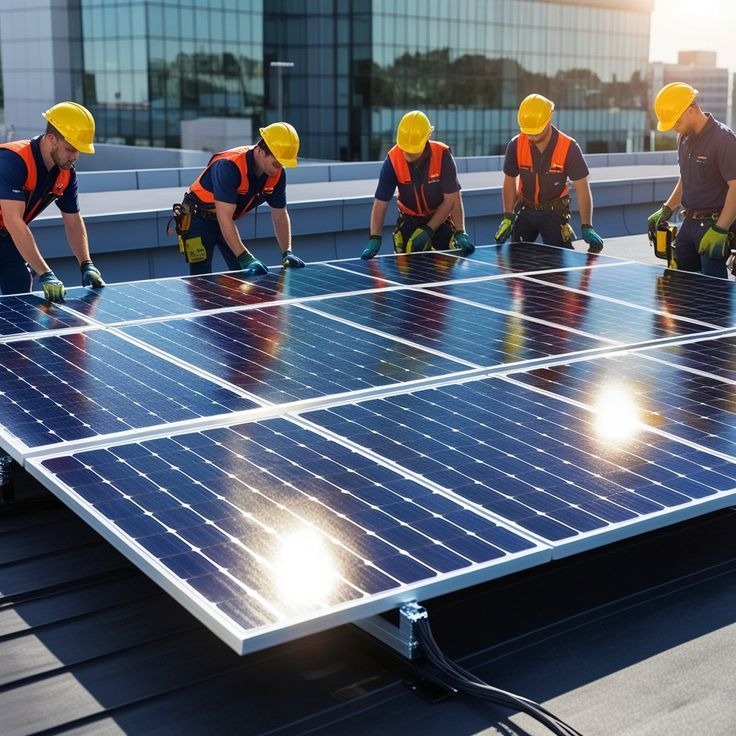
The commercial and home architectural panorama throughout the Chesapeake area is confronting an essential financial project: stabilizing escalating operational overhead in the face of distinctly volatile grid utility price lists. For building controllers, facility managers, and estate owners, passive reliance on traditional fossil-fuel energy transport networks has converted into an unpredictable stability-sheet liability. Re-engineering a building’s energy infrastructure via localized sustainable generation is now not an idealistic environmental intention; it is a defensive capital deployment approach designed to seize structural fee-mitigation, maximize long-term asset fee, and insulate operations from unpredictable transmission surcharges.
Mitigating Capital Risk through Solar Installation Company in Virginia Beach
For local companies handling expansive footprints—which include logistics hubs, maritime garages, and industrial retail complexes—the course to lengthy-time period strength stabilization starts with high-yield asset conversion. Underutilized rooftops and parking structures may be systematically transformed into localized power generation plants. Transitioning to self-technology requires working with specialised engineering companies that recognize the specific structural and regulatory frameworks of the area.
When corporate stakeholders evaluate massive-scale energy deployments through established networks offering Solar Installation Services in Richmond, they release an extraordinarily predictable operational model. Rather than writing unrecoverable month-to-month assessments to nearby application cartels, organizations convert their power spend into a depreciable, capital asset. This structural transition is based on middle economic mechanisms:
- Accelerated Capital Recovery: Utilizing the Modified Accelerated Cost Recovery System (MACRS) along with the 30% Federal Investment Tax Credit (ITC) to efficiently offset greater than half of the preliminary machine engineering costs within the first twelve fiscal months.
- Levelized Cost Optimization: Locking in predictable, sub-utility-levelized fees of power for a lifespan exceeding 25 years, insulating corporate earnings margins from localized inflation.
- C-PACE Funding Structural Alignment: Leveraging Commercial Property Assessed Clean Energy to steady 100% non-recourse, long-term period financing tied immediately to the property parcel, preserving the debt off the center company’s balance sheet.
Engineering for Climate Resilience with Solar Installation Services in Roanoke
Deploying bodily electricity infrastructure across the particular coastal, high-humidity, and maritime micro-climates of the Chesapeake basin requires deep localized domain know-how. Partnering with the choicest Solar Installation Services in Roanoke guarantees that device designs are structurally engineered to deal with the unique environmental stressors of the Chesapeake Bay area. Maritime weather structures bring dense salt-fog, accelerated humidity, and severe winds that may swiftly degrade sub-popular electric components.
A localized, maritime-grade setup demands precise engineering protocols, consisting of the utilization of marine-grade anodized aluminum racking structures, anti-corrosive chrome steel hardware, and top-class Tier-1 PV modules rated for optimum Potential Induced Degradation (PID) resistance. Furthermore, by way of pairing localized solar arrays with shrewd, utility-interactive battery electricity storage systems (BESS), asset owners assemble an impenetrable layer of operational continuity. These smart microgrids allow crucial commercial capabilities—consisting of cold storage, water control, and automatic safety arrays—to seamlessly island themselves from the primary distribution grid for the duration of coastal hurricane interruptions.
Regulatory Leverage: Navigating the Dynamics of Net Energy Metering (NEM)
Net Metering remains an effective prison framework for neighborhood property owners. When an optimized sun array generates surplus energy at some point during the top daylight hours, the excess energy is fed immediately back into the nearby power distribution grid. The software is legally mandated to credit score the asset owner’s account at the full retail rate, consistent with kilowatt-hour, efficiently turning the utility meter backward and dramatically accelerating the economic payback period of the asset.
To demonstrate how these localized clean energy strategies manifest in real-world scenarios, the following table breaks down standard operational frameworks across different regional property types:
| Property Classification | Primary Technology Strategy | Financial & Policy Integration | Core Operational Impact |
| Maritime Cold Storage Warehouse | 450 kW Ballasted Roof Solar + BESS | Federal Tax Equity + Localized Accelerated Depreciation | Reduces peak daytime refrigeration utility costs by up to 72%. |
| Agricultural Logistics Center | Ground-Mounted Tracking Solar Infrastructure | USDA REAP Grant (covering up to 50%) + SREC Open Market | Converts underutilized acreage into a highly predictable, recurring revenue stream. |
| Corporate Office Complex | Elevated Solar Parking Lot Carports + EV Hubs | C-PACE Long-Term Financing + Virtual Net Metering | Lowers corporate Scope 2 emissions while attracting premium commercial tenants. |
| Coastal Suburban Estate | High-Density All-Black Rooftop Solar Modules | State Clean Energy Grants + Residential Federal ITC | Permanently caps baseline energy expenses; increases immediate property equity. |
Maximizing Household Valuation through a residential solar installation service in Maryland
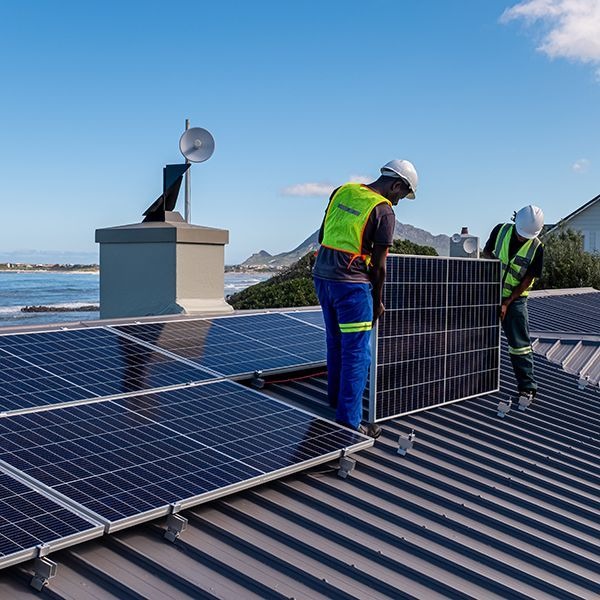
While commercial establishments awareness on b2b operational scale, residential property owners face a similarly essential need to defend their household cash flow from compounding software rate hikes. For top-class homeowners looking to cast off high monthly utility statements, choosing a skilled Residential Solar Panel Installer in Virginia is the most essential step in securing actual system performance and architectural protection. Residential electricity manufacturing has to be custom-designed to unique household load profiles, structural roof orientations, and localized shading factors.
An expert residential integration is predicated on advanced pre-production engineering analytics:
- Precision LiDAR Shading Diagnostics: Utilizing high-resolution drone imagery and satellite tv for pc facts to map real seasonal sun patterns and tree cover obstruction over the roof space.
- Smart Home Infrastructure Integration: Upgrading baseline electric provider panels to seamlessly accommodate bi-directional energy, clever circuit breakers, and dedicated electric-powered car (EV) charging arrays.
- Architectural Synergy Engineering: Deploying low-profile, all-black sun skins and hid conduit runs to hold the historical or contemporary aesthetic integrity of premium Chesapeake homes.
By transforming a residential roof into an impartial power hub, homeowners do not simply eliminate variable application liabilities; Residential Solar Panel Installer Maryland they immediately invest in their home’s non-appraised asset value. Modern real estate metrics constantly show that houses equipped with completely owned solar infrastructure sell at a top class in comparison to houses tied absolutely to legacy electrical grids.
Final Thoughts
The economic baseline for managing real estate throughout the Chesapeake region has completely shifted. Leaving your enterprise or your household totally exposed to the pricing whims of centralized utility networks is an avoidable danger. As neighborhood environmental requirements tighten and the conventional electricity era faces growing operational challenges, the price of grid energy will maintain on an upward trajectory.
Investing in localized, resilient, sustainable energy infrastructure allows building owners to take full management of their software line objects. By intelligently mixing federal tax credits, local grants, and internet metering advantages, forward-thinking owners rework an ongoing, unrecoverable operational cost into a high-yielding capital asset. Whether dealing with a heavy industrial port facility or protecting a privately owned family residence, the strategy remains clean: proactive power self-sufficiency is the final hedge for long-term financial protection.
Frequently Asked Questions (FAQs)
Q: How do Solar Renewable Energy Credits (SRECs) generate independent income for Chesapeake property owners?
A: SRECs are performance-based, totally environmental commodities that become independent from the bodily energy your device produces. For every 1,000 kilowatt-hours (kWh) of clean energy your sun array generates, you’re issued one SREC. In Maryland, utilities are legally required to purchase these credits to avoid heavy county consequences. Property proprietors can monetize these credits on the open marketplace via an aggregator, establishing a constant, ordinary source of independent revenue.
Q: Can an enterprise utilize C-PACE financing if the building is presently under a traditional commercial loan?
A: Yes. Commercial Property Assessed Clean Energy (C-PACE) is structured as a non-accelerating property tax assessment in place of a conventional bank mortgage. Because the financing attaches immediately to the belongings themselves and can decrease the general running prices of the building—thereby enhancing the assets’ debt-service coverage ratio—conventional mortgage creditors automatically supply the important consent for C-PACE integration.
Q: What happens to assets’ sun manufacturing and backup energy abilities in the course of a prolonged wintry weather typhoon?
A: Modern Tier-1 sun modules are especially touchy and keep generating strength throughout overcast or cloudy winter days by soaking up ambient, diffused UV light. If your machine is paired with a battery garage array, the clever inverter will automatically prioritize powering your own home’s vital loads. Additionally, snow accumulation on solar panels generally slides off unexpectedly due to the anti-reflective glass coating and the operational heat generated by using the cells.
