
The moment a toddler starts pulling themselves upright on the furniture, the whole house starts to look different. Every sharp corner, every wobbly bookcase, every glass panel in the back door suddenly becomes something you can’t unsee.
The good news is that making your home safer for small children doesn’t mean stripping it back to bare walls and bubble wrap. Find out how to tackle the biggest hazards below.
1. Stair Gates: Pick One That Doesn’t Look Like a Building Site
Stair gates get a bad reputation for being ugly, but the options have come a long way. Retractable fabric gates and pressure-mounted wooden gates now blend into most hallways without looking like a safety cage.
The key decision is between pressure-mounted and wall-mounted. Pressure-mounted gates are easy to fit and remove, which makes them fine for blocking off rooms. For the top of the stairs, though, you’ll want a wall-mounted gate. A toddler leaning on a pressure gate at the top of a staircase is a risk not worth taking.
Look for gates that are certified to EN 1930:2011, the current European safety standard for stair gates. That certification matters more than the price tag.
2. Replace Low-Level Glass With Something Safer
This one often gets overlooked because glass panels in internal doors or low-level windows look fine. The problem is that toughened glass still breaks under enough impact, and a running toddler or an enthusiastically thrown toy can create more force than you’d expect.
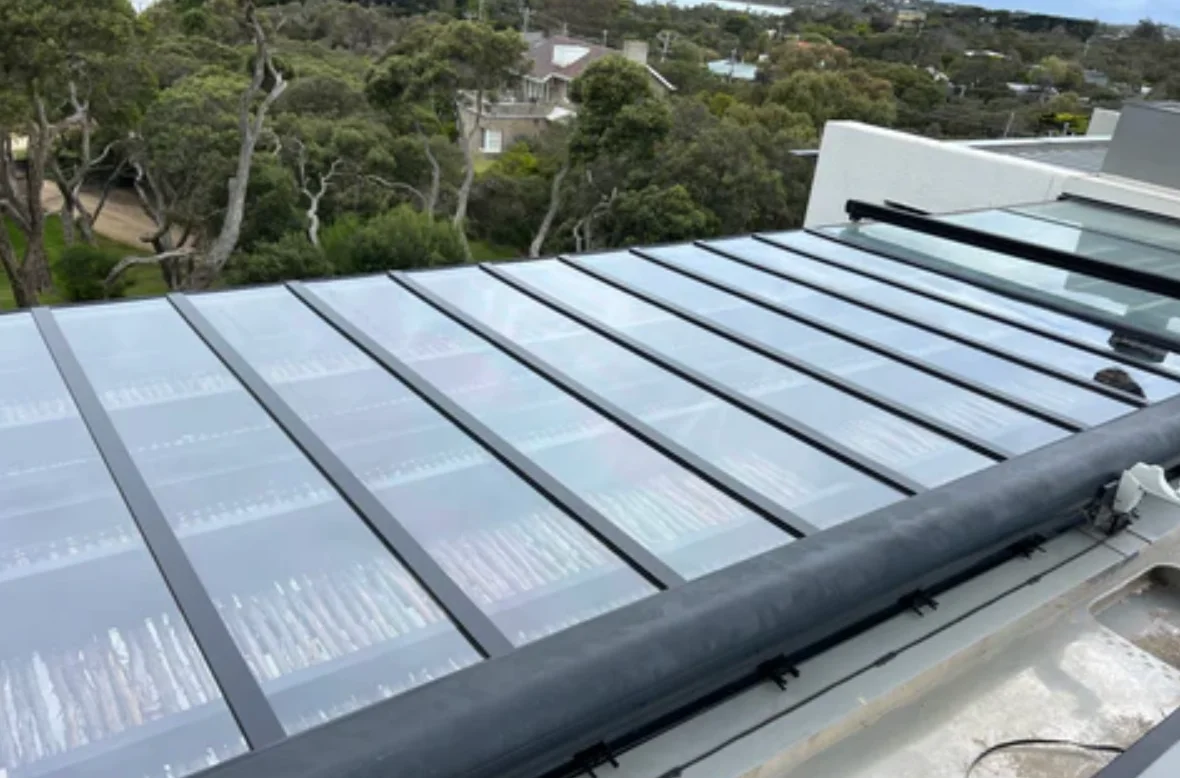
Swapping the glass for a transparent polycarbonate panel is a practical solution. Polycarbonate is virtually unbreakable compared to standard glazing, it lets through the same amount of light, and it looks identical once it’s fitted. You can have it cut to size and fitted into existing glazing beads without replacing the whole door or frame.
It’s a small change that makes a real difference, especially in rooms where children spend a lot of time.
3. Furniture Anchors: The Fix Most Parents Skip
Furniture tipping is one of the most common causes of serious injury in toddlers, yet anchoring is one of the most overlooked steps in childproofing. A chest of drawers with two or three drawers open creates a significant amount of forward weight, and children will climb them.
Furniture straps are inexpensive and straightforward to fit. You attach one end to the back of the furniture and the other to a wall stud or a solid fixing point. Most are hidden behind the piece and won’t affect the look of the room at all.
Bookcases, wardrobes, dressers, and televisions are all worth anchoring. If it’s taller than it is wide, it’s a candidate.
4. Corner Protectors: Choose Wisely and They’ll Stay Put
Corner protectors on coffee tables and hearths are worth fitting, but there’s a lot of variation in quality. The cheap foam ones that stick on with adhesive tend to peel off within a few weeks, especially on furniture with a lacquered finish or near radiators.
Silicone edge guards with a stronger adhesive base tend to last longer and are less visually intrusive than bulky foam pieces. For stone or brick hearths, there are purpose-made hearth cushions that sit flat and stay in place.
The goal isn’t to wrap every surface. Focus on hard edges at toddler head height: coffee tables, TV units, fireplace surrounds, and low shelving.
The Important Takeaway
None of these changes require a full renovation, and none of them need to make your home look like a soft play centre. A stair gate that suits the hallway, a few furniture straps, safer glazing, and decent corner protection will cover most of the real risks. Small adjustments, done properly, are more effective than half-measures everywhere.

David Weber is an experienced writer specializing in a range of topics, delivering insightful and informative content for diverse audiences.