
Muslim sayings offer timeless guidance that inspires people to live with faith, kindness, and purpose. Rooted in the Quran and Hadith, these powerful words reflect the teachings and example of Prophet Muhammad (PBUH), helping believers strengthen their relationship with Allah while developing honesty, patience, and compassion.
Whether you are searching for daily encouragement or a deeper understanding of Islam, these teachings provide practical wisdom for every stage of life. From building strong character to facing challenges with hope, Islamic teachings continue to shape millions of lives around the world. Exploring these meaningful sayings reveals enduring values that promote peace, gratitude, forgiveness, and a life devoted to righteousness.
What Are Muslim Sayings?
The Meaning of Muslim Sayings in Islam
Muslim sayings are expressions of guidance rooted in Islamic tradition. Most originate from the Hadith, which records the words, actions, and approvals of the Prophet Muhammad (PBUH). Alongside the Quran and Hadith, these teachings help Muslims understand how to apply divine guidance in everyday situations. They shape Islamic values, encourage good deeds, and strengthen a person’s relationship with Allah.
Unlike ordinary quotations, these sayings carry spiritual meaning. They teach honesty, patience, humility, generosity, and responsibility. Every lesson encourages believers to become better family members, neighbors, and citizens. This timeless collection of Islamic guidance continues to influence people across cultures and generations.
Difference Between Muslim Sayings, Hadith, and Quranic Teachings
Many people confuse Muslim sayings with verses from the Quran. Although both are central to Islam, they are not identical. The Quran is the direct revelation from Allah, while the Hadith records the teachings and practices of the Prophet Muhammad (PBUH). Together they form the foundation of the Sunnah, which explains how Islamic teachings should be practiced.
The following table highlights the differences.
| Source | Meaning | Purpose |
| Quran | Direct words revealed by Allah | Primary source of Islamic belief and law |
| Hadith | Recorded words and actions of the Prophet | Explains and clarifies the Quran |
| Sunnah | Practical lifestyle of the Prophet | Demonstrates daily implementation of Islam |
Scholars carefully evaluate every narration before accepting it as Authentic Hadith. This process preserves the accuracy of the sayings of Prophet Muhammad and protects the integrity of Islamic scholarship.
Why Muslim Sayings Continue to Inspire Millions?
One remarkable quality of Muslim sayings is their timeless relevance. A teaching delivered fourteen centuries ago still offers practical advice for modern families, workplaces, and communities. These messages promote Islamic ethics, moral values, and lifelong spiritual growth without losing their original purpose.
They also speak to universal human emotions. Everyone experiences happiness, fear, disappointment, and hope. The words of the Prophet provide balanced guidance for each stage of life. They encourage positive thinking, sincere worship, compassion, forgiveness, and responsible living. This universal appeal explains why many non-Muslims also admire the profound wisdom in Islam.
Ten Beautiful Muslim Sayings About Life and Faith
“A sincere heart finds peace because every honest action brings you closer to Allah and lasting inner contentment.”
“True success begins when your character reflects kindness before your words seek admiration from other people.”
“The strongest believer controls anger with patience instead of answering harshness through revenge or pride.”
“Every sunrise is another opportunity to perform good deeds that benefit both your soul and your community.”
“Knowledge becomes valuable when it inspires humility instead of arrogance and service instead of personal fame.”
“A thankful heart discovers blessings hidden inside ordinary moments that many people overlook each day.”
“Real wealth grows from contentment because endless desires never satisfy the human heart completely.”
“Faith shines brightest during hardship because difficult moments reveal genuine trust rather than comfortable belief.”
“Mercy offered to others often returns unexpectedly through the countless blessings granted by Allah.”
“Every sincere prayer plants hope that continues growing even before you witness the answer.”
Muslim Sayings About Faith and Trust in Allah
Trusting Allah During Every Season of Life
Every believer encounters moments filled with uncertainty. During those times, Trust in Allah becomes the strongest source of comfort. The teachings of Islam remind believers that every challenge carries hidden wisdom, even when immediate answers remain unclear. This beautiful principle encourages confidence rather than despair.
The concept of Reliance on Allah (Tawakkul) does not mean avoiding effort. Instead, it teaches believers to work sincerely while trusting Allah to determine the final outcome. This balanced approach creates emotional stability and reduces unnecessary anxiety.
Muslim Sayings About Tawakkul and Hope
Many Prophet Muhammad sayings encourage optimism because hope strengthens faith. Believers should combine prayer with action. They should make sincere Dua, pursue honest opportunities, and accept every result with patience. This attitude nurtures confidence instead of fear.
The Hadith Qudsi also reminds believers that Allah responds according to the expectations held by His servants. Therefore, maintaining Hope in Allah becomes an act of sincere faith rather than simple wishful thinking.
Finding Peace Through Daily Remembrance
Daily remembrance transforms ordinary routines into meaningful moments of worship. Reciting Istighfar, remembering Allah, reading the Quran, and reflecting upon the Sunnah of Prophet Muhammad strengthen the heart against life’s pressures.
This daily connection also develops self-restraint, devotion, and emotional resilience. A believer gradually replaces worry with confidence because faith grows stronger through consistent remembrance.
Ten Muslim Sayings About Faith and Trust in Allah
“When your plans change unexpectedly, remember that Allah always sees what remains hidden from human understanding.”
“Strong faith does not remove every storm from life because it teaches you how to walk peacefully through them.”
“A sincere Dua never disappears because every prayer reaches the One who knows every secret of your heart.”
“Trust grows stronger each time you surrender fear and replace it with confidence in divine wisdom.”
“Every believer discovers new strength after placing complete Reliance on Allah (Tawakkul) above personal anxiety.”
“Faith becomes brighter whenever gratitude replaces complaints and hope overcomes unnecessary fear.”
“The road toward success becomes easier when honesty guides your efforts and trust accompanies every decision.”
“Never measure blessings only through wealth because peace of heart remains one of life’s greatest treasures.”
“Every difficulty carries lessons that prepare believers for greater wisdom and stronger faith.”
“Those who remember Allah often rarely walk alone because divine guidance accompanies sincere hearts.”
Muslim Sayings on Kindness and Good Character
Muslim Sayings That Encourage Compassion and Mercy
One of the greatest messages found in Muslim sayings is the importance of treating every person with dignity. The Prophet Muhammad (PBUH) became known for extraordinary kindness long before he received prophethood. His life demonstrated that good character is not simply a virtue. It is a reflection of genuine Muslim faith. The teachings of Islam encourage believers to show Mercy, respect, and fairness regardless of a person’s background, wealth, or social status.
The Quran and Hadith repeatedly emphasize that kindness is never wasted. Even a smile, a gentle word, or helping someone in need becomes an act of Worship when performed sincerely for Allah. These timeless examples continue to shape Islamic values and inspire people to build peaceful families and compassionate communities.
The Prophet’s Example of Good Character
The Words of the Prophet consistently encouraged believers to develop honesty, humility, and patience before seeking recognition. His behavior became the living explanation of the Sunnah, showing that faith should appear through actions instead of claims. These Prophet Muhammad sayings remind Muslims that true strength comes from humility rather than pride.
A person with beautiful manners creates harmony wherever they go. They forgive mistakes, speak gently, and avoid hurting others through words or actions. This practical model of Islamic ethics remains relevant in schools, workplaces, and homes across the world.
Living with Compassion Every Day
Daily life offers countless opportunities to practice kindness. Helping a neighbor, supporting parents, respecting elders, and comforting someone experiencing hardship all reflect authentic Islamic guidance. These actions strengthen relationships and encourage spiritual growth through consistent service.
The best Muslim sayings remind believers that character develops gradually. Every act of patience, generosity, and honesty shapes a stronger personality. Small habits eventually become lifelong qualities that reflect the wisdom of Prophet Muhammad and the enduring beauty of Islamic principles.
Ten Muslim Sayings on Kindness and Good Character
“Kindness offered without expecting anything in return becomes one of the most beautiful gifts you can present before Allah.”
“Gentle words often heal wounded hearts faster than harsh criticism ever could because compassion speaks directly to the soul.”
“Real honor comes from serving others with humility instead of seeking praise through impressive appearances or achievements.”
“A believer protects another person’s dignity even when disagreements make forgiveness seem difficult or uncomfortable.”
“Every smile shared sincerely becomes a silent reminder that goodness still exists in this busy world.”
“Choose patience before anger because calm hearts solve problems that pride only makes worse.”
“Helping someone quietly reflects stronger faith than announcing every charitable action before other people.”
“True character appears when nobody is watching because sincerity always begins inside the heart.”
“Respect shown toward parents, neighbors, and strangers reflects the lasting beauty of Islamic sayings about life.”
“The strongest communities grow when people replace judgment with understanding and criticism with genuine compassion.”
Muslim Sayings About Patience and Strength
Why Patience Is One of Islam’s Greatest Virtues?
Every human being faces trials. Some struggle with illness while others experience financial hardship or emotional loss. Muslim sayings about patience teach believers that challenges are temporary, yet their response carries lasting rewards. The Prophet Muhammad (PBUH) consistently encouraged Patience because it strengthens both character and faith.
The Quran, supported by Authentic Hadith, explains that patient people earn special rewards from Allah. Instead of viewing hardship as punishment, believers learn to see it as an opportunity for self-improvement, perseverance, and deeper trust in divine wisdom.
Strength Comes from Faith, Not Anger
Many people mistake physical power for genuine strength. However, the Sayings of Prophet Muhammad describe strength differently. A truly strong person controls emotions during difficult moments. They practice Self-restraint, forgive others, and avoid making decisions driven by anger.
This timeless lesson continues to guide modern life. Whether facing workplace pressure, family disagreements, or personal disappointment, emotional discipline often produces better outcomes than uncontrolled reactions. These motivational Islamic quotes remain valuable because they focus on inner transformation rather than outward appearance.
Turning Difficulties into Spiritual Growth
Hardship often becomes life’s greatest teacher. Every challenge encourages believers to increase Supplication, perform sincere Istighfar, and strengthen their relationship with Allah. Through these experiences, faith matures into unwavering confidence instead of temporary enthusiasm.
This approach creates remarkable resilience. Rather than surrendering to despair, believers develop inner strength, self-discipline, and hope. These qualities become lifelong companions that support both worldly success and preparation for the Afterlife.
Ten Muslim Sayings About Patience and Strength
“Patience transforms painful moments into valuable lessons because every hardship carries hidden wisdom from Allah.”
“Strong believers continue walking forward even when life becomes difficult because faith gives courage beyond ordinary strength.”
“Every delay teaches perseverance that quick success could never develop within the human heart.”
“The calm person often wins life’s greatest battles because wisdom speaks louder than uncontrolled anger.”
“When disappointment arrives, remember that every closed door may protect you from unseen harm.”
“True bravery appears through forgiveness, self-control, and quiet confidence rather than loud displays of power.”
“Every challenge becomes lighter when sincere prayer accompanies determined effort and hopeful expectations.”
“A grateful believer discovers opportunities hidden inside problems that others only recognize as obstacles.”
“Patience today often becomes tomorrow’s greatest blessing because growth rarely happens inside complete comfort.”
“Keep moving with hope because every faithful step brings you closer to peace, purpose, and the pleasure of Allah.”
Muslim Sayings on Gratitude and Forgiveness
The Beauty of Gratitude in Islam
Gratitude changes the way you see life. Instead of focusing on what is missing, you begin to appreciate the countless blessings already surrounding you. Muslim sayings frequently remind believers that thankfulness strengthens the heart and deepens Faith in Allah. The Quran and Hadith describe Gratitude as a quality that brings spiritual peace and attracts even greater blessings from Allah.
The teachings of Islam encourage gratitude in every situation. Thankfulness is not limited to moments of success. It also appears during hardship because believers trust that every event carries wisdom. This mindset creates emotional balance and helps people avoid jealousy, greed, and constant dissatisfaction. It also supports peaceful living and a positive Islamic lifestyle.
The Power of Forgiveness in Everyday Life
Holding anger for years only burdens the heart. The Prophet Muhammad (PBUH) taught that Forgiveness reflects courage rather than weakness. Many Hadith quotes explain that forgiving others earns the pleasure of Allah while building stronger families and healthier communities. These timeless lessons continue to guide people toward moral conduct and lasting inner peace.
Forgiveness does not always erase painful memories. Instead, it frees your heart from hatred and opens the door to healing. The Words of the Prophet encourage believers to forgive sincerely, seek reconciliation whenever possible, and trust Allah to deliver perfect justice. This balanced approach reflects the enduring Islamic wisdom found throughout the Sunnah of Prophet Muhammad.
Gratitude and Forgiveness Build Strong Character
People who practice gratitude usually become more patient, generous, and compassionate. Likewise, people who forgive avoid carrying unnecessary emotional burdens. These two qualities strengthen Islamic values because they encourage humility, Compassion, and Empathy instead of pride or resentment.
Modern research often highlights the emotional benefits of gratitude and forgiveness. Islam introduced these principles centuries ago through Islamic guidance and Authentic Hadith. Today, they remain essential for anyone seeking stronger relationships, emotional resilience, and genuine spiritual wisdom.
| Islamic Quality | Daily Benefit | Spiritual Benefit |
| Gratitude | Greater contentment and optimism | Increased blessings from Allah |
| Forgiveness | Healthier relationships | Purifies the heart and earns divine reward |
| Thankfulness | Reduces envy and stress | Strengthens Muslim faith |
| Mercy toward others | Creates peaceful communities | Reflects Islamic ethics |
Ten Muslim Sayings on Gratitude and Forgiveness
“A grateful heart notices countless blessings that hurried eyes often overlook during ordinary moments of everyday life.”
“Forgiving someone for the sake of Allah often brings greater peace than holding resentment for many years.”
“True gratitude begins when your heart appreciates simple blessings before seeking greater worldly success.”
“The strongest soul remembers kindness received instead of counting every mistake made by other people.”
“Mercy offered today may become the reason someone rediscovers hope tomorrow with renewed confidence.”
“Every thankful believer understands that life’s smallest blessings often carry the greatest hidden value.”
“Choose forgiveness whenever possible because anger steals peace long before it harms anyone else.”
“Contentment grows naturally when gratitude becomes a daily habit instead of an occasional response.”
“A humble heart praises Allah during both comfort and hardship because every moment contains divine wisdom.”
“People remembered for kindness usually leave richer legacies than those remembered only for worldly achievements.”
Muslim Sayings About Intentions and Worship
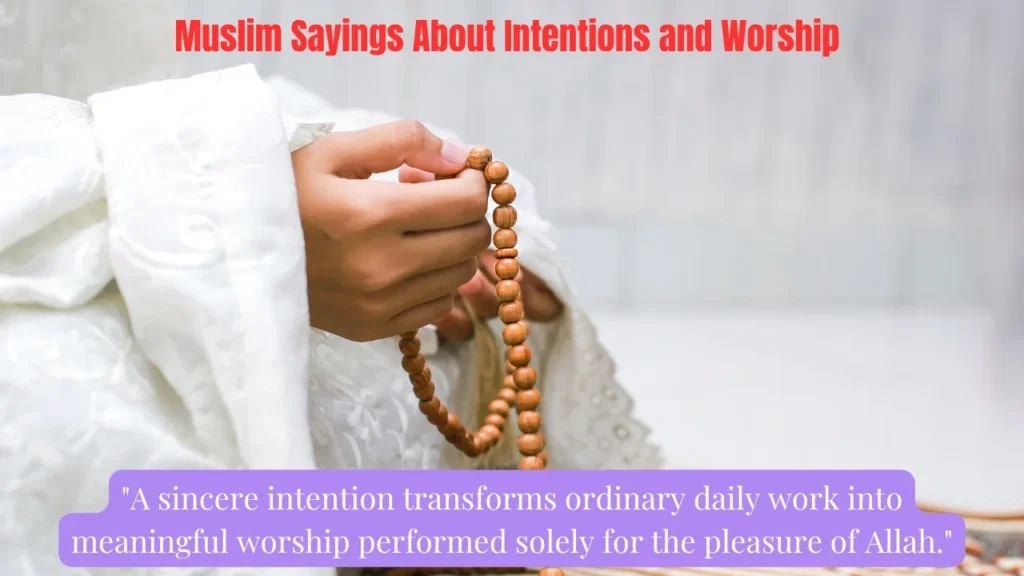
Why Pure Intentions Matter?
Every meaningful action begins inside the heart. One of the most famous Hadith teaches that actions are judged according to Intentions (Niyyah). This powerful principle reminds believers that Worship extends beyond prayer and fasting. Honest work, helping others, and fulfilling responsibilities also become acts of worship when performed sincerely for Allah.
The Prophet Muhammad (PBUH) consistently emphasized sincerity because appearances can mislead people. A small action performed with honest intention often carries greater reward than an impressive deed motivated by pride. This lesson remains one of the foundations of Islamic principles and Islamic reminders.
Worship Beyond Rituals
Many people think worship only includes prayer or fasting. However, the teachings of Islam present a much broader picture. Respecting parents, earning lawful income, keeping promises, and serving the community all reflect sincere devotion when motivated by faith. These practical examples demonstrate the beauty of Islamic sayings and their relevance to everyday life.
Regular Supplication, remembrance of Allah, and sincere Istighfar also strengthen the connection between believers and their Creator. These practices encourage repentance, humility, and continuous self-improvement, making faith a living experience instead of a weekly routine.
Living with Purpose Every Day
Purpose gives direction to every decision. Believers who renew their intentions each day often remain focused on serving Allah, benefiting others, and seeking Eternal reward rather than temporary recognition. This mindset encourages obedience to Allah, personal excellence, and lifelong devotion.
The Sayings of Prophet Muhammad continue inspiring millions because they combine practical advice with spiritual wisdom. They encourage people to balance worldly responsibilities with preparation for the Day of Resurrection, creating lives filled with meaning and compassion.
Ten Muslim Sayings About Intentions and Worship
“A sincere intention transforms ordinary daily work into meaningful worship performed solely for the pleasure of Allah.”
“Pure hearts seek acceptance from their Creator before seeking praise from other people.”
“Every honest prayer begins with humility and ends with renewed hope in divine mercy.”
“Renew your intentions each morning because purpose gives strength to every action throughout the day.”
“Quiet acts of goodness often carry greater reward than public displays seeking admiration from others.”
“Remember Allah frequently because consistent remembrance softens hearts and strengthens faith during life’s challenges.”
“The believer measures success through sincerity before measuring achievements through numbers or recognition.”
“Every sincere Dua plants hope that continues growing even when immediate answers remain unseen.”
“A heart devoted to worship remains peaceful because trust replaces unnecessary fear and anxiety.”
“True success belongs to those who combine righteous actions with sincere intentions throughout every stage of life.”
Muslim Sayings on Knowledge and Charity
The Lifelong Pursuit of Knowledge
One of the defining features of Islam is its respect for learning. Many Muslim sayings encourage Seeking knowledge from childhood until the final stage of life. The Prophet Muhammad (PBUH) taught that beneficial knowledge improves both the individual and society. This emphasis on Lifelong learning has inspired generations of scholars, scientists, teachers, and students throughout Islamic history.
The Quran and Hadith repeatedly encourage believers to think, reflect, and seek understanding. Learning is not limited to religious subjects alone. Gaining useful skills, exploring science, improving communication, and developing practical abilities all become valuable when they benefit humanity and earn the pleasure of Allah. This broad perspective reflects the richness of Islamic wisdom and supports continuous character building.
Charity Strengthens Both Society and Faith
Giving to others is one of the clearest expressions of Muslim faith. The teachings of Islam encourage believers to practice Charity with generosity, sincerity, and humility. Helping those in need is not simply a financial transaction. It demonstrates compassion, gratitude, and responsibility toward society.
The Sunnah teaches that charity appears in many forms. Financial support remains important, yet offering kind words, sharing knowledge, assisting neighbors, or removing harm from a public path also reflect charitable behavior. These examples show that everyone can contribute regardless of their financial situation. This balanced understanding represents the heart of Islamic guidance and the timeless wisdom of Prophet Muhammad.
Knowledge and Charity Create Lasting Impact
Knowledge without compassion may become pride, while charity without wisdom may lose effectiveness. Islam combines both qualities to build balanced individuals who benefit others through learning and service. This combination develops Islamic values, generosity, and helping the needy while strengthening the relationship between believers and Allah.
Throughout history, many Muslim scholars established schools, hospitals, libraries, and charitable institutions. Their work reflected the practical application of the Teachings of Islam, proving that faith should inspire positive action rather than remain only theoretical.
| Virtue | Personal Benefit | Community Benefit |
| Seeking knowledge | Better decisions and wisdom | Educated and stronger communities |
| Charity | Purifies the heart | Supports vulnerable people |
| Generosity | Builds humility | Encourages social unity |
| Service to others | Personal satisfaction | Long-term community development |
Ten Muslim Sayings on Knowledge and Charity
“Knowledge becomes truly valuable when it helps people solve problems and brings them closer to Allah.”
“Generosity shines brightest when kindness reaches someone without expecting recognition or reward from anyone.”
“Every lesson learned should inspire service because wisdom grows stronger when shared with others.”
“Charity offered with sincerity often changes two lives because both the giver and receiver benefit.”
“A believer never stops learning because every day presents another opportunity to gain beneficial knowledge.”
“Helping the needy reflects genuine faith because compassion speaks louder than impressive words or promises.”
“The richest person is often the one who shares knowledge, hope, and encouragement generously.”
“Small acts of charity performed regularly create greater impact than rare displays of generosity.”
“Seek wisdom with humility because learning without good character rarely benefits the human heart.”
“Use every blessing wisely so your knowledge and generosity continue benefiting people long after your lifetime.”
Muslim Sayings for Hope, Positivity, and Daily Life
Finding Hope Through Faith
Life brings unexpected challenges, yet Muslim sayings consistently encourage believers to remain hopeful. The Prophet Muhammad (PBUH) inspired people to look beyond temporary hardship and trust the mercy of Allah. This perspective nurtures Hope in Allah, strengthens Positive thinking, and reminds believers that every trial eventually passes.
Islam does not ignore pain or suffering. Instead, it teaches believers to face difficulties with confidence, prayer, and determination. This hopeful mindset protects the heart from despair and supports lasting spiritual growth. It also encourages people to become sources of optimism for their families and communities.
Applying Muslim Sayings in Everyday Life
The beauty of Islamic sayings for daily life lies in their practical nature. They guide everyday conversations, business ethics, family relationships, and personal responsibilities. A believer who practices honesty, keeps promises, respects others, and remains patient demonstrates the living example of Islamic ethics.
Simple daily habits also strengthen faith. Beginning the day with remembrance of Allah, speaking kindly, helping neighbors, and expressing gratitude transform ordinary routines into meaningful acts of worship. These actions reflect the enduring message found throughout the Words of the Prophet and the Sunnah of Prophet Muhammad.
A Message of Optimism for Every Generation
The Prophet Muhammad (PBUH) was described in Al-Ahzab 33:45-46 as Shahid, Basheer, Nazeer, Daee, and Sirajan Munira, meaning a witness, bearer of glad tidings, warner, caller to Allah, and an illuminating lamp. These beautiful descriptions highlight his mission of guidance, compassion, and hope.
His teachings continue inspiring millions because they combine wisdom with practicality. They encourage righteousness, humility, remembrance of Allah, reliance on God’s mercy, and unwavering confidence in divine guidance. These timeless messages remain as meaningful today as they were more than fourteen centuries ago.
Ten Muslim Sayings for Hope, Positivity, and Daily Life
“Every new morning reminds believers that the mercy of Allah is greater than yesterday’s mistakes.”
“Hope grows stronger whenever faith replaces fear and trust overcomes unnecessary worry.”
“Speak words that encourage others because kindness often begins with a single thoughtful sentence.”
“Positive hearts discover opportunities where discouraged minds only recognize obstacles and disappointment.”
“Every sincere effort earns value because Allah appreciates honest intentions before visible results.”
“The believer welcomes each day with gratitude, determination, and confidence in divine wisdom.”
“Choose optimism because hope strengthens the soul during seasons when circumstances seem uncertain.”
“Good character leaves lasting memories that wealth and status can never truly replace.”
“Never underestimate one small act of kindness because it may become someone’s reason to smile again.”
“Walk through life with faith, compassion, and gratitude because these qualities illuminate every path toward lasting success.”
Frequently Asked Questions
What Can I Say Instead of “Alhamdulillah”?
You can say “JazakAllahu Khairan,” “MashaAllah,” “SubhanAllah,” or “BarakAllahu Feek”, depending on the situation. Each phrase expresses gratitude, appreciation, praise, or blessings in Islam.
What Is a Typical Muslim Greeting?
The most common Muslim greeting is “As-salamu Alaikum,” meaning “Peace be upon you.” The traditional reply is “Wa Alaikum As-salam,” meaning “And peace be upon you.”
What Is the 7 7 7 Rule in Islam?
There is no authentic 7 7 7 rule in Islam found in the Quran or Hadith. The phrase is often associated with personal productivity or social media trends rather than Islamic teachings.
What Do Muslims Say Instead of “Bless You”?
Muslims commonly say “Yarhamuk Allah” (“May Allah have mercy on you”) when someone sneezes. The person who sneezed replies, “Yahdikum Allah wa Yuslihu Balakum.”
What Are Some Beautiful Islamic Greetings?
Beautiful Islamic greetings include “As-salamu Alaikum,” “Wa Alaikum As-salam,” “Ramadan Mubarak,” “Eid Mubarak,” and “JazakAllahu Khairan.” These greetings promote peace, gratitude, and goodwill among Muslims.
Also Read: Christian Sayings
Conclusion
Muslim sayings continue to inspire millions because they combine timeless spiritual guidance with practical advice for everyday life. The Islamic sayings, Muslim quotes, and Prophet Muhammad sayings explored throughout this guide encourage believers to strengthen their relationship with Allah, develop excellent character, and contribute positively to society.
The enduring message of the Quran and Hadith is simple yet profound. Faith should appear through actions, words, and sincere intentions. By practicing Kindness, Patience, Gratitude, Forgiveness, Charity, and Seeking knowledge, every believer can experience meaningful spiritual growth while building stronger families and communities.
Whether you are exploring Islam for the first time or seeking a deeper understanding of its timeless teachings, these beautiful Muslim sayings offer guidance that remains relevant in every generation. They remind us that true success comes through sincere faith, compassionate actions, and unwavering trust in Allah.

David Weber is an experienced writer specializing in a range of topics, delivering insightful and informative content for diverse audiences.
3 thoughts on “Muslim Sayings: Timeless Islamic Wisdom for Faith, Character, and Daily Life”