
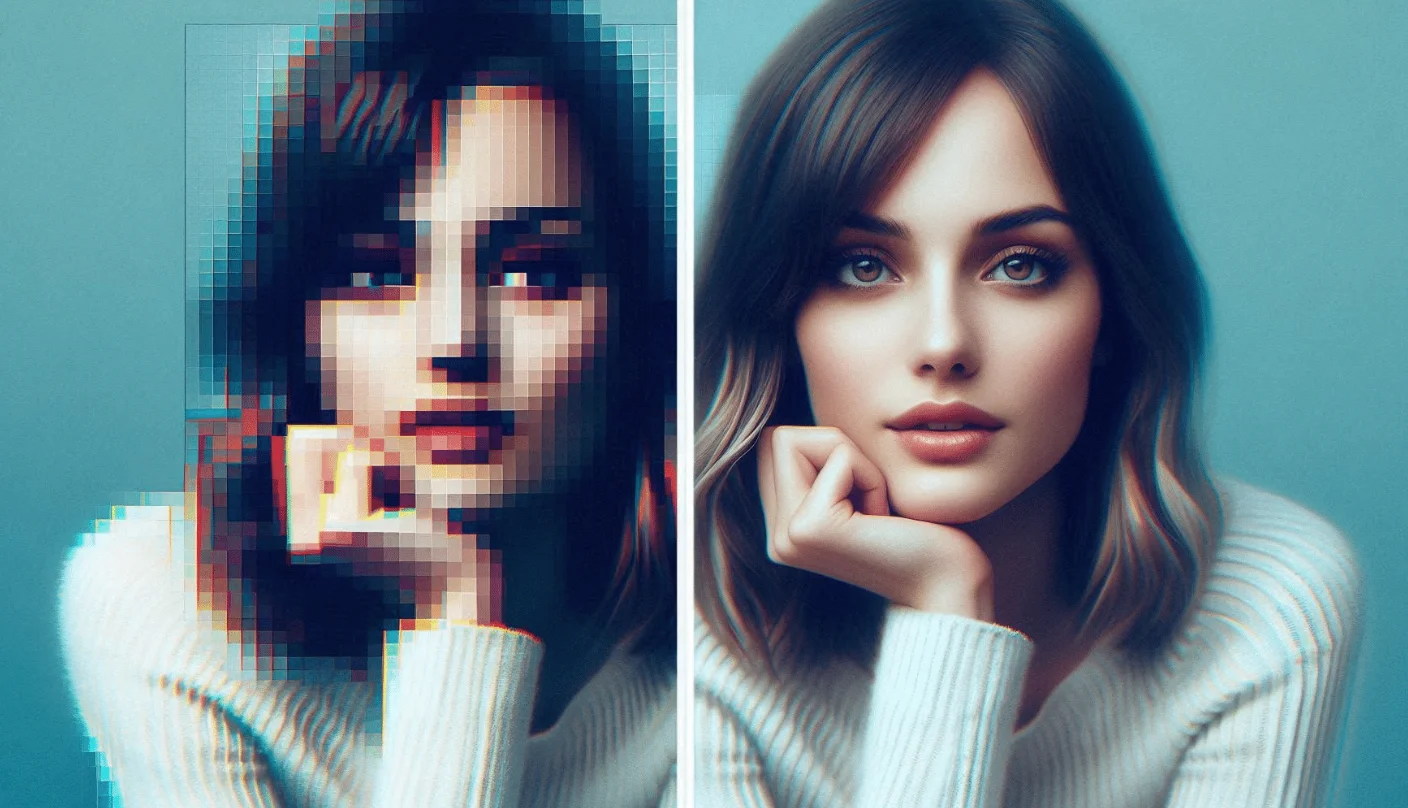
In the ever-evolving digital landscape, there is a constant demand for high-quality visual content across all platforms. One groundbreaking advancement in this arena is the application of AI to image upscaling, making it easier than ever to breathe new life into older, low-resolution visuals. With innovative solutions like an image upscaler, creators and businesses are enhancing image resolution, unlocking new creative potential, and setting higher standards in digital media.
The core benefit of AI upscaling lies in its ability to intelligently increase image resolution. Rather than simply adding pixels, these smart algorithms analyze and reconstruct image details, ensuring that clarity, vibrancy, and fidelity are preserved or even improved. This process revolutionizes key sectors such as photography, gaming, online publishing, and social media, offering opportunities to repurpose existing content or restore cherished memories without compromising on quality.
Unlike traditional methods of enlarging visuals, which often leave images blurry or pixelated, advanced AI models draw on vast datasets to reconstruct missing information, rendering images that look sharper and more natural. As digital technology advances, AI image upscaling is becoming indispensable for creators who want their work to stand out.
As AI-driven upscaling tools become more refined, industry leaders are integrating them into everyday workflows, making professional-grade results accessible to amateurs and experts alike. This widespread adoption is transforming how we approach everything from content restoration to user-generated media and display optimization.
The Rise of AI in Image Enhancement
Historically, increasing the size of an image meant accepting a loss in sharpness and detail. Standard digital upscaling often resulted in visible pixelation and sometimes distorted colors. However, modern AI-powered upscaling overcomes these hurdles by training deep learning algorithms on vast image datasets. These algorithms learn the nuanced ways in which natural images should appear and use that knowledge to generate missing pixels more convincingly. The results are higher-fidelity, more visually pleasing images, particularly useful for restoring heritage photography and adapting vintage images for modern, high-resolution screens.
Adobe’s Integration of AI Upscaling
Adobe has remained a pioneer in creative software by integrating AI into its established suite of tools. In 2025, Adobe introduced the “Harmonize” feature in Photoshop, blending images by intelligently matching colors, lighting, and shadow to achieve unmatched realism. The company’s Firefly AI platform takes user-friendly editing even further, making complex enhancements as simple as describing a desired change. Such innovations allow visual storytellers of all backgrounds to achieve professional results with less time and effort.
YouTube’s AI-Powered Video Enhancement
Online video platforms are also embracing AI upscaling, and YouTube is leading the charge. The platform recently launched an AI-driven feature that automatically enhances the resolution of lower-quality videos, initially focusing on converting standard definition footage to high definition, with plans to eventually support up to 4K. This seamless upgrade means creators can share legacy content that looks fresh on today’s larger, sharper screens, significantly improving the viewing experience for global audiences.
Impact on Photography and Content Creation
Photography professionals and content creators are quickly leveraging AI upscaling to boost image quality without sacrificing the original artistic vision. Modern AI tools, such as the upscaling features recently added to popular apps like VSCO, can instantly improve photo resolution by up to four times. This not only adds new detail and vibrancy to old digital photos but also enables larger prints and more flexible cropping options, making legacy content more valuable in today’s competitive digital environment.
AI Upscaling in the Gaming Industry
The gaming sector is no stranger to the benefits of AI upscaling. Developers use this technology to retexture and reimagine classic games for modern consoles and displays, delivering richer, more immersive visuals that appeal to both nostalgic gamers and newcomers. AI upscaling allows studios to revitalize older assets with greater efficiency and less manual reworking, thereby extending the longevity and commercial appeal of gaming titles.
Challenges and Considerations
While AI upscaling is a powerful tool, it comes with important caveats. Overly aggressive upscaling can result in images that appear unnatural, introducing artifacts or artificial sharpness that was not present in the original content. Additionally, the computational power required for real-time or large-scale AI upscaling can be a barrier for some users, particularly those without access to the latest hardware or cloud-based solutions. Content creators must weigh these considerations against the substantial benefits of enhanced visuals.
The Future of AI in Digital Media
AI technology is expected to continue transforming digital media in profound ways. With each iteration of upscaling algorithms, we move closer to real-time, universal solutions that seamlessly bridge the gap between old and new content. As AI becomes increasingly intertwined with digital creativity, collaboration among software engineers, artists, and content strategists will yield even more innovative features and accessible workflows that empower creators of every skill level.
In summary, AI image upscaling represents a pivotal shift in digital content creation. These technologies offer unmatched advantages in image quality and restore valuable content for modern audiences. As this field progresses, expect even more sophisticated, convenient, and powerful tools to emerge, ensuring that digital visuals are more compelling and accessible than ever.

David Weber is an experienced writer specializing in a range of topics, delivering insightful and informative content for diverse audiences.
Repurposing older visuals often involves more than increasing resolution. For a creator-owned campaign image with an outdated date or headline, the text cleanup and the enlargement are separate decisions. It would be useful to show that workflow alongside the upscaling examples, with a close-up of the reconstructed background so readers can see whether the edit survives at the final display size.
The section on artificial sharpness could be expanded with an exposure example. Enlarging a washed-out image may make its edges more defined without fixing the missing tonal separation in the highlights. Showing the original, an exposure-adjusted version, and the enlarged result side by side would help readers understand which improvement comes from which step, instead of attributing every change to resolution.
A birth-announcement preview is worth checking at the intended print size, not only enlarged on a screen. With a generated newborn portrait, a larger pixel count means little if fine facial or fabric details become less convincing. Your discussion of artificial sharpness is a good reason to compare a small print-size proof before choosing the largest version for a keepsake card.