
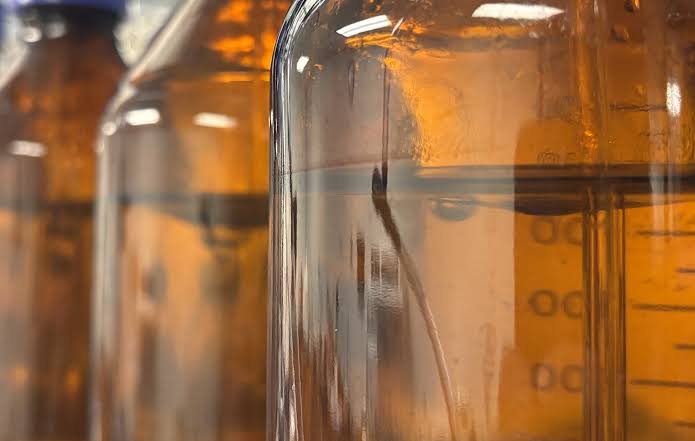
Chemical substances are used extensively in manufacturing, agriculture, household cleaning, cosmetics, and industrial applications. While these chemicals serve important purposes, their environmental behavior after disposal or release deserves careful examination. Some substances can be broken down by microorganisms, while others may remain in the environment for extended periods. Understanding these differences helps industries make more responsible decisions about chemical development and environmental safety.
OECD 301B testing offers a scientifically recognized approach to assessing whether organic chemicals are readily biodegradable under aerobic conditions. Instead of relying on assumptions about environmental performance, this laboratory method measures biological activity to determine how effectively microorganisms can convert a substance into carbon dioxide.
Why Chemical Structure Matters in Biodegradation
Not every chemical responds to microbial activity in the same way. Molecular structure, water solubility, toxicity, and accessibility to microorganisms can influence how effectively a substance undergoes biodegradation.
Certain organic compounds contain structures that microorganisms can metabolize relatively easily. Others have complex molecular arrangements that make biological breakdown more challenging. Even chemicals with similar industrial applications may demonstrate significantly different biodegradation behavior.
Testing these substances under standardized conditions allows researchers to identify important differences in their biodegradation potential. Such information can guide manufacturers when selecting ingredients for products intended to have a reduced environmental impact.
The Role of Microorganisms in Chemical Decomposition
Microorganisms are essential participants in the natural breakdown of organic substances. Bacteria and other microbial populations use various organic compounds as sources of energy and nutrients, producing carbon dioxide during aerobic mineralization.
In OECD 301B testing, a microbial inoculum is introduced into a carefully prepared laboratory system containing the test substance. The microorganisms are supplied with oxygen and appropriate mineral nutrients to support biological activity.
As degradation progresses, the carbon dioxide released is collected and measured. This provides evidence of microbial mineralization rather than simply observing whether the original chemical disappears from a solution.
The distinction is important because the disappearance of a substance does not automatically establish that it has been completely biodegraded.
Interpreting Carbon Dioxide Evolution Results
One of the most valuable features of the OECD 301B method is its quantitative approach to measuring biodegradation. The test compares the carbon dioxide generated during microbial activity with the theoretical carbon dioxide expected from complete mineralization of the chemical.
The assessment generally continues for 28 days, with measurements taken throughout the testing period. The resulting data help researchers understand the extent and progression of biodegradation.
For a substance to meet the usual ready biodegradability criteria under this method, it must achieve at least 60% of theoretical carbon dioxide production while satisfying applicable timing and validity requirements.
However, failing to meet this threshold does not necessarily mean a chemical cannot biodegrade. It may undergo degradation more slowly or under different environmental conditions.
Addressing Challenges With Difficult Test Substances
Some chemicals present practical challenges during biodegradability assessment. Poorly soluble substances may not disperse evenly throughout the testing medium, while volatile compounds can be difficult to retain within the experimental system.
Other substances may inhibit microbial activity at certain concentrations, potentially affecting the interpretation of results.
Laboratories must carefully consider these characteristics when preparing test systems. Suitable handling procedures, concentration selection, and control measurements help reduce experimental interference and improve the reliability of the findings.
Recognizing these limitations is particularly important when evaluating specialized industrial chemicals and complex formulations.
Using Biodegradability Data for Better Chemical Design
Biodegradability testing can contribute to chemical innovation by providing information that supports ingredient selection and formulation improvements. Manufacturers can compare substances with similar functional properties while considering their potential environmental behavior.
Research teams may also use test results to identify formulations that require additional investigation or modification before commercialization.
Although ready biodegradability alone does not establish complete environmental safety, it provides valuable evidence when combined with toxicity, exposure, and persistence assessments.
Conclusion
Evaluating chemical biodegradation requires more than observing changes in appearance or chemical concentration. Reliable assessment depends on understanding microbial processes, measuring mineralization, and interpreting results against established scientific criteria.
OECD 301B testing provides a structured method for examining the ready biodegradability of organic chemicals under aerobic conditions. By generating measurable scientific evidence, it helps industries evaluate chemical behavior, improve product development decisions, and strengthen responsible environmental management.

I like that the article separates true mineralization from a chemical simply vanishing from solution. The 28-day CO2 curve is the detail I’d want to see before any ready-biodegradability label gets attached. That kind of slow progression might come across better in a short visual, and an unlimited AI video generation could shape the timeline without changing the data.
Thanks for this, it answered a question I have had open in a tab for months. Quick shout-out to online HDR photo enhancer as well, it is the online HDR photo enhancer I keep coming back to when the built-in tools are not enough.
Nice work. I came here for the upscaling tips and stayed for the rest of it. AI image editor online is worth a look too.
Had a blast playing here last night! The atmosphere is great and the winning streaks were real. 8cassinocombet is definitely my new favorite.
I love how fast the loading time is here. Getting my daily bonuses has never been easier than through gg7770login
If you are looking for a platform that actually pays out and has a wide range of slots, bigobet889 is the way to go.
Very interesting info !Perfect just what I was looking for!
I have tried many sites but this one is really smooth. The login process is fast and I love the bonuses. Check out plus777viplogin for a great experience.
Exactly what I was looking for, appreciate it for putting up.
Hi there! I know this is somewhat off topic but I was wondering which blog platform are you using for this site? I’m getting tired of WordPress because I’ve had issues with hackers and I’m looking at alternatives for another platform. I would be fantastic if you could point me in the direction of a good platform.
I like this blog so much, bookmarked. “I don’t care what is written about me so long as it isn’t true.” by Dorothy Parker.
Absolutely written content material, thankyou for entropy.
Thankyou for this post, I am a big fan of this web site would like to continue updated.
Great breakdown of OECD 301B testing! It’s eye-opening how many chemicals linger instead of breaking down. Curious—do you think this kind of biodegradability data will become a standard marketing label in the future? Also, after reading something so technical, I needed a mental break. Wonderhop is my go-to trivia game for unwinding. wonderhop.org
Good day very cool web site!! Man .. Excellent .. Amazing .. I will bookmark your website and take the feeds also…I’m satisfied to seek out numerous useful information here within the post, we’d like work out extra techniques on this regard, thank you for sharing. . . . . .
I’ve recently started a blog, the information you provide on this site has helped me greatly. Thank you for all of your time & work. “The more sand that has escaped from the hourglass of our life, the clearer we should see through it.” by Jean Paul.
Throughout this grand pattern of things you receive a B+ just for effort and hard work. Where you actually confused me personally ended up being on all the particulars. As it is said, the devil is in the details… And it could not be much more correct in this article. Having said that, allow me tell you what exactly did give good results. The writing is definitely really convincing and that is possibly the reason why I am making an effort in order to opine. I do not really make it a regular habit of doing that. Next, despite the fact that I can certainly notice the leaps in reason you come up with, I am definitely not certain of how you seem to connect the ideas which help to make the final result. For the moment I shall yield to your issue however trust in the foreseeable future you link the facts better.
강남토닥이, 강남여성전용마사지, 서울 전지역 24시간 서비스 제공. 프라이빗 공간에서 아로마·건식·스웨디시 맞춤 케어로 깊은 힐링을 경험하세요.
용인출장마사지 은 코스와 비용, 방문 시간, 결제 절차를 상담한 뒤 예약을 진행합니다. 이용 가능한 시간과 선호하는 관리 방식을 말씀해주시면 요청 사항의 반영 가능 여부를 확인
Well I truly enjoyed reading it. This information provided by you is very practical for correct planning.
I really appreciate your piece of work, Great post.
Great amazing things here. I am very glad to see your post. Thank you a lot and i am taking a look forward to touch you. Will you please drop me a mail?
Loving the information on this web site, you have done great job on the blog posts.
It’s actually a cool and useful piece of info. I am happy that you shared this helpful information with us. Please keep us up to date like this. Thanks for sharing.
Please let me know if you’re looking for a writer for your site. You have some really good articles and I believe I would be a good asset. If you ever want to take some of the load off, I’d really like to write some content for your blog in exchange for a link back to mine. Please blast me an email if interested. Many thanks!
I together with my guys have already been looking at the great guides from your web blog then all of a sudden developed a terrible feeling I never thanked the website owner for those tips. All of the guys were definitely for this reason excited to see all of them and have now unquestionably been enjoying those things. Thank you for genuinely so accommodating and for deciding on such important subject areas millions of individuals are really wanting to learn about. My very own sincere regret for not saying thanks to you sooner.
Loving the info on this web site, you have done great job on the content.
신촌가라오케는 신촌 번화가 한복판에 위치하여 처음 오는 분들도 찾기 쉽습니다. 지하철 2호선 신촌역 3번 출구로 나와 연세대학교 방향으로 도보 5분 거리에 있으며
Having read this I thought it was very informative. I appreciate you taking the time and effort to put this article together. I once again find myself spending way to much time both reading and commenting. But so what, it was still worth it!
Thank you a lot for sharing this with all of us you really recognize what you are speaking approximately! Bookmarked. Please also visit my website =). We could have a hyperlink change agreement between us!
Some truly nice and utilitarian info on this site, likewise I believe the pattern has got good features.
소액결제현금화 이용 전 실수령액과 수수료를 직접 계산해 보세요. 모바일 소액결제, 정보이용료, 상품권 매입 방식과 본인 명의 확인, 청구액 관리, 사기 예방 수칙
I was very pleased to find this web-site.I wanted to thanks for your time for this wonderful read!! I definitely enjoying every little bit of it and I have you bookmarked to check out new stuff you blog post.
Good day very cool site!! Man .. Excellent .. Superb .. I will bookmark your blog and take the feeds also?KI’m happy to find a lot of helpful info right here within the post, we want develop more strategies on this regard, thank you for sharing. . . . . .
Great remarkable things here. I am very satisfied to peer your article. Thank you a lot and i am looking forward to touch you. Will you please drop me a mail?