
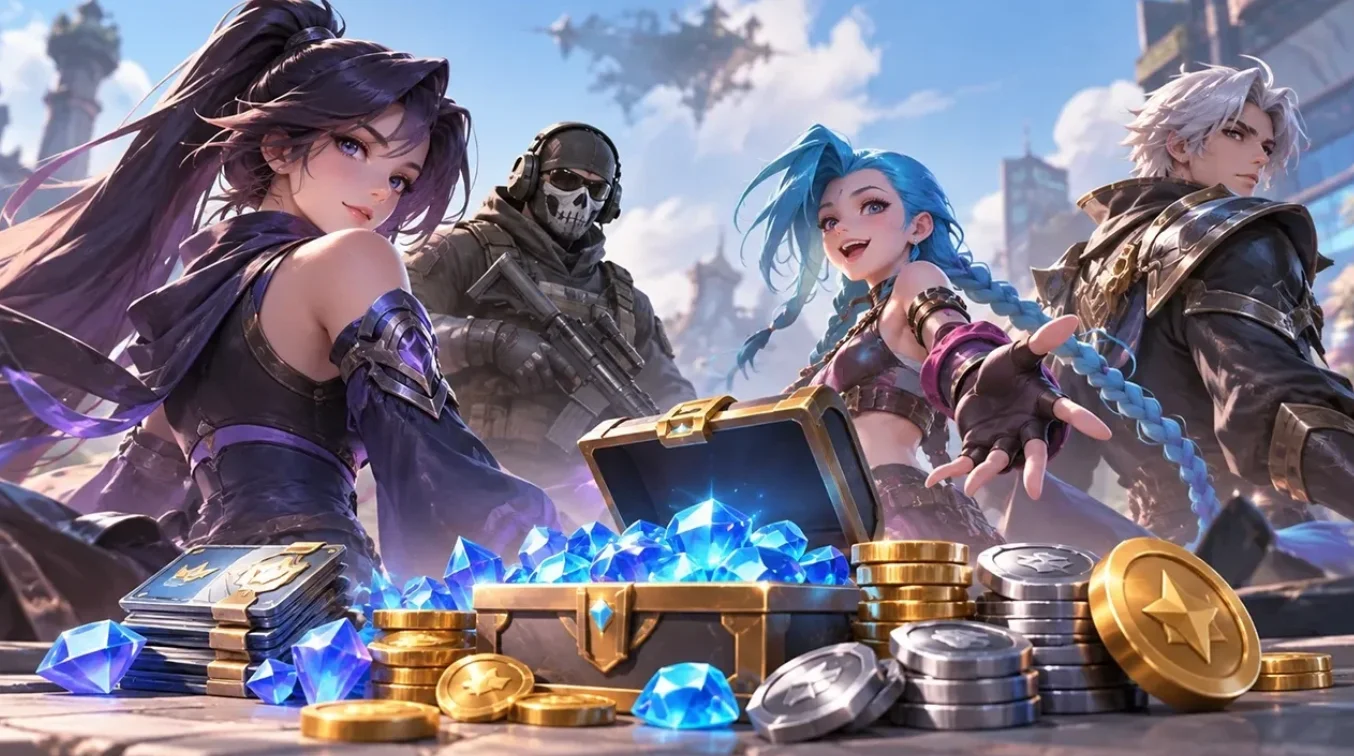
Back in the early days of digital gaming, paying for a game was a straightforward transaction. You handed over a fixed amount of cash, downloaded or unwrapped your title, and owned the experience from start to finish. There were no hidden paywalls, no recurring micro-transactions, and certainly no concept of purchasing abstract digital tokens to speed up progress.
Why would anyone spend money on disposable, intangible data pixels? Why do mobile and modern online gamers prefer buying virtual currency over purchasing a complete game upfront?
The answer lies in a fascinating intersection of human evolutionary psychology, modern game design, behavioral economics, and shifting consumer expectations.
1. The Barrier to Entry and the Psychology of “Free”
One of the primary reasons in-game currency models outperform traditional upfront sales—especially on mobile devices—is the elimination of the barrier to entry.
When a developer prices a game at a flat rate of twenty or thirty dollars, they erect an immediate financial wall. A player must weigh the risk of spending money on a product they have never experienced. If they buy the game and hate it, they feel cheated.
Free-to-play models completely dismantle this friction. Anyone can download, install, and experience the core loop of the game without spending a single cent. This massive accessibility creates a huge player base. Once users are inside the ecosystem and become emotionally invested, monetization transitions from a risk-filled upfront purchase into an optional, gradual choice.
The Abstraction of Currency
Another psychological trick driving in-game currency purchases is abstraction. Handing over ten dollars for a game feels like a heavy, conscious financial commitment. However, spending 100 “crystals” or “gems” inside a game feels weightless.
Because prices are obscured behind virtual denominations (e.g., buying a 500-gem pack instead of a $4.99 SKU), the psychological pain of paying is drastically reduced. Over time, players accumulate multiple small transactions—buying energy refills, card packs, or event currency—often spending far more than the price of a traditional AAA game without ever realizing it. Trusted platforms like topupcheap have emerged in this space, providing gamers with a secure, reliable way to acquire these virtual assets safely and efficiently without compromising their accounts.
2. Instant Gratification and Overcoming Artificial Scarcity
Human beings are hardwired to seek immediate rewards. Modern game design leans heavily on this psychological trigger.
Many games are structured around artificial scarcity and time gates. For example, upgrading a high-tier character might require a rare resource that takes weeks of grinding to accumulate, alongside an abundant resource like common gold. Alternatively, a puzzle game might limit a player’s daily energy, forcing them to stop an inherently pleasurable activity and wait hours for a meter to refill.
Fixing Time Planning Errors and Purchasing Efficiency
Players buy in-game currency to buy back their most precious non-renewable resource: time.
- Bypassing the Grind: Impatient players or busy adults with disposable income and limited free time prefer to pay to skip repetitive, mundane tasks.
- Fixing Mistakes: In farming, crafting, or simulation games, poor resource management can stall progress. Spending a small amount of currency instantly fixes these time-planning errors.
Instead of waiting days for a structure to build or a timer to reset, a quick currency transaction provides immediate gratification. For players looking to top up their balances quickly without risking security vulnerabilities, services like topupcheap offer a streamlined, secure marketplace for handling game currency top-ups safely.
3. Establishing Identity, Status, and “Peacocking”
In the real world, clothing and accessories are rarely purchased solely for physical survival; they are profound statements of social identity, personal style, and status. The exact same principle applies to virtual worlds.
Game developers have mastered leveraging evolutionary psychology—specifically traits like peacocking (the biological urge to display excess resources to stand out) and the desire for social belonging.
- The Power of Cosmetics and Skins: In competitive multiplayer games, vanity items (such as skins, custom emotes, glowing weapon wraps, or rare character outfits) do not grant statistical advantages. Yet, players spend fortunes on them. Why? Because they communicate uniqueness, elite status, or alignment with a specific subcultural group.
- Standing Out in Crowds: In social games, a rare skin acts like a luxury designer brand in real life. It signals to other players: “I have invested time, skill, or resources into this world, and I am unique.”
4. Maintaining Relationships and the Power of Gifting
Humans are deeply social creatures shaped by millennia of tribal survival, where collaboration and altruism were prerequisites for avoiding extinction. One of the primary social rituals driving human connection across every culture is gift-giving. Gift-giving triggers a psychological rule of reciprocity, binding social groups closer together.
While early free-to-play titles kept transactions entirely solitary, modern games have introduced social monetization. A prime example is the ability to gift a “Battle Pass” or premium currency to a friend in games like Fortnite.
When a player spends real money to gift a digital item to a teammate, it strengthens social bonds, deepens friendships, and often creates a viral loop where the recipient feels compelled to return the favor. This social dimension elevates in-game currency from a selfish, purely functional cheat code into an interactive tool for building digital communities.
5. The Shift from Ownership to Experience
Ultimately, the clash between traditional gamers and mobile/online gamers comes down to a philosophical divide over the definition of value:
- The Traditionalist View: Value is tied to tangible ownership. You buy a game box or a permanent digital license, own the software, and play through a definitive beginning, middle, and end. To this group, spending money on consumable, temporary in-game data feels like throwing money away.
- The Modern Gamer View: Value is tied to active experience and social utility. To an active player spending hundreds of hours inside a living, breathing, constantly updated multiplayer world, the game is not a static product—it is a hobby, a social club, and a daily pastime. Spending money on currency to unlock a favorite character, customize an aesthetic, or enjoy smoother progression is viewed no differently than buying popcorn at a cinema or purchasing tickets to a theme park.
Conclusion
As the gaming ecosystem continues to evolve toward service-based, community-driven worlds, micro-transactions and virtual currencies are here to stay. Whether players are looking to optimize their time, express their unique digital identity, or gift items to friends, navigating these economies safely is paramount. Utilizing secure sites like topupcheap ensures that players can protect their digital investments while continuing to enjoy the rich, fast-paced experiences that modern games provide.

David Weber is an experienced writer specializing in a range of topics, delivering insightful and informative content for diverse audiences.
Top notch service and very fair odds. I really appreciate the transparency they have with their terms. w88kt is definitely a winner in my book.