
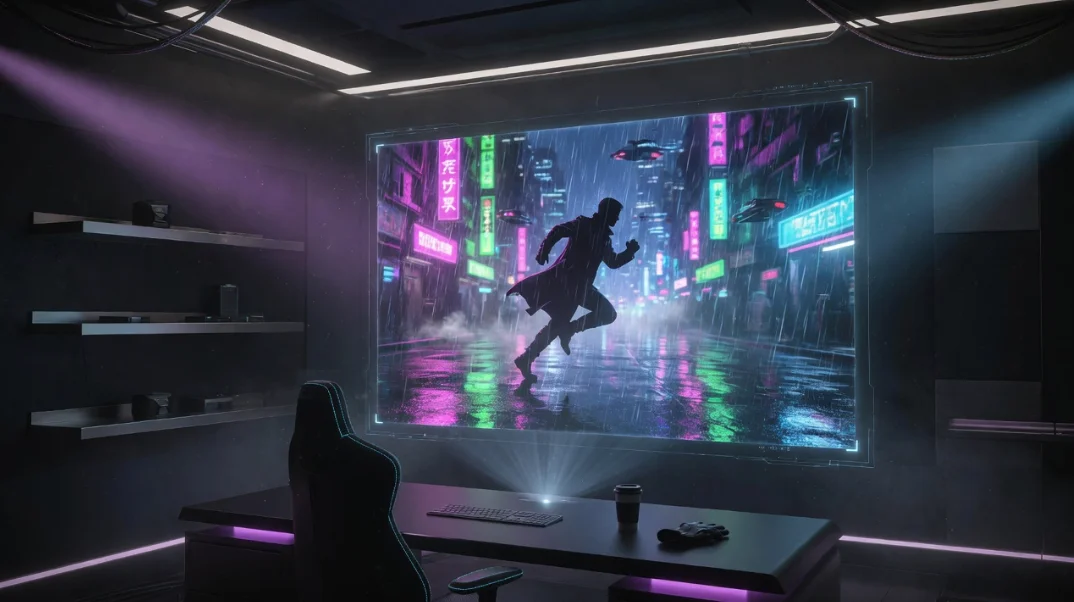
You’ve probably scrolled past one already. A clip of a rainy neon street that no camera crew ever visited. A historical figure smiling in perfect 4K. A product shot that would have cost a small fortune to film. AI video has moved from “weird tech demo” to “thing your cousin uses for their small business” — and it happened faster than most people noticed.
But there’s a lot of confusion floating around, too. Some people think it’s magic. Others think it’s a scam. The truth is somewhere in between, and once you understand the basics, it’s honestly not that complicated.
What AI Video Generation Actually Is
Strip away the hype and the idea is simple: you describe a scene, and the software builds the frames for you.
Most tools work from a few types of input:
- A text prompt — “a foggy morning in a cherry orchard, camera slowly rising”
- An image — a photo or illustration you want to bring to life
- A reference clip or character — something to keep consistent across shots
The models are trained on enormous amounts of video, which is how they know what motion looks like. They’re not “filming” anything. They’re predicting frames, one after another, based on what you asked for.
That’s the whole secret. Impressive, sure. But not magic.
Why This Year Feels Different
Video models have been improving steadily, but 2026 is the first year the improvements became obvious to regular users.
Take Alibaba’s Wan line, which has been behind a surprising share of the AI clips circulating online. The latest entry, Wan 3.0, entered public beta this month, and the early demos show clips around thirty seconds long — generated in one pass, with audio already synced. That’s a real jump. A year ago, most models could barely manage ten seconds without the motion falling apart.
For context, that changes what the tools are useful for. Ten seconds was fine for a transition or a teaser. Thirty seconds is enough for a proper short ad, a scene from a story, or a real social media post.
What It Still Can’t Do
Here’s the part most articles skip: AI video still has obvious weaknesses, and pretending otherwise does nobody any favors.
- Hands and small details go wrong more often than you’d think.
- Text that appears inside a scene — signs, logos, captions — frequently comes out garbled.
- Keep characters consistent across separate clips and they sometimes change appearance mid-story.
- Fast motion can blur or morph in strange ways.
None of these are deal-breakers for casual use. But if you’re planning to publish something, budget time to review and re-generate. The tools are draftsmen, not editors.
How to Try It Without a Big Budget
The good news: you don’t need a gaming PC or a production budget to test any of this.
Almost every major model now runs in a browser. You sign up, get some free credits, type a description, and wait a couple of minutes. That’s the entire barrier to entry.
If you want a concrete starting point, the Wan 3.0 Video is a reasonable place to begin — it’s browser-based, has a free tier, and shows off the latest model without requiring any setup. I’d also suggest starting with a still image rather than pure text; feeding it a picture of your subject usually gives you more control over the result.
A Few Things to Know Before You Start
A handful of practical notes, learned the slightly embarrassing way:
- Be specific. “A dog running” gives you a generic dog. “A golden retriever sprinting through a shallow stream, water splashing, camera following low” gives you something worth keeping.
- Iterate. The first output is rarely the one you use. Plan for a few tries.
- Keep an eye on storage. Generated clips are bigger than you expect, and versions pile up fast.
- Be honest about what you post. If a video is meant to look real, say it’s AI-generated. It’s both fairer and safer.
Conclusion
AI video generation is a real, useful, and increasingly ordinary tool — not magic, and not a scam. The models are finally good enough for everyday projects, the tools run in your browser, and the only real cost is your time.
If you’ve been curious about it but figured it wasn’t for you, this is a good month to give it a shot. The hardest part is typing the first prompt.

David Weber is an experienced writer specializing in a range of topics, delivering insightful and informative content for diverse audiences.
Found this site through a friend and it did not disappoint. The customer support is very responsive and helpful. Keep it up phjiliuu!
Solid overview – the “what it still cannot do” section especially. From the post-production side, one thing I keep seeing: even when AI video gets 90% of the way there, creators still lose hours cleaning up source material – hardcoded subtitles burned into stock clips, fixed logos or timestamps on footage they are licensed to edit. That is the gap we built Markswipe for: a browser tool that auto-erases hardcoded subs or draws up to two boxes over fixed marks. Generation gets the attention, but the cleanup around it eats the real time.
Solid performance and great graphics. I’ve spent a few hours here and the experience has been flawless so far. Big shoutout to bd7r7777.