
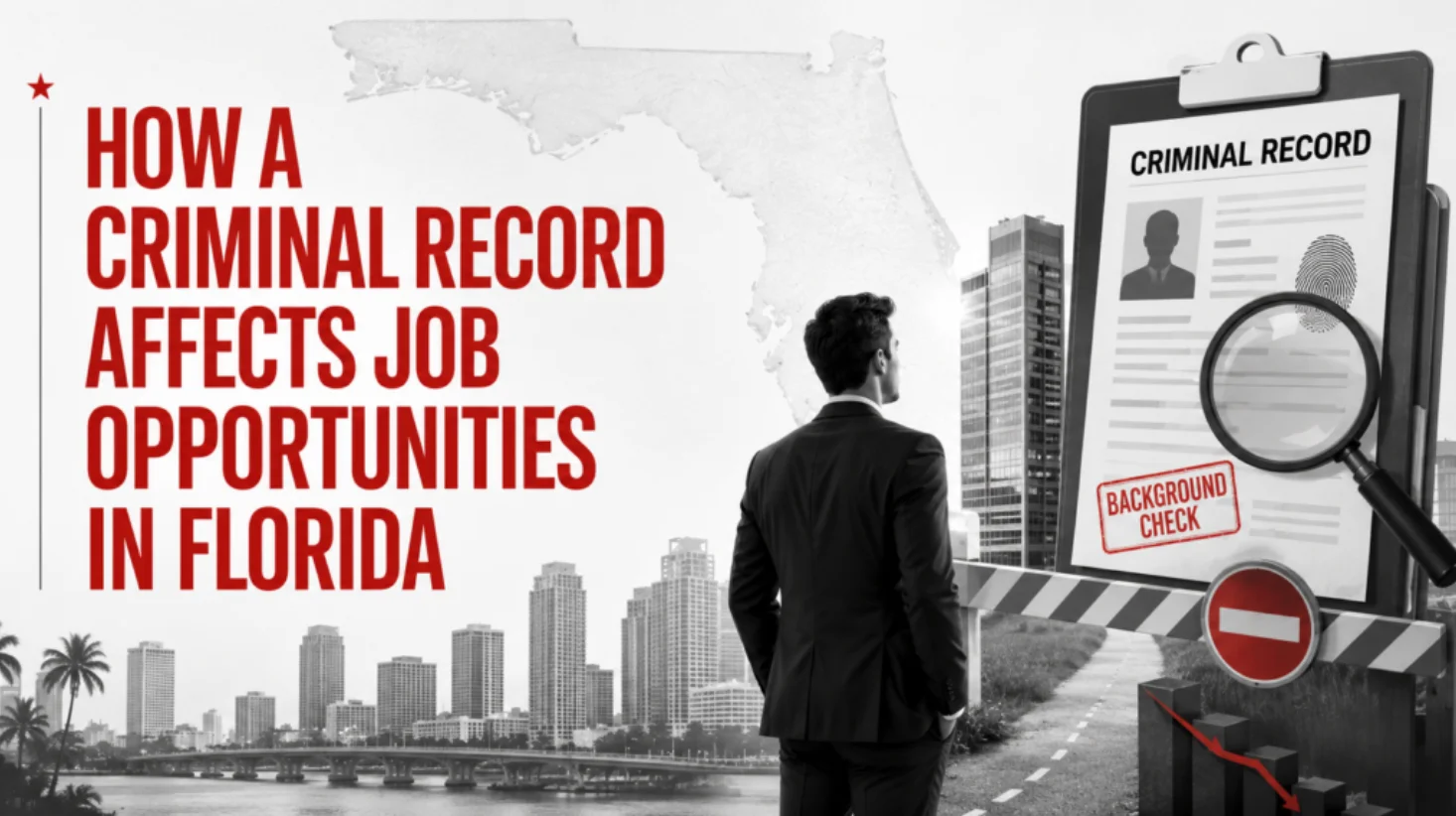
A criminal record is a documented history of arrests, charges, convictions, court outcomes, and related criminal justice information. In job hunting, a criminal record matters because employers use employment screening to evaluate workplace safety, legal compliance, trust, and job-related risk.
Florida job applicants face a specific concern because criminal records appear through court records, Florida Department of Law Enforcement records, private background check companies, and online data brokers. A criminal record that appears on a background check affects employment, housing, and licensing opportunities in Florida.
What Shows Up When Employers Review a Criminal Record?
A criminal record appears in several forms during job hunting. Employers and screening companies look at arrests, pending charges, dismissed cases, convictions, warrants, sentencing information, and sometimes professional license history.
Florida employment background checks commonly cover criminal records, employment history, education history, and professional license verification. The same source explains that Level 2 checks use fingerprinting with FBI and FDLE review.
A record creates different hiring effects based on the job. A misdemeanour has a different employment impact than a recent felony conviction involving theft, violence, fraud, or a regulated duty. Healthcare, education, finance, child care, security, and public service employers apply stricter review because state or federal rules govern many roles.
This creates the first job-hunting issue: the record does not speak alone. The employer reads the record through the duties of the position.
Why Does a Criminal Record Affect Hiring Decisions?
A criminal record affects hiring because employers connect past conduct with workplace responsibility, customer safety, property access, and regulatory compliance. The EEOC tells employers to consider the nature of the crime, the time that has passed since the conduct, and the nature of the job before using criminal history in an employment decision.
This job-related review matters. A conviction for driving under the influence has more relevance for a commercial driving role than for a remote office role. A theft conviction has more relevance for a cash handling job than for a position with no financial access.
The EEOC also instructs employers to treat applicants with similar criminal records consistently. An employer creates discrimination risk when one applicant receives consideration, and another applicant with a similar record receives rejection because of race, national origin, or another protected trait.
How Do Background Checks in Florida Shape Job Hunting?
Background checks in Florida shape job hunting by giving employers structured access to criminal history, identity information, and job qualification records. A Florida background check has stronger consequences when the record appears before the applicant explains the case.

Employers run background checks for workplace safety, regulatory compliance, liability control, and reputation protection. These employer goals explain why a record affects interviews, conditional offers, onboarding, and licensing approvals.
Florida applicants should review their own records before applying for sensitive roles. FDLE allows people to obtain a Florida criminal history record for a fee through its criminal history record search.
How To Clear a Background Check After Record Relief?
How to clear a background check is a practical question because sealing or expungement does not always remove old information from private databases immediately. Erase The Case, a dedicated Florida expungement law firm, explains that criminal background check removal includes clearing records from FDLE databases, commercial background check companies, online data brokers, and mugshot sites. Professionals from the firm also guide you through the procedures to build a strong background before applying for jobs, as follows:

Step 1: Review Your Current Records
- Obtain your files: Secure a copy of your background report from the background screening company, potential employer, or landlord who initiated the check.
- Audit the entries: Carefully examine the document for any criminal history markers. Pay close attention to older entries, including cases that were dismissed, dropped, or previously restricted, as they can sometimes still appear.
Step 2: Determine Your Legal Eligibility
- Understand state requirements: Restricting public access to criminal data typically requires a formal court-ordered sealing or expungement.
- Verify qualifications: Generally, to be eligible for record relief, the legal proceedings must have concluded without a formal conviction or adjudication of guilt.
Step 3: Secure an Official Court Order
- Request state certification: Apply for a formal Certificate of Eligibility through the appropriate state department or law enforcement division.
- Submit the legal paperwork: Complete the necessary legal petitions and file them with the clerk of court in the specific county where the original incident occurred.
- Obtain your proof: Once approved by a judge, this signed court order serves as your definitive legal mandate confirming the record is officially restricted.
Step 4: Notify Government Repositories
- Distribute the mandate: Forward copies of your certified court order to state law enforcement divisions, local law enforcement agencies, and relevant federal databases.
- Enforce official updates: This step ensures that government-managed databases properly update their systems to reflect the change.
Step 5: Inform Commercial Screening Agencies
- Submit direct updates: Commercial data aggregators and private background check firms do not instantly sync with court systems. You must manually send them your court order.
- Invoke federal protections: Request removal by leveraging consumer rights protected under the Fair Credit Reporting Act (FCRA), which mandates that background companies report accurate, up-to-date information.
Step 6: Address Non-Compliant Data Brokers and Web Platforms
If a private website continues to display your restricted or expunged records, take the following steps:
- Request search engine de-indexing: Utilize search engine removal requests (such as Google’s content removal tools) to scrub outdated, harmful, or legally restricted personal details from public search results.
- Issue copyright notices: If a site is hosting your digital property without authorization—such as a mugshot photo—consider filing a DMCA takedown notice.
- Seek legal recourse: If a consumer reporting agency or digital publisher flatly refuses to correct inaccurate information, consult with legal counsel regarding violations of the FCRA or state-level consumer protection statutes.
Step 7: Conduct a Final Audit
- Monitor your digital footprint: Run a self-background check and perform search engine queries on your own name.
- Confirm compliance: Verify that the records have been successfully purged from state databases, commercial screening software, and major online search indices.
Conclusion
A criminal record affects job hunting by influencing background checks, interview timing, employer risk review, professional licensing, and final hiring decisions. Florida applicants improve outcomes when they review their records, dispute inaccurate reports, prepare job-related explanations, and pursue sealing, expungement, or background check removal when eligible.
Applicants who need Florida-specific help can explore record cleanup services, confirm eligibility, and contact qualified professionals before submitting applications for sensitive roles.

David Weber is an experienced writer specializing in a range of topics, delivering insightful and informative content for diverse audiences.