
British people have a special talent for turning ordinary conversations into memorable moments with funny British sayings. These witty expressions blend clever wordplay, dry humour, and centuries of tradition, making everyday speech far more entertaining. From classic phrases like Bob’s your uncle to colourful British slang, each saying carries a unique story that reflects British culture and local customs. Some expressions sound confusing at first, yet their charm becomes clear once you understand their meanings.
In this guide, you’ll discover the funniest sayings, learn when to use them, and explore how these British expressions continue to shape British English sayings in modern conversations across the United Kingdom.
What Are Funny British Sayings?
Why do funny British sayings sound so different?
The charm of funny British sayings comes from imagination rather than logic. Many expressions compare ordinary situations to unusual objects or humorous events. Instead of saying someone is tired, a Brit might call themselves Cream crackered. Rather than saying something is nonsense, they could simply mutter Poppycock. These colourful phrases make conversations lively while preserving the playful character of British language.
Most of these expressions belong to British idioms, British colloquialisms, and informal British English. Their meanings rarely match the individual words, which surprises visitors. That’s exactly why they remain memorable. Once you understand the hidden meaning, they become much easier to recognise in films, books, and real conversations.
How British humour shaped these famous expressions?
Unlike many languages that favour direct speech, British people often enjoy understatement, irony, and gentle sarcasm. This habit created thousands of quirky British expressions that soften criticism or add humour without sounding rude.
Imagine someone arriving in heavy rain without an umbrella. Instead of expressing sympathy immediately, a friend might laugh and say, “Taking the biscuit,” before offering help. That playful balance between humour and kindness reflects the heart of British humour.
Many expressions also spread through literature, theatre, television, and local communities. Some even developed through Cockney rhyming slang, while others came from farming villages, factories, or busy London markets. These influences created the rich collection of British English sayings people still enjoy today.
How funny British sayings became part of everyday life?
Many visitors believe these expressions belong only in comedy shows. In reality, they remain common throughout daily conversations. Friends use them while chatting in cafés. Families repeat them during dinner. Colleagues hear them in offices across the country.
Although younger generations invent new phrases every year, many traditional British sayings, classic British sayings, and popular British expressions continue to survive because they feel familiar and entertaining. They connect different generations through shared language and cultural identity.
Popular Funny British Sayings and Their Meanings
Understanding British words and meanings becomes much easier when you see expressions in everyday situations. The following table explains several famous sayings that still appear across Britain today.
| Funny British Saying | Meaning | Example |
| Bob’s your uncle | Everything is finished successfully | Follow these steps and Bob’s your uncle. |
| Blimey | Expression of surprise | Blimey, that’s a huge dog. |
| Bloody hell | Strong surprise or frustration | Bloody hell, I forgot my wallet. |
| Chuffed | Very pleased or proud | She felt Chuffed after winning the prize. |
| Knackered | Extremely tired | I’m absolutely Knackered after work. |
| Gobsmacked | Completely shocked | We were Gobsmacked by the final result. |
| Cheeky | Playfully bold or slightly naughty | That was a Cheeky question to ask. |
| Gutted | Deeply disappointed | He felt Gutted after missing the train. |
| Have a chinwag | Enjoy a friendly conversation | Let’s Have a chinwag over coffee. |
| Full of beans | Full of energy | The children were Full of beans all afternoon. |
Saying 1: Bob’s your uncle
Few expressions represent funny British sayings better than Bob’s your uncle. People usually say it after explaining simple instructions. It means everything will work perfectly once the final step is complete. Although its exact history remains uncertain, many believe it became popular during the nineteenth century.
Saying 2: Blimey
Blimey expresses surprise without sounding offensive. You might hear someone say it after seeing an expensive car, an unexpected football result, or a dramatic weather change. It remains one of the best-known British conversational phrases.
Saying 3: Bloody hell
Despite containing a strong word, Bloody hell often sounds surprisingly casual among British speakers. People use it when something unexpected happens. Visitors should remember that tone matters. Friends may laugh together after saying it, while formal situations usually require milder language.
Saying 4: Chuffed
If someone tells you they’re Chuffed, they’re extremely happy. Success at work, passing an exam, or receiving good news can all leave someone feeling delighted. It remains one of the most popular examples of everyday UK English.
Saying 5: Knackered
After walking all day through London or hiking across the countryside, many people describe themselves as Knackered. It simply means completely exhausted. You’ll hear this expression throughout Britain regardless of age.
Saying 6: Gobsmacked
Nothing captures genuine surprise better than Gobsmacked. Imagine winning the lottery unexpectedly. Most people would struggle to speak. That’s exactly the feeling this colourful expression describes.
Saying 7: Cheeky
British people often describe playful behaviour as Cheeky. A humorous joke, a clever reply, or even ordering dessert before dinner might earn this description. Unlike many insults, it usually sounds affectionate.
Saying 8: Gutted
Losing your favourite football match or cancelling a long-awaited holiday can leave you feeling Gutted. The word expresses genuine disappointment without becoming overly dramatic.
Saying 9: Have a chinwag
Friends who sit together discussing life often decide to Have a chinwag. This expression reflects the relaxed style of British speech patterns, where conversation matters just as much as the topic itself.
Saying 10: Full of beans
Children running around the garden often appear Full of beans because they seem impossible to slow down. Adults also use this phrase when someone shows unusual enthusiasm or endless energy.
Also Read: Christian Sayings
Classic British Slang Words That Will Make You Laugh
Why British slang words are so entertaining?
One reason funny British sayings remain popular is their unforgettable slang. Many British slang words sound odd at first, yet they quickly become part of your vocabulary once you know their meanings. These expressions add colour to British language, making everyday conversations lively and memorable. They also reveal how British culture values humour, understatement, and creativity.
Many slang terms developed from working-class communities, local dialects, and Cockney rhyming slang. Others spread through television, football, music, and social media. Today, you’ll hear them across England, Scotland, Wales, and Northern Ireland, although regional British slang still gives each area its own personality.
Popular British slang words and their meanings
| British Slang Word | Meaning | Example |
| Faff about | Waste time doing unimportant things | Stop Faff about and let’s leave. |
| Taking the mickey | Making fun of someone | Are you Taking the mickey? |
| A load of tosh | Complete nonsense | That story is A load of tosh. |
| Quids in | In a lucky position | We bought cheap tickets, so we’re Quids in. |
| Whinge | Complain constantly | Don’t Whinge about the weather. |
| Prat | Silly person | You forgot your keys again, you Prat. |
| Bog-standard | Very ordinary | It’s a Bog-standard family car. |
| Geezer | Man, often friendly | He’s a funny old Geezer. |
| Skive | Avoid work or school | They tried to Skive on Friday. |
| Ace | Excellent | That meal was Ace. |
Saying 1: Faff about
People who spend twenty minutes looking for their phone before leaving the house often Faff about without noticing. This expression perfectly describes unnecessary delays. It remains one of the funniest examples of common UK slang because almost everyone has done it at least once.
Saying 2: Taking the mickey
When friends tease each other without causing offence, they’re usually Taking the mickey. British people enjoy light-hearted jokes, which explains why this phrase appears so often in British conversational phrases.
Saying 3: A load of tosh
If someone tells an unbelievable story, another person may laugh and call it A load of tosh. Instead of arguing, this expression dismisses nonsense with humour. It has become one of the best-known funny English expressions.
Saying 4: Quids in
Imagine buying a valuable bicycle for half its usual price. Your friend might smile and say you’re Quids in. The expression celebrates unexpected good fortune and reflects everyday British vocabulary.
Saying 5: Whinge
Every office seems to have someone who loves to Whinge about Mondays, traffic, or the weather. While everyone complains occasionally, British people use this word playfully instead of sounding harsh.
Saying 6: Prat
Calling someone a Prat usually means they’ve done something silly rather than serious. Forgetting your birthday cake or wearing mismatched shoes could earn this harmless label among close friends.
Saying 7: Bog-standard
A Bog-standard product isn’t exciting, yet it works perfectly well. British speakers often use this phrase for everyday objects that lack luxury or special features.
Saying 8: Geezer
A friendly Geezer may simply be an ordinary man with plenty of stories. Depending on context, the word can describe someone respected, humorous, or slightly old-fashioned.
Saying 9: Skive
Students sometimes dream about Skive days when they avoid school for no good reason. Adults also use the word for skipping work without permission, although employers rarely appreciate the joke.
Saying 10: Ace
Whether describing a football match, a holiday, or fish and chips, Ace simply means excellent. It remains one of the easiest British slang for beginners to learn because people still use it regularly.
Funny British Phrases for Everyday Conversations
Everyday British phrases make simple chats more enjoyable
Daily conversations across Britain rarely sound boring. Instead of speaking plainly, many people choose funny British phrases that make ordinary moments more entertaining. These everyday British phrases often appear while greeting neighbours, chatting with colleagues, or joking with family members. Learning them helps you understand the phrases British people say naturally every day.
Unlike formal English, these expressions create warmth and friendliness. They also help visitors understand expressions used in the UK without feeling confused. Once you recognise these sayings, British television programmes and conversations suddenly become much easier to follow.
Everyday funny British sayings you should know
| British Saying | Meaning | Everyday Example |
| Lovely jubbly | Excellent or wonderful | That’s Lovely jubbly news. |
| Off you trot | Time to leave | Dinner’s finished, Off you trot. |
| Taking the biscuit | Going too far | That delay is Taking the biscuit. |
| A few sandwiches short of a picnic | Not very sensible | He’s A few sandwiches short of a picnic. |
| Dog’s dinner | Complete mess | Your room looks like a Dog’s dinner. |
| Swings and roundabouts | Every situation has advantages and disadvantages | It’s Swings and roundabouts really. |
| Bits and bobs | Small miscellaneous things | I bought some Bits and bobs today. |
| Brolly | Umbrella | Don’t forget your Brolly. |
| Builder’s tea | Strong tea with milk | I’d love a Builder’s tea. |
| Alright? | Casual greeting | Alright? How’s your day going? |
Saying 1: Lovely jubbly
When everything works out perfectly, many British people happily say Lovely jubbly. The phrase became especially famous through classic television comedy. Today, it still represents cheerful British catchphrases.
Saying 2: Off you trot
Parents often tell children Off you trot when it’s time for bed or school. Rather than sounding rude, the phrase feels warm and encouraging. It’s one of those words only British people use naturally.
Saying 3: Taking the biscuit
Someone arriving two hours late without apologising might be Taking the biscuit. This saying politely points out that someone has crossed the line while keeping the mood humorous.
Saying 4: A few sandwiches short of a picnic
Instead of calling someone foolish directly, British speakers may describe them as A few sandwiches short of a picnic. The expression softens criticism through clever imagery, making it one of the funniest British idioms with meanings.
Saying 5: Dog’s dinner
If your bedroom is covered with clothes, books, and empty cups, someone might say it looks like a Dog’s dinner. The phrase paints a vivid picture without sounding overly serious.
Saying 6: Swings and roundabouts
Life rarely offers perfect choices. That’s why British people often shrug and say Swings and roundabouts. Every decision brings both benefits and drawbacks. This practical attitude reflects everyday British speech patterns.
Saying 7: Bits and bobs
Shopping for screws, batteries, cleaning supplies, and notebooks means buying Bits and bobs. The phrase covers many small items without listing each one individually.
Saying 8: Brolly
Britain’s famous weather explains why Brolly remains one of the country’s favourite slang words. Even on sunny mornings, many people carry one just in case.
Saying 9: Builder’s tea
A proper Builder’s tea usually contains strong black tea with plenty of milk. Some people even add extra sugar. It has become part of traditional English expressions linked with comfort and everyday life.
Saying 10: Alright?
Visitors sometimes think Alright? is a serious question about their health. Usually, it’s simply a friendly greeting similar to saying “Hello.” Understanding small details like this helps you speak authentic British English more confidently.
How these everyday sayings improve your English?
Learning funny British sayings isn’t only about sounding amusing. These expressions help you understand films, books, podcasts, and real conversations much more easily. They also introduce you to British expressions explained, the origin of British phrases, British sayings for daily life, and many funny things British people say without sounding forced.
Humorous British Expressions for Excitement and Surprise
Why British people react with humour instead of drama?
One reason funny British sayings remain unforgettable is the way British people express excitement, amazement, and surprise. Instead of shouting loudly, they often choose clever British expressions that sound amusing while keeping conversations friendly. These funny UK sayings reveal the playful side of British humour and make ordinary moments far more entertaining.
Whether someone wins a football match, discovers unexpected good news, or sees something unbelievable, these expressions appear naturally in everyday UK English. They also help learners understand British language expressions without sounding overly formal.
Funny British expressions for exciting moments
| British Expression | Meaning | Example |
| It’s brass monkeys | Extremely cold weather | It’s It’s brass monkeys outside today. |
| Chockablock | Completely full | The train is Chockablock this morning. |
| Brassed off | Very annoyed | I’m Brassed off with the delays. |
| Bees knees | Outstanding or excellent | That restaurant is the Bees knees. |
| Any road | Anyway | Any road, let’s continue. |
| Nick | Steal | Someone tried to Nick my bicycle. |
| Mug | Foolish or easily tricked person | Don’t be a Mug. |
| Butcher’s hook | A look | Come and have a Butcher’s hook. |
| Waffle | Talk too much | Stop Waffle and answer the question. |
| Chinwag | Friendly conversation | We enjoyed a long Chinwag yesterday. |
Saying 1: It’s brass monkeys
When winter becomes bitterly cold, many British people describe the weather as It’s brass monkeys. The phrase exaggerates the cold in a humorous way. It has survived for generations because it sounds far more entertaining than simply saying the temperature has dropped.
Saying 2: Chockablock
A busy shopping centre before Christmas often becomes Chockablock with people. The word describes places that are completely full. It appears regularly in British conversational phrases because crowded trains, buses, and markets are familiar experiences.
Saying 3: Brassed off
After waiting hours for a delayed flight, anyone might feel Brassed off. Instead of sounding aggressive, the expression communicates frustration with a touch of classic British understatement.
Saying 4: Bees knees
When something is exceptionally good, British speakers may proudly call it the Bees knees. Whether describing homemade cake or a new car, this cheerful saying has remained one of the most loved iconic British phrases.
Saying 5: Any road
People across northern England often say Any road instead of “anyway.” The phrase gently moves a conversation forward. It demonstrates how regional British slang creates charming differences across the United Kingdom.
Saying 6: Nick
If someone plans to Nick your lunch from the office fridge, they’re planning to steal it. The word appears frequently in films, television dramas, and casual conversations throughout Britain.
Saying 7: Mug
Calling someone a Mug usually means they have been fooled or treated unfairly. Friends often use it jokingly, although strangers should avoid using it carelessly.
Saying 8: Butcher’s hook
The expression Butcher’s hook comes from Cockney rhyming slang. It simply means “look.” Someone may say, “Have a Butcher’s hook at this photograph.” Many visitors find this style of speech fascinating because it transforms ordinary words into memorable expressions.
Saying 9: Waffle
Some people never stop talking. British speakers politely tease them by saying they Waffle. The expression suggests endless talking without saying very much at all.
Saying 10: Chinwag
Friends meeting after several months usually enjoy a long Chinwag over tea or coffee. This friendly expression highlights how conversation itself remains an important part of everyday British life.
Funny British Insults (Mostly Playful, Not Offensive)
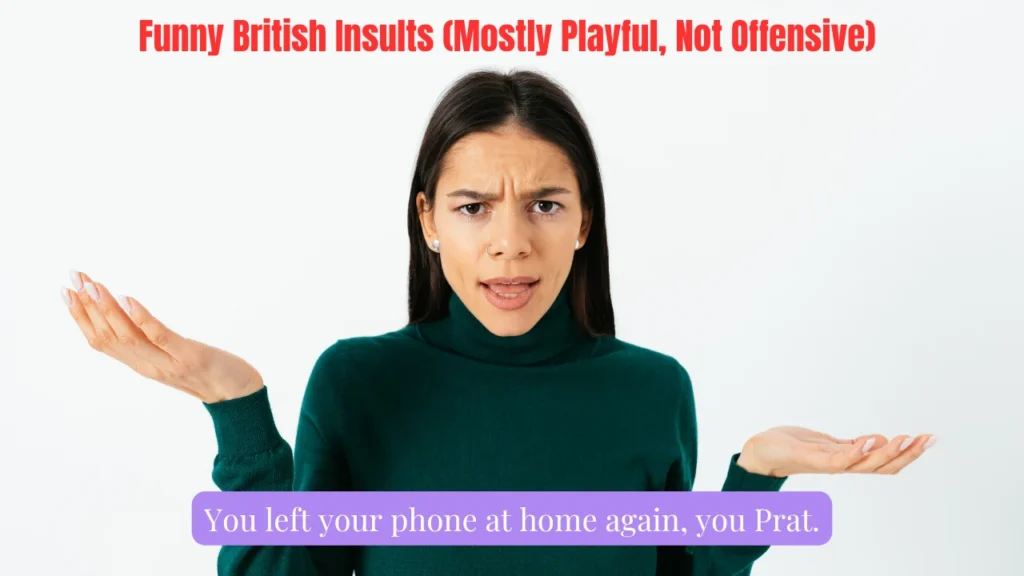
British banter often sounds harsher than it really is
Many visitors misunderstand British insults because they sound stronger than intended. In reality, friends frequently tease each other without causing offence. This playful style, known as banter, forms an important part of British culture. Understanding these expressions helps you recognise jokes rather than arguments.
Most of these sayings should only be used with people you know well. Tone and context matter far more than the words themselves.
Playful British insults and what they really mean
| British Insult | Meaning | Example |
| Prat | Silly person | You left your phone at home again, you Prat. |
| Mug | Easily fooled person | Don’t be a Mug. |
| Wally | Foolish but harmless person | You parked in the wrong place, you Wally. |
| Numpty | Slightly silly person | Don’t be such a Numpty. |
| Daft | Silly | That’s a Daft idea. |
| Plonker | Fool | Stop acting like a Plonker. |
| Berk | Idiot | You silly Berk. |
| Cheeky | Playfully bold | You’re being Cheeky today. |
| A few sandwiches short of a picnic | Not very sensible | He’s A few sandwiches short of a picnic. |
| Taking the mickey | Teasing someone | Are you Taking the mickey again? |
Why British people enjoy playful teasing?
British banter depends on friendship and trust. Close friends may exchange these expressions while smiling throughout the conversation. That balance between humour and affection explains why many common British phrases sound surprisingly sharp to visitors yet rarely cause offence among locals.
The Most Stereotypical British Sayings Everyone Knows
Famous expressions recognised around the world
Some classic British sayings have become so well known that people recognise them even without visiting Britain. Television, literature, and social media helped these British catchphrases travel across the globe. Although they sound amusing, native speakers still use many of them today.
Expressions such as Bob’s your uncle, Blimey, Cheeky, Lovely jubbly, The bee’s knees, and Have a chinwag represent the spirit of uniquely British sayings. They continue to introduce learners to British sayings and meanings while celebrating the country’s distinctive sense of humour.
Why British Sayings Sound So Funny to Non-Brits?
Culture shapes the language people speak
Many funny British sayings confuse international visitors because they rely on culture rather than literal meaning. A learner expects words to make logical sense. British speakers often value wit instead. That contrast creates many unforgettable moments.
Many British idioms, old British sayings, and English sayings developed hundreds of years ago through farming, trade, theatre, and local traditions. Others emerged from British slang, military life, or Cockney slang examples. Their unusual history explains why the expressions remain colourful today.
Learning British sayings becomes easier with context
Watching British television, reading novels, and speaking with native speakers quickly improves your understanding. Instead of memorising definitions alone, notice how people naturally use these phrases. Over time, you’ll recognise funny British slang words, common UK expressions, British phrases for everyday conversation, and funny English sayings without translating every word.
Frequently Asked Questions
What is a very British thing to say?
A classic British expression is “Bob’s your uncle,” which means everything is finished or will work out easily. It’s one of the most well-known funny British sayings still used today.
What are some funny British words?
Popular funny British words include Chuffed, Knackered, Gobsmacked, Brolly, Faff about, and Cheeky. These words add humour and personality to everyday conversations.
What are some funny slang phrases?
Funny British slang phrases include Taking the mickey, A load of tosh, The bee’s knees, Lovely jubbly, and Taking the biscuit. They make ordinary situations sound much more entertaining.
How do British people say “silly”?
British people often say Daft, Prat, Numpty, Wally, or A few sandwiches short of a picnic to describe someone acting silly in a light-hearted way.
Why do Brits say “oy”?
Brits use “Oy!” to quickly get someone’s attention or express mild annoyance. Depending on the tone, it can sound friendly, playful, or slightly stern.
How do Brits say crazy?
Instead of saying “crazy,” British people might say Bonkers, Mad, Barmy, Daft, or Off your trolley, depending on the situation and region.
Also Read: Muslim Sayings
Conclusion
Learning funny British sayings offers much more than expanding your vocabulary. It opens the door to British culture, everyday conversations, and the unique humour that makes the United Kingdom famous around the world. From Bob’s your uncle to Gobsmacked, each expression tells a small story about British life and communication.
The more you hear these funny British phrases, the more natural they become. Whether you’re travelling, studying British English sayings, or simply enjoying British television, these colourful expressions will help you understand conversations with greater confidence. Before long, you’ll recognise the words only British people use, appreciate their hidden meanings, and perhaps even surprise native speakers by slipping a few of these memorable sayings into your own conversations.

David Weber is an experienced writer specializing in a range of topics, delivering insightful and informative content for diverse audiences.
2 thoughts on “Funny British Sayings: Hilarious British Phrases and Their Meanings”