
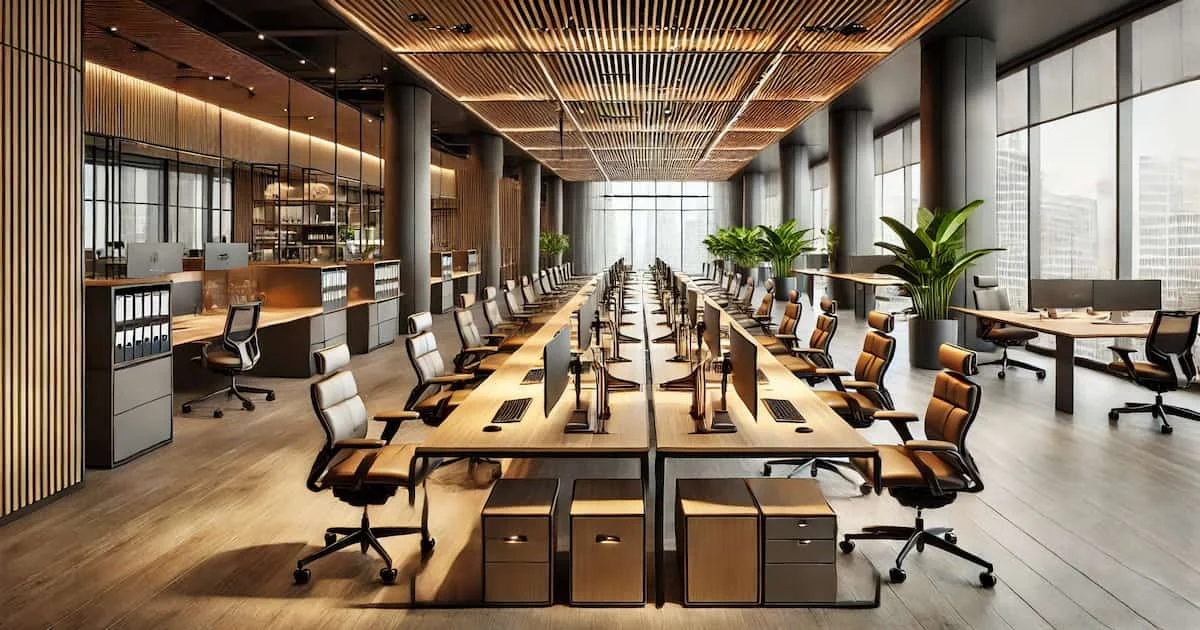
Limited office space creates pressure quickly. A workplace can feel functional when the team is small, then suddenly seem cramped, inefficient, and difficult to move through once desks, chairs, storage, and meeting areas begin competing for the same square footage. Many offices do not actually lack space as much as they lack furniture choices that use it well.
That is why furniture buying should be treated as a layout decision, not a catalog decision. For property managers, facility teams, and business owners, the right purchase can improve circulation, support multiple work modes, reduce clutter, and make a small office feel far more usable without changing the footprint. The key is choosing furniture that complements the room rather than overwhelming it.
Why Small Offices Need Smarter Choices
- Space Efficiency Starts With Furniture
An office with limited floor space cannot afford furniture that looks acceptable but performs poorly in real use. A team comparing options such as ergonomic desks for professionals should consider more than just finish, style, or individual desk size. The more useful question is how each piece contributes to movement, storage, comfort, and flexibility across the full workspace. A good purchase supports the room as a system. A weak purchase takes up space without improving how people actually work inside it.
- Oversized Pieces Create Hidden Waste
One of the biggest mistakes in small offices is choosing furniture that is slightly too large in too many places. A desk may not look oversized on its own, but once paired with a task chair, a guest chair, a pedestal, and surrounding clearance, it can consume more usable area than expected. The same problem appears with bulky conference tables, deep credenzas, and storage units that force awkward circulation paths.
This matters because wasted floor space rarely announces itself dramatically. It shows up through narrow walkways, blocked sightlines, poor seating access, and work areas that feel crowded even when occupancy is low. Furniture should be evaluated not only by its footprint, but by the space it requires around it to function properly.
- Multi-Use Furniture Improves Efficiency
In smaller offices, single-purpose furniture often becomes a luxury the floor plan cannot support for long. A table used only for occasional meetings may occupy space that could serve multiple daily needs. By contrast, furniture that supports more than one function helps the office do more without expanding.
A shared-height table can serve as a meeting surface, a touchdown zone, and a projection space. Mobile storage can serve as an organizational tool during the day and as a space divider when needed. Compact workstations with integrated storage reduce the need for separate cabinets. These choices improve floor space by reducing the number of individual pieces the office must accommodate.
- Storage Decisions Shape Open Space
Poor storage planning is one of the fastest ways to lose usable floor area. When the office lacks efficient storage, materials start spreading onto desks, side chairs, countertops, and circulation zones. The room then feels smaller, not because the footprint has changed, but because the office’s working surface has been consumed by overflow.
Furniture purchases should account for how documents, technology, supplies, and personal items will be stored without introducing bulk in the wrong places. Vertical storage, under-desk solutions, shared storage walls, and compact filing approaches often make more sense than scattering multiple large units around the office. Better storage does not just hide clutter. It gives floor space back to the people using it.
- Desk Choice Affects Room Performance
Desks usually occupy the largest share of the office, so their design has an outsized effect on how spacious or cramped the environment feels. Deep desk surfaces, fixed return units, and oversized executive-style pieces can consume valuable area that smaller offices need for movement and flexibility. Choosing desks with a more efficient footprint often improves the room immediately without reducing actual functionality.
This does not mean selecting the smallest possible workstation. It means selecting desks sized to the tasks being performed. If most work is digital, the layout may not need oversized surfaces meant for paper-heavy workflows. Matching desk dimensions to real work patterns is one of the clearest ways to support better use of limited space.
Smart Purchases Make Small Offices Work Harder
An office furniture purchase supports better use of limited floor space when it improves function without overwhelming the room. The strongest choices reduce wasted footprint, support multiple uses, improve storage, preserve circulation, and fit the actual work being done. In smaller offices, every piece has to justify the area it occupies.
For property managers, facility teams, and business owners, that means furniture should be measured by how well it helps the room perform, not just how it looks in isolation. A limited floor plan can still support a productive, comfortable office when the furniture is chosen with layout, flexibility, and daily use in mind. That is what turns constrained space into workable space.
