
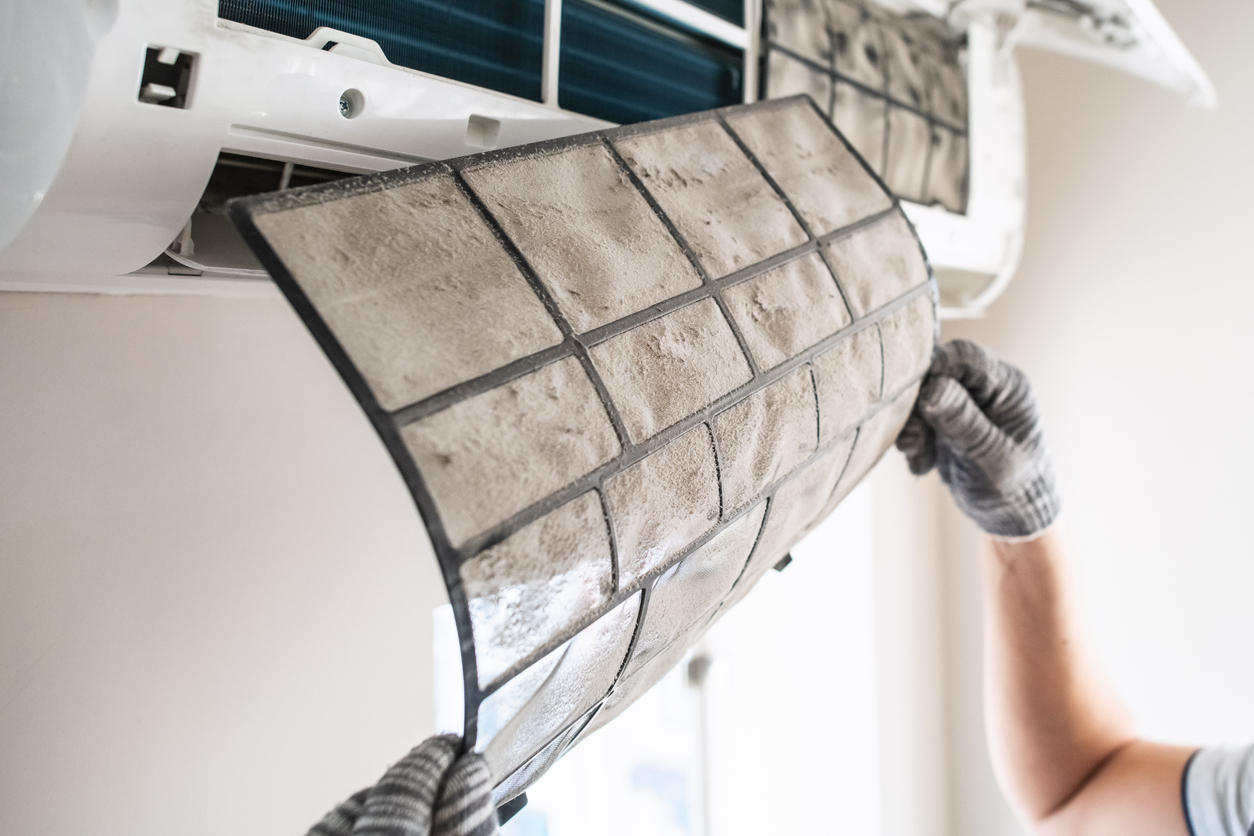
Air conditioning systems depend on steady airflow and clean internal components to maintain efficient cooling and stable indoor comfort. One often-overlooked component is the air filter, which continuously traps dust, pollen, and other airborne debris before they reach the system’s sensitive internal parts. When filters are neglected, airflow becomes restricted, forcing the system to work harder than intended. Over time, this added strain can lead to performance issues and mechanical breakdowns that require professional repair. We will explore how dirty filters lead to AC repair needs and why consistent attention to filtration supports system reliability and long-term performance.
How Clogged Air Filters Stress Cooling Systems
1. Restricted airflow and system strain caused by clogged filters
Dirty air filters reduce the volume of air that passes through the HVAC system, creating immediate strain on essential components such as the blower motor and evaporator coil. When airflow is blocked, the system struggles to distribute conditioned air evenly throughout the indoor space, resulting in temperature imbalances and longer operating cycles. This continuous strain forces the equipment to operate beyond its intended capacity, gradually accelerating wear on internal parts. Reduced airflow can also cause the evaporator coil to become excessively cold, increasing the risk of ice formation that further disrupts performance.
As the system compensates for restricted airflow, energy consumption rises, and mechanical stress accumulates across multiple components.
Neglecting a simple filter change can lead to a cascade of mechanical failures that are far more expensive than a replacement part. When airflow is stifled, the blower motor must work overtime, eventually leading to electrical strain or a complete burnout. Many homeowners find that Merritt Island Air & Heat can assist in identifying these early warning signs during a routine inspection before the damage becomes irreversible. By staying ahead of dust accumulation, you not only protect the motor but also prevent the evaporator coils from freezing over, ensuring the entire system operates within its designed parameters for years to come.
Over time, this imbalance can lead to functional breakdowns that require professional repair interventions, especially when neglected for extended periods, including situations that may require Frisco, TX, Air Conditioner Repair services. Regular inspection and timely filter replacement help restore proper airflow and reduce stress on the system before further damage develops. Without consistent attention, the accumulation of dust and debris continues to restrict air passage, causing repeated cycling of components and increasing the likelihood of breakdowns that require repair services to restore full system functionality and stable cooling performance over time.
Neglecting a simple filter change often creates a domino effect of mechanical strain that can compromise the most expensive components of your cooling system. When air cannot pass freely through a clogged medium, the blower motor is forced to run longer and hotter to maintain airflow, which significantly accelerates wear on the bearings and internal wiring. Homeowners who overlook this routine task frequently find themselves needing ac repair conroe to address frozen evaporator coils or compressor failures that could have been avoided. Maintaining a consistent replacement schedule ensures that your unit operates within its designed parameters, protecting your investment from the high costs associated with emergency component replacements and sudden spikes in monthly utility consumption.
2. Compressor overload and cooling inefficiency linked to restricted filtration
Compressor overload and cooling inefficiency are linked to restricted filtration
When airflow is reduced due to dirty filters, the compressor must operate for longer cycles to achieve the desired cooling output. This extended operation increases internal pressure and heat within the system, placing significant stress on the compressor mechanism. Over time, restricted airflow can also lead to refrigerant imbalance, which further reduces cooling efficiency and overall system performance. Inadequate airflow prevents proper heat exchange across the evaporator coil, causing the system to struggle in maintaining stable indoor temperatures. These conditions gradually increase wear on critical components, leading to higher repair requirements if not addressed promptly through maintenance or filter replacement.
Routine maintenance ensures airflow remains consistent and helps prevent excessive load on mechanical parts responsible for cooling regulation. Technicians often observe that systems with neglected filters show early signs of compressor fatigue, including irregular cycling patterns and reduced cooling response during peak temperature conditions. Regularly addressing filter cleanliness helps stabilize the compressor workload and reduces the likelihood of system inefficiency escalating into repair situations that disrupt daily comfort and energy efficiency. Consistent upkeep ultimately reduces operational strain and prolongs stable system performance. Preventive care reduces the risk of breakdowns and improves the overall system’s reliability.
3. Evaporator coil freezing and moisture management issues caused by dirty filters
Evaporator coil freezing and moisture management issues caused by dirty filters
Blocked airflow forces the evaporator coil to operate at lower temperatures than intended, resulting in frost accumulation over time. This freezing effect reduces heat-exchange efficiency and prevents proper cooling of the circulating air within the system. When ice builds up on the coil, airflow is further restricted, leading to drainage issues as the ice melts unevenly. Moisture imbalance inside the unit can trigger sensor malfunctions and reduce system responsiveness during cooling cycles. Repeated freezing cycles place strain on internal components, increasing the likelihood of breakdowns requiring repair.
A neglected air filter does more than just compromise your home’s air quality; it initiates a chain reaction of mechanical strain that can shorten the lifespan of your entire HVAC system. When airflow is restricted by a thick layer of dust and debris, the blower motor must work significantly harder to push air through the vents, leading to overheating and potential component failure. Homeowners who want to secure professional maintenance and ensure their cooling units remain in peak condition can Click here to find expert guidance on preventing these common issues. By prioritizing regular filter changes, you protect sensitive internal parts like the evaporator coil from freezing and avoid the sudden spike in energy costs that often accompanies an inefficient, struggling air conditioner.
Proper filtration maintenance helps maintain balanced airflow and reduces the chances of coil icing under heavy system load. Technicians often find that neglected filters contribute significantly to drainage blockages and irregular system shutdowns during extended use periods. Maintaining clean airflow paths ensures consistent evaporation cycles and prevents excess moisture buildup inside the system components. Long-term efficiency depends heavily on simple maintenance practices that support stable cooling performance. Consistent filter replacement schedules reduce stress on evaporator systems and help prevent costly repairs caused by prolonged airflow restriction and moisture imbalances. Supporting overall system reliability always further.
4. Electrical stress, sensor faults, and indoor air quality decline linked to dirty filters
Electrical stress sensor faults and indoor air quality decline are linked to dirty filters
Restricted airflow increases system runtime, which places additional load on electrical components such as wiring, relays, and control boards. This sustained pressure can lead to sensor calibration errors that affect temperature regulation and system accuracy. Accumulated dust particles bypass filtration and circulate indoors, reducing indoor air quality and increasing allergy-related discomfort. As components overheat due to restricted airflow, energy usage rises while system efficiency declines steadily over time. Neglected filtration often leads to recurring maintenance needs and higher repair costs due to progressive system degradation. Regular filter changes significantly reduce electrical strain and help maintain stable airflow throughout the system operation cycle.
Technicians also observe that poor filtration contributes to inconsistent thermostat readings and reduced cooling precision in residential systems.
When temperature readings fluctuate or the unit fails to maintain steady conditions, it often indicates a deeper issue with airflow distribution. Addressing these system disruptions early helps protect complex electronic components from overheating. Property owners who notice ongoing cooling inconsistencies can benefit from finding a reliable hvac near me to assess their equipment. A professional technician can thoroughly check for restricted duct pathways, test the calibration of internal sensors, and verify that the system is operating safely within its normal capacity parameters.
Over time, continuous exposure to contaminated airflow accelerates wear on sensitive electrical components and increases the likelihood of unexpected system shutdowns. Maintaining clean filters ensures more accurate temperature sensing and supports balanced humidity control within indoor environments. Reduced system stress ultimately lowers repair frequency and extends operational stability across cooling cycles. Overall system reliability improves when airflow restrictions are addressed through consistent maintenance practices over time.
Regular attention to air filter condition is central to maintaining the performance and reliability of air conditioning systems in residential and commercial environments. When filters accumulate dust and debris, the resulting airflow restriction gradually increases system strain, leading to mechanical and electrical issues that require repair. Consistent maintenance ensures smoother operation, improved efficiency, and longer system stability over time. Timely replacement of filters helps reduce operational stress and supports better indoor air quality and temperature balance. Overall system performance remains more stable when airflow pathways are kept clear through routine care practices applied.
Effective system care involves more than just changing filters; it also includes professional evaluations to catch small mechanical issues before they worsen. Routine inspections allow technicians to check critical components such as the heat exchanger, electrical connections, and refrigerant levels. For residents in Kennett Square, coordinating with R&D Heating & Cooling Company can provide a clearer picture of your equipment’s health and ensure all parts are functioning safely. These periodic assessments help balance airflow and verify that thermostats are properly calibrated, which supports consistent indoor temperatures and may help reduce monthly energy consumption throughout the year.
