
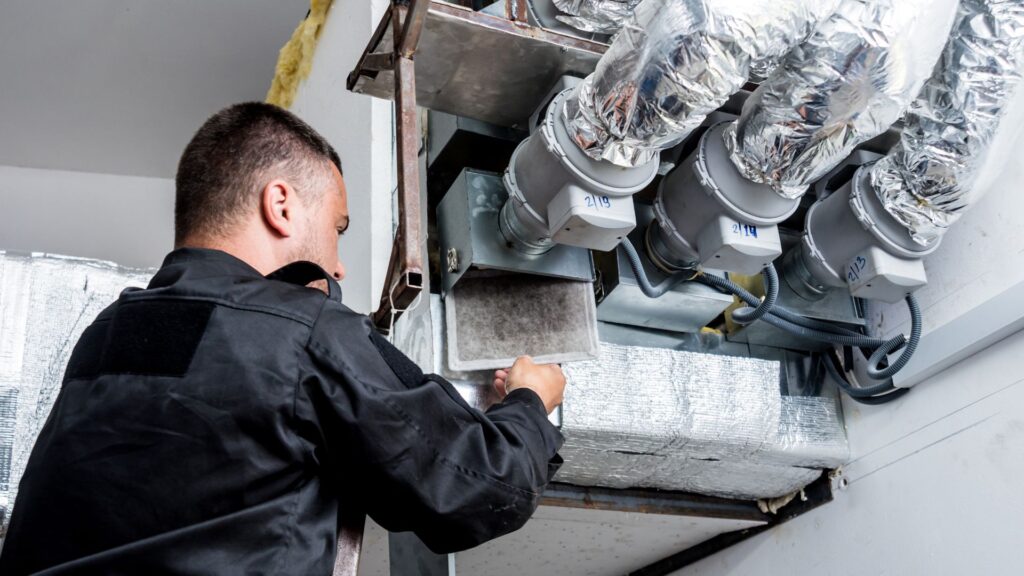
Uneven temperatures are one of the most frustrating problems homeowners face because the issue rarely affects the entire house in the same way. One bedroom may feel stuffy, an upstairs hallway may stay hot long after sunset, and a living room near the thermostat may feel perfectly fine. That difference makes the problem easy to dismiss at first, but comfort problems usually point to airflow, duct, insulation, or control issues that deserve attention. HVAC contractors handle these complaints by looking beyond the thermostat and studying how air is delivered, returned, and held inside the home from one area to another over time.
How contractors find the cause
1. Measuring Airflow Instead of Guessing
HVAC contractors usually begin by treating uneven temperatures as a distribution problem rather than assuming the equipment itself is failing. A home can have a working furnace or air conditioner and still feel uncomfortable because the conditioned air is not reaching rooms evenly or returning to the system properly. Contractors often check supply vents, return grilles, filter condition, blower performance, thermostat location, and room-by-room airflow to see where the imbalance begins. They also ask practical questions about when the temperature difference is most noticeable, whether it changes by time of day, and whether certain rooms stay uncomfortable year-round or only during one season. Those details help distinguish a steady airflow issue from one tied to sun exposure, attic heat, or cycling behavior. Instead of offering a quick fix based on one symptom, contractors build a full picture of how the system behaves across the home. That matters because a hot upstairs bedroom and a cold downstairs office may stem from the same underlying issue, even though they feel like separate complaints to the homeowner.
2.Looking Beyond the Equipment Cabinet
Once the initial airflow pattern becomes clear, contractors often inspect the parts of the home that influence how heating and cooling move from room to room. Ductwork is a major focus because leaks, crushed sections, poor layout, or disconnected runs can quietly reduce airflow long before the main unit stops working. Return air pathways are just as important, since a room that receives air but cannot send it back effectively may become pressurized and drift away from the rest of the house in both comfort and temperature.
Homeowners often struggle with inconsistent airflow that leaves specific rooms feeling neglected while others are perfectly conditioned. This imbalance frequently stems from underlying mechanical issues or age-related wear within the internal components. Seeking professional ac repair columbus can help identify if the problem is a failing blower motor or perhaps a refrigerant leak affecting thermal exchange. Beyond equipment failures, a technician will typically examine the integrity of the plenum and branch ducts to ensure that static pressure is maintained throughout the entire run. Addressing these technical discrepancies ensures that the system operates within its designed parameters, providing a more uniform climate across the entire property.
Contractors also consider insulation levels, window placement, attic heat, and the amount of direct sunlight certain rooms receive during the day. In many homes, the temperature imbalance is not caused by one dramatic defect but by several smaller issues pushing in the same direction.
When multiple small inefficiencies combine, the overall demand on your climate control equipment increases significantly. Proactively scheduling detailed performance audits can help identify these subtle systemic vulnerabilities before they lead to severe structural discomfort. Property owners looking for thorough system evaluations often consult experienced regional teams like Compass Energy Inc. to properly analyze air movement patterns and balance distribution. Fulfilling these strategic evaluations helps optimize seasonal energy management and ensures that the indoor environment remains consistent.
When identifying the root cause of temperature imbalances, a technician often investigates mechanical performance alongside structural factors like insulation. This comprehensive assessment ensures that the system is not only distributing air correctly but also generating sufficient output to meet the specific thermal demands of each zone. If an aging system struggles to reach set points during extreme weather, a targeted furnace repair may be necessary to restore full heating capacity and stabilize the indoor environment. Addressing these equipment-level deficiencies prevents the system from running excessively, which ultimately protects internal components from premature wear and ensures that every room maintains a consistent level of comfort regardless of its distance from the main unit.
Structural efficiency and equipment health work together to keep conditions stable throughout the year. When an air conditioner undergoes sudden mechanical trouble during peak operational periods, securing emergency ac repair in Arlington helps mitigate immediate performance risks. Resolving severe system blockages early supports more even air distribution and prevents excessive strain on the entire property layout.
Service teams that work with homes similar to those discussed at https://atticmanhvac.com/elk-grove-hvac/ often find that room discomfort improves only when airflow and heat gain are addressed together, rather than treating the thermostat as the sole control point. That broader approach helps explain why one room can stay hot even when the rest of the home feels close to normal.
3. Correcting the Imbalance With Targeted Changes
After identifying the likely causes, HVAC contractors handle uneven temperatures by matching the solution to the source of the imbalance rather than relying on a one-size-fits-all repair. In some homes, the answer may be as simple as adjusting dampers, cleaning components, improving filter maintenance, or more carefully balancing vent output.
Addressing persistent hot or cold spots requires looking at the home as a complete thermal system rather than just a collection of independent rooms. Often, these imbalances occur when air takes the path of least resistance, bypassing distant areas due to minor duct leaks or pressure changes. When a homeowner begins searching for hvac near me to resolve these issues, they are typically looking for an assessment that includes airflow balancing and load calculations. By adjusting internal dampers and ensuring that return vents are not obstructed, a technician can help redistribute conditioned air more effectively. This systematic approach ensures that the entire property remains comfortable throughout the changing seasons.
In others, the problem may require duct sealing, additional return air, thermostat relocation, zoning controls, attic insulation improvements, or an evaluation of whether the equipment size matches the home’s actual demand. Contractors may also look at how quickly the system cycles, since short cycling can leave distant rooms uncomfortable by ending the run before enough conditioned air reaches them. The goal is to reduce the temperature gap between rooms without creating new pressure or airflow issues elsewhere. Good correction work is usually gradual and deliberate. Contractors make changes based on how the home actually performs, then check whether those changes improve comfort where the homeowner feels the problem most. Uneven temperatures are solved more reliably when the house is treated as a system, not just a collection of separate rooms.
Comfort Improves When the Whole System Is Studied
HVAC contractors address uneven temperatures by identifying why conditioned air is not being delivered, returned, or retained consistently throughout the home. That process often includes testing airflow, inspecting ducts, reviewing insulation condition, and observing how the system cycles in real use. The solution may involve simple balancing or broader corrections, depending on what the house reveals during inspection. What matters is that the contractor follows the air’s path rather than guessing based on the thermostat alone. When that happens, rooms begin to feel more consistent, the system runs with less strain, and the home starts working like one connected space instead of several different climates.
