
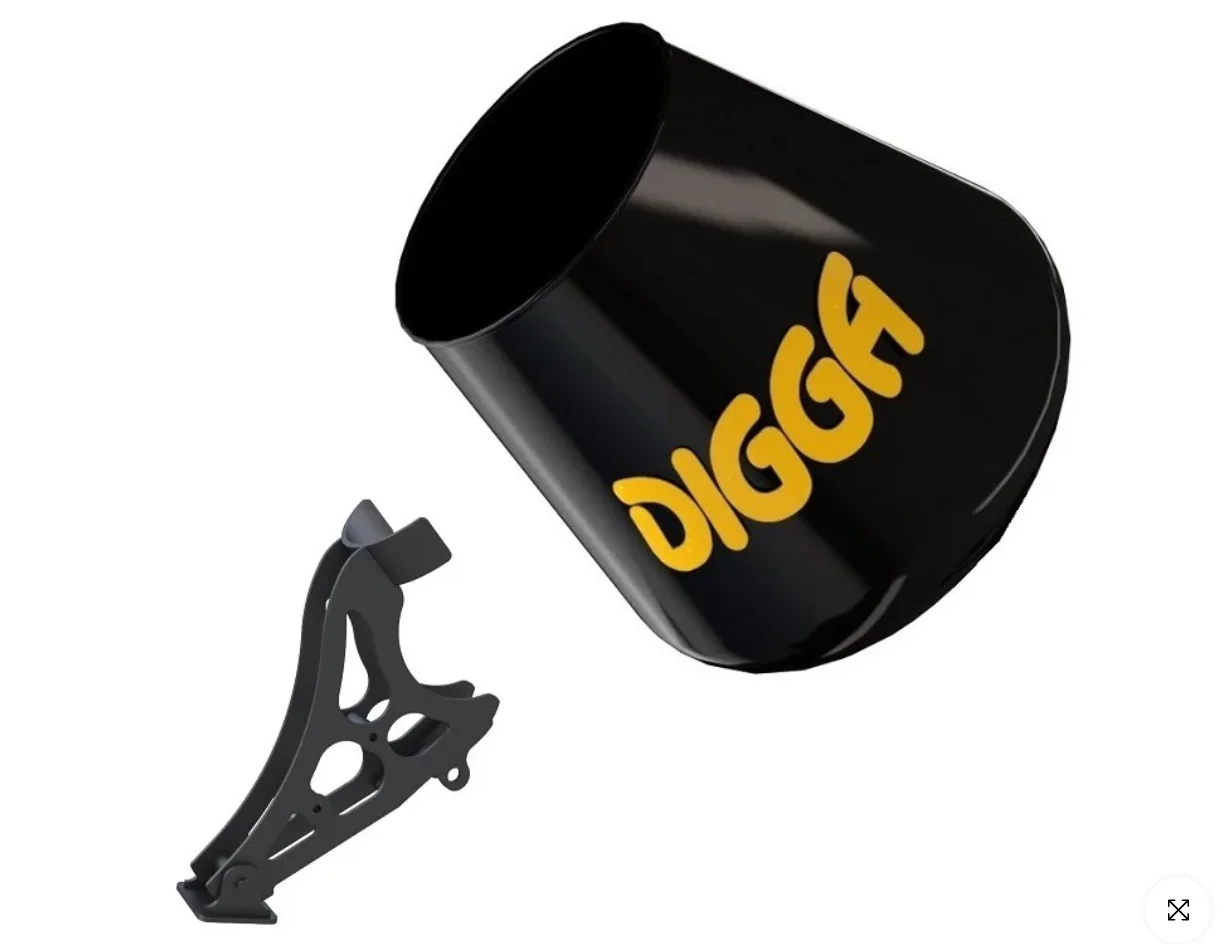
Mixing cement on a job site without a traditional mixer nearby is a common challenge, particularly on rural properties, fencing runs, or sites where rough terrain makes it impossible to get a standalone mixer where it needs to go. A cement mixing bowl solves this by turning the equipment already on site into a fully functional mixing solution. If you have an auger drive on your machine, you have everything you need to mix and pour cement without adding another piece of equipment to the job.
What Is a Cement Mixing Bowl?
A cement mixing bowl is an attachment that connects to the auger drive on an excavator, skid steer, mini loader, or backhoe. Rather than using a dedicated motor of its own, it draws power directly from the rotation of the auger drive to mix the cement. The bowl sits in a cradle mount that holds it at an angle, allowing it to be filled easily and tipped to pour once the mix is ready. A hex drive coupler at the base of the bowl connects it to the auger drive, making the swap from auger bit to mixing bowl quick and straightforward. The result is a single machine that can drill post holes and mix cement without any additional equipment on site.
How Does a Cement Mixing Bowl Work?
The process is simple. Once the auger bit has finished drilling, the operator swaps it out for the cement mixing bowl using the cradle mount or flip hitch. The bowl locks into place using the same standard auger pin. Cement, aggregate, and water are added to the bowl, and the auger drive is engaged to begin rotating. The rotation of the drive blends the materials evenly inside the bowl, producing a consistent mix within a few minutes. When the batch is ready, the operator uses the machine to tilt the bowl and pour the cement directly into the hole or formwork below. The whole process from attaching the bowl to completing the pour can be done without the operator leaving the cab.
What Is a Cement Mixing Bowl Used For?
The most common application for a cement mixing bowl is mixing and pouring cement for post holes on fencing projects. Because fencing work often takes place across large areas of rough or uneven ground, getting a traditional mixer to each hole is impractical. The cement mixing bowl solves this by travelling with the machine, allowing the operator to drill and backfill each hole in sequence without stopping to relocate separate equipment.
Beyond fencing, cement mixing bowls are used for retaining wall construction, agricultural infrastructure, civil projects requiring small to medium batch mixing on site, and any application where cement needs to be mixed in a location that is difficult to access. They are particularly well suited to rural and remote sites where keeping the number of machines and support equipment to a minimum is a practical necessity.
What Machines Can a Cement Mixing Bowl Attach To?
Cement mixing bowls are compatible with any machine that runs an auger drive. This includes excavators, mini excavators, skid steer loaders, mini loaders, backhoes, and telehandlers. The auger drive is the power source, so the bowl itself requires no hydraulic connections beyond what is already in use for the drive. Compatibility comes down to the auger drive model and hex drive size. Most cement mixing bowls use a standard 2-inch hex drive coupler, but it is worth confirming compatibility with your specific auger drive model before purchasing.
Key Benefits of Using a Cement Mixing Bowl
The most immediate benefit is not having to bring a separate mixer to site. On large properties or remote locations, every additional piece of equipment adds time, cost, and logistical complexity. A cement mixing bowl removes that requirement entirely. Switching between the auger bit and the mixing bowl takes under two minutes, so the workflow from drilling to mixing to pouring stays tight and efficient. The machine handles all the physical effort of mixing, reducing manual labour and producing a more consistent result than hand mixing. On rough or sloped terrain where a traditional drum mixer would be unstable or impossible to use, the cement mixing bowl works just as effectively as it would on a flat surface.
What to Look for When Choosing a Cement Mixing Bowl
Bowl capacity is the first consideration. Match the bowl size to the typical batch volume your projects require, keeping in mind that oversized batches slow the mixing process and make pouring harder to control. Confirm that the bowl is compatible with your auger drive model and that the hex drive size matches before committing to a purchase. The design of the cradle mount matters too. A well-designed cradle holds the bowl at an angle that makes filling straightforward and allows the operator to tip and pour cleanly from the cab. Build quality and the ease of switching between the auger bit and the bowl are worth assessing, particularly if you will be making that swap repeatedly throughout a working day.
Key Takeaways
A cement mixing bowl is one of those attachments that makes an immediate difference to the way a job runs. It removes a logistical problem that slows down fencing, civil, and construction work and turns the machine already on site into a complete drill and mix solution. For anyone regularly mixing cement in the field, it is a straightforward investment that pays for itself quickly in time and labour saved. If you would like advice on which cement mixing bowl suits your machine and the type of work you do, get in touch with the team for a recommendation.

David Weber is an experienced writer specializing in a range of topics, delivering insightful and informative content for diverse audiences.