
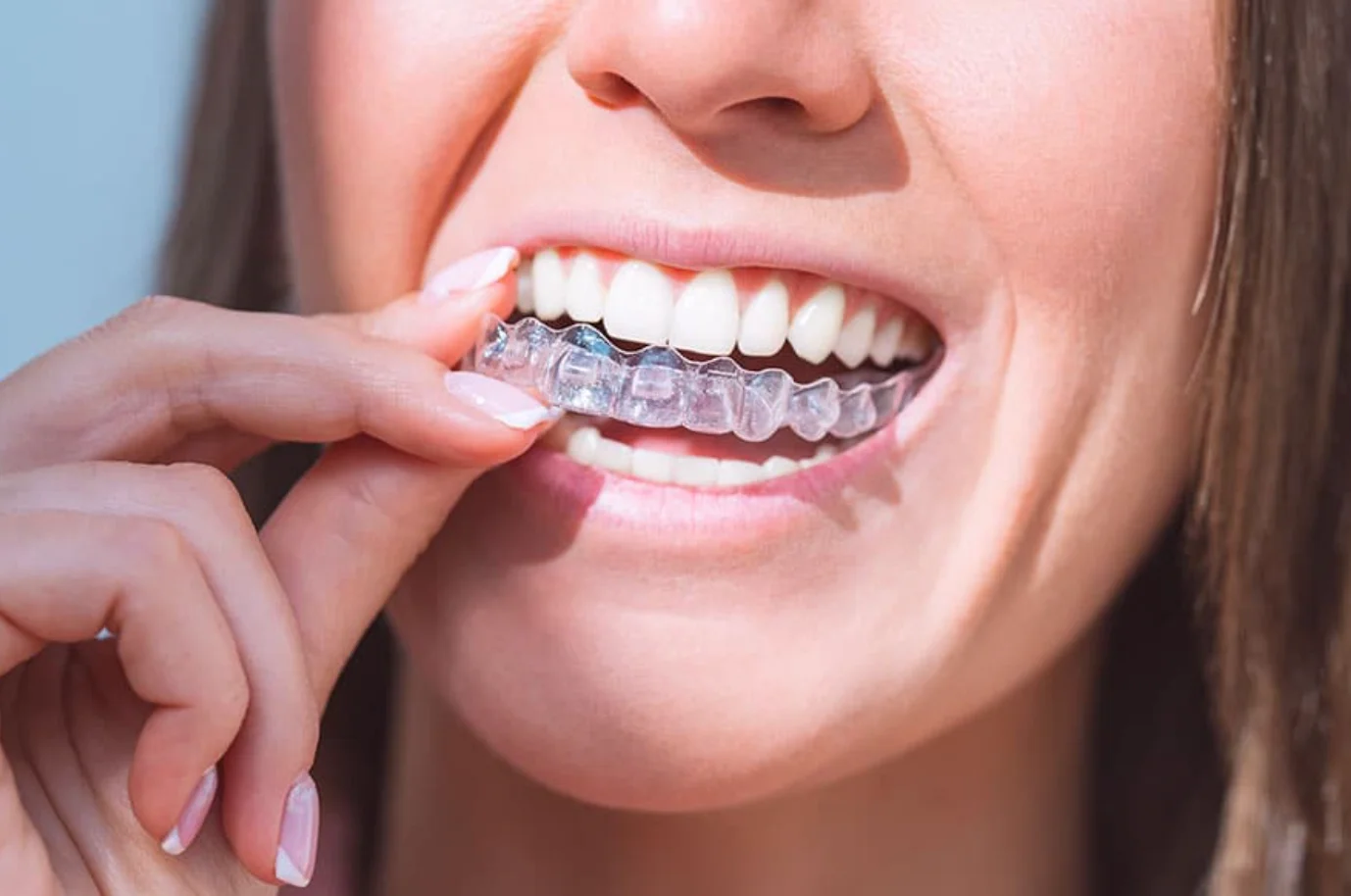
Clear aligners have become one of the most talked-about options in adult orthodontic care, and the numbers back that up. The demand for orthodontic treatment by adults has been constantly increasing, with U.S. orthodontists reporting a 27.53% rise in adult patients in just six years. And while the technology behind aligners is genuinely impressive, the hardware alone won’t carry you across the finish line. Your daily habits matter just as much as the appliance on your teeth.
This guide covers seven practical health habits that directly support a smoother, more effective clear aligner experience. Whether you’re mid-treatment or just thinking about starting, these are the things that actually move the needle.
1. Wear Your Aligners for the Full 20 to 22 Hours Each Day
This one sounds obvious, but it’s where most adults quietly fall short. Patients typically wear a series of aligners, each for about two weeks, progressively moving teeth toward optimal alignment. That progression depends entirely on consistent wear time. Pull your aligners out too often, or leave them out for long stretches during meals or social events, and you’re stalling the gentle pressure that does the actual work.
A practical workaround: set a phone timer when you remove your aligners to eat. Give yourself 20 to 30 minutes for the meal, then put them back in. That single habit keeps most people in the 20-to-22-hour window without obsessing over the clock.
If you’re exploring options and want treatment that’s built around your specific bite and lifestyle, looking into spark clear aligners johns creek is a great place to start. Personalized treatment plans make consistent wear far easier because the aligners actually fit how you live.
2. Brush and Floss Before Every Reinsertion
Putting aligners over unbrushed teeth is one of the fastest ways to create problems during treatment. Failure to clean your aligners properly can lead to several oral health issues. Over time, unclean aligners can harbor bacteria, which can cause bad breath and increase your risk of cavities or gum disease.
The good news is that clear aligners actually make brushing and flossing easier than traditional braces do. The removability of clear aligners is a significant advantage when it comes to oral hygiene. Unlike fixed braces, aligners can be removed for brushing and flossing, allowing you to maintain a more effective oral hygiene routine.
Keep a travel toothbrush and a small tube of toothpaste in your bag or desk drawer. You won’t always be home when it’s time to put your aligners back in, and having a kit close by removes every excuse to skip the step.
3. Clean Your Aligners Daily With the Right Method
Your aligners need their own cleaning routine, separate from brushing your teeth. Rinse your aligners regularly with lukewarm water and a soft brush. Brush your aligners daily using a mild toothpaste to remove any buildup. Keep your aligners in a case when not in use to prevent contamination from dust or bacteria.
One detail people often miss: temperature matters. Hot water warps the plastic, which can throw off the fit and slow your tooth movement. Lukewarm is the word, every single time. A warped aligner that no longer snaps flush against your teeth isn’t just uncomfortable; it’s not doing its job.
You can also use a clear, unscented soap for a deeper rinse. Skip the colored mouthwash for soaking since the pigment can stain the material and make your aligners more noticeable during wear.
4. Stay Hydrated and Drink Water Throughout the Day
Hydration is one of those health habits that pays off in ways you don’t immediately see. With aligners in, saliva flow is slightly altered, and a dry mouth creates a more hospitable environment for bacteria. Drinking water consistently through the day flushes food particles, keeps your mouth’s natural defenses active, and helps prevent the odor that can build up inside aligners by afternoon.
Water is also the only beverage you should be drinking with your aligners in. Coffee, tea, and anything with color or sugar either stains the trays or feeds bacteria under them. If you’re a coffee drinker, build a simple routine: remove aligners, have your coffee, brush, reinsert. It takes less than five minutes and protects months of treatment progress.
5. Keep Up With Your Scheduled Orthodontic Check-Ins
One of the practical perks of aligner treatment is that it typically requires less chair time than traditional braces. Clear aligners require fewer visits for adjustments compared to traditional braces, making them a more convenient treatment option. But fewer visits doesn’t mean no visits. The appointments you do have are where your provider confirms that your teeth are tracking correctly and that you’re ready to progress to the next set of aligners.
Skipping or delaying check-ins can mean wearing a set of aligners longer than necessary, or missing a correction before it becomes a setback. The American Association of Orthodontists notes that clear aligners are designed to move your teeth gradually through gentle, consistent pressure. That pressure works on a schedule, and your check-ins keep everything on track.
6. Protect Your Oral Health Between Meals
Misaligned teeth create pockets and angles that are genuinely harder to clean, and that increases cavity and gum disease risk. Leaving misaligned teeth untreated can lead to dental problems such as tooth decay, gum disease, and difficulty chewing. Clear aligner treatment directly addresses that risk, but only if you’re protecting your oral health during treatment too.
Just 1.2% of aligner patients, as opposed to 26% of brace patients, end up with white spot lesions. That statistic is encouraging, but it assumes you’re brushing well after every meal before reinserting. Adults who snack frequently and then put aligners back in without brushing are the ones who end up on the wrong side of that number.
If you can’t brush after every snack, at minimum rinse your mouth with water before reinserting. It’s not perfect, but it’s significantly better than nothing. Save the heavier cleaning for after full meals.
For a deeper look at the connection between aligner care and gum health, Smilebliss Orthodontics has a solid breakdown of the oral hygiene advantages that removable aligners offer over fixed appliances.
7. Track Your Mental and Emotional Response to Treatment
This one rarely shows up in aligner care guides, but the research is clear. Orthodontic treatment carries significant psychosocial benefits across different age groups. Both adolescents and adults experience improvements in self-esteem, social interactions, and overall quality of life post-treatment.
Misaligned teeth, or malocclusion, can impact more than oral health. Children and adults with noticeable dental irregularities often experience low self-esteem, increased social anxiety, and emotional stress. If you’ve carried those feelings for a long time, the early weeks of aligner treatment can feel strange even when they’re going well. You might find yourself self-conscious about the trays, or frustrated by the speech adjustment period.
Some patients experience a temporary adjustment period where their speech may be slightly affected. This is typically due to the new sensation and feeling of the aligners in the mouth. Practicing speaking aloud with the aligners in place helps you adjust quickly. Reading books or articles aloud to yourself can speed up the adaptation process. This challenge is usually temporary and resolves within a few days to a week.
Tracking how you feel week to week, not just how your teeth look, gives you a fuller picture of your progress. Many adults report that the confidence shift starts happening well before treatment ends, often as soon as they see the first visible tooth movement.
The peer-reviewed research published on PubMed on the psychological effects of orthodontic treatment confirms that adults see meaningful reductions in psychosocial impact scores after completing treatment. That’s a real, measurable outcome alongside the straighter smile.
Wrapping It Up
Clear aligners are a genuinely capable tool, but they work best when you pair them with consistent, intentional habits. Wear your trays as directed, keep your mouth and aligners clean, stay hydrated, show up for your appointments, protect your gum health between meals, and give yourself permission to notice the confidence changes as they happen. Those seven habits, done consistently, are what separate people who get great results from people who get okay ones.
Orthodontic care does more than align teeth. It promotes healthy function, helps protect oral health, and can positively influence overall well-being. The habits you build during treatment don’t go away when you graduate to your retainer. They become part of how you take care of your health for the long run.

David Weber is an experienced writer specializing in a range of topics, delivering insightful and informative content for diverse audiences.
Japanese writing often needs more than a simple character total. A 文字数カウント tool becomes especially practical when it also reports lines, paragraphs, 400-character manuscript pages, and byte counts for both UTF-8 and Shift_JIS. Those measurements can help writers check manuscripts, form limits, and system-specific text requirements in one place. Processing the text locally in the browser is another meaningful detail, since drafts do not need to be uploaded to a server merely to calculate their length.
A strong profile detail is usually restrained: one visual cue can establish a mood, while a crowded line becomes harder to scan. Aesthetic Symbols makes the selection process more deliberate by organizing Unicode options and ready-to-copy combinations around common uses such as bios, captions, and usernames. It is worth checking how a chosen character renders on mobile as well as desktop, especially when clarity matters more than decoration.
A compact symbol reference is most useful when it answers two questions quickly: what the mark means and how to enter it correctly. For the approximately symbol, showing the glyph beside its Unicode identifier and common web and LaTeX representations would reduce avoidable formatting mistakes. It would also help to explain that approximate equality is not automatically interchangeable with equality, equivalence, or similarity; that small distinction matters in educational and technical writing.
Writers working in Spanish often have to balance clarity with strict format limits, especially when preparing summaries, titles, or classroom assignments. A contador de caracteres can make that process less mechanical when it is considered alongside sentence structure, readability, and repeated phrases. Those signals help identify text that is technically within a limit but still feels crowded or uneven. The final decision should remain editorial: revise only where the measurement supports a clearer, more natural message.
A useful timer does not need to be complicated. A browser-based online timer that accepts hours, minutes, and seconds can support focused work, planned breaks, cooking, or any task with a clear endpoint. Controls for starting, pausing, resuming, and resetting make interruptions manageable, while an end sound removes the need to keep checking the screen. Keeping the interface free of sign-up steps and advertising is also valuable when the goal is to start a timed task immediately.
Choosing a UPS is easier when the decision starts with the actual load, the time needed to shut down safely, and the type of equipment being protected. Battery Backup Picker is useful because it frames those questions together instead of treating capacity as a single number. Comparing wattage, expected runtime, outlet layout, and battery design can help shoppers avoid paying for features that do not match their setup.
Attendance planning is easier when classes are recorded by subject along with sessions held, sessions attended, and the required threshold. An attendance calculator can clarify how many future classes may be missed or how many must be attended to recover from a shortfall. Checking this after timetable changes or absences helps students make decisions early instead of relying on rough mental estimates.
A printable coloring book pdf can be a convenient way to keep related activities together while still allowing only selected pages to be printed. The most useful collections balance simple, open designs with more detailed options, so the material can suit different ages and attention spans. Providing A4 and US Letter files also matters because it prevents unwanted cropping or scaling. Custom page generation is another practical feature when someone needs a specific theme for a lesson, holiday, or personal project.
For anyone preparing technical notes, the most useful workflow is one that keeps equations editable from the start. imagetolatex brings image conversion, an equation editor, and table creation into one place, which can reduce the friction of moving material from screenshots or handwritten pages into a document. It is still worth checking symbols, alignment, and matrices carefully before finalizing the output.
A typeface often needs to preserve a recognizable character while remaining readable across many sizes and contexts. An ai font generator can be a practical starting point for exploring that balance, especially when a visual reference or handwritten draft is involved. The important part is having room to refine letter shapes before export, because a compelling sample image alone does not guarantee a coherent alphabet or reliable font for a finished project.
Honestly, I was skeptical at first but the payouts here are legit. The interface is super smooth and I had no issues with my first withdrawal. Definitely recommending idimpor88 to my buddies.
Document automation is most useful when the output can remain editable after collection, review, and routing. Experlogix Document Automation fits that discussion because it highlights how repeatable templates and structured data can reduce manual assembly work. A practical evaluation should also consider approval paths, version control, export formats, and whether nontechnical staff can maintain the underlying templates without creating a separate support burden.
Large attachments can create needless friction in classrooms, job applications, and everyday correspondence. The ability to reducir tamaño de PDF locally is a sensible design choice because it keeps the task focused: make a document easier to send without adding an account, a subscription, or an upload step. Privacy-conscious tools are most useful when their workflow remains this straightforward.
Love the variety of games they have here. It feels like a real casino vibe from the comfort of my home. Definitely give tayahotcasino a shot if you want some excitement.