
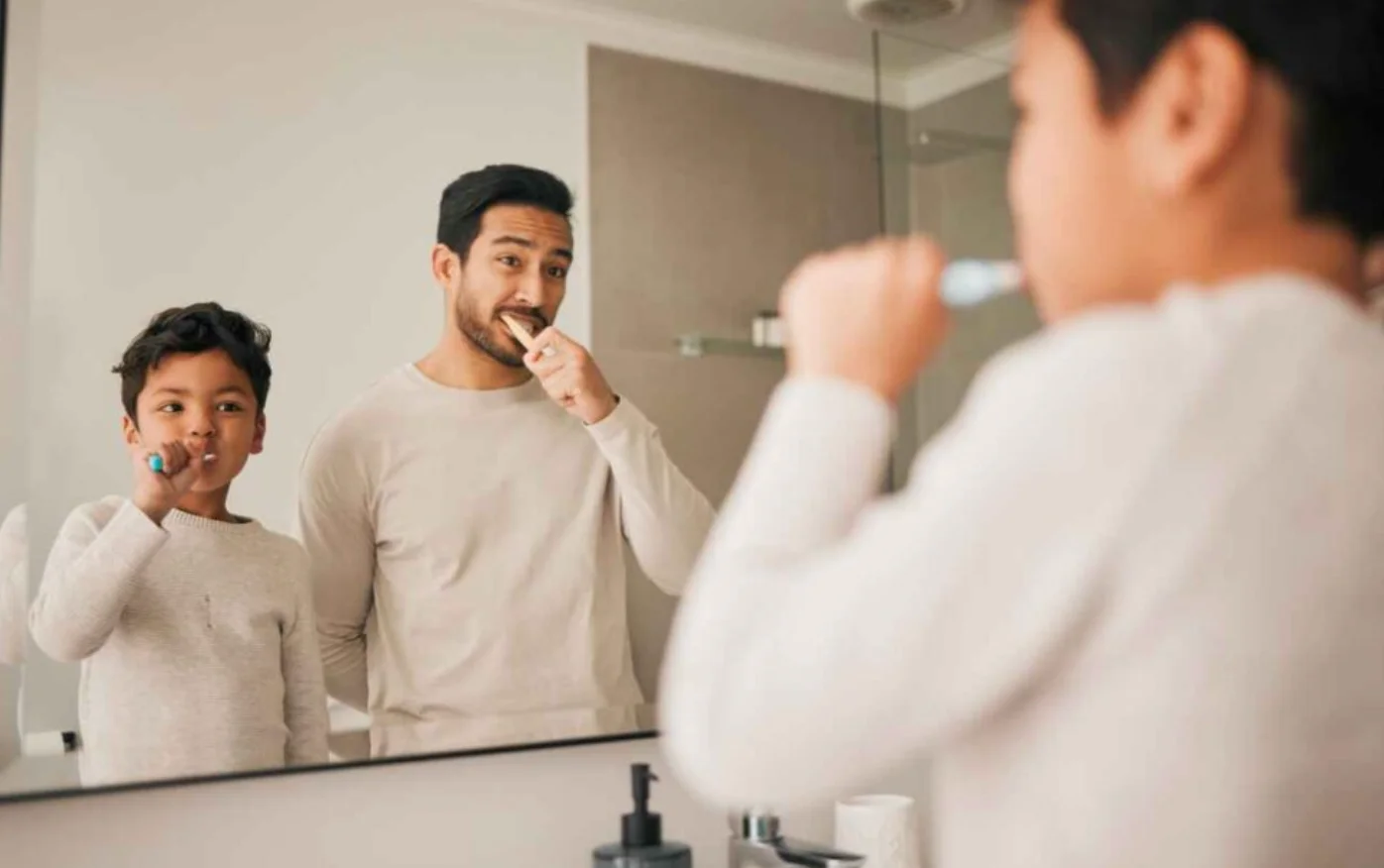
Dental health gets treated like a twice-a-year event, but the reality is that your family’s oral health is negotiated daily in small, boring decisions. Sugar at lunch, skipped flossing at night, a toothbrush that has seen better days. You might not need a lecture about brushing twice a day. You already know that. What you need is a working set of habits that actually stick without turning your bathroom into a boot camp. These eight practices cover the gaps most families miss, from the timing of your snacks to how you handle the dreaded jaw clench.
1. Store Your Toothbrush Away From the Toilet
Your bathroom is a damp, warm environment, which is exactly what bacteria like. When you flush the toilet without lowering the lid, a fine mist of water particles can travel several feet and settle on every surface, including your toothbrush. A 2024 study published in the American Journal of Infection Control found that closing the lid before flushing significantly reduces contamination spread. The fix here is simple and costs nothing. Keep your brushes in a cabinet or a covered holder, and make the lid-down flush a household rule. Also, let your brush air dry completely before storing it in a closed container, since a damp, sealed case is a breeding ground for mold.
2. Wait 30 Minutes After Eating Before You Brush
Brushing immediately after a meal sounds like the responsible move, but it can actually damage your enamel. Acidic foods and drinks, like citrus fruits, soda, or even coffee, soften the enamel temporarily. Brushing while your enamel is in that softened state scrubs the mineral layer right off. The American Dental Association recommends waiting at least 30 minutes after eating before you brush. You can still rinse your mouth with water right after a meal to wash away loose food particles, then set a timer for a half hour and brush then. This is the kind of habit that prevents costly restorative work down the road.
3. Swap Your Toothbrush Every Three Months
That frayed, splayed-out toothbrush in your cup is not cleaning anything effectively. Bristles lose their stiffness and shape after roughly three months of normal use, which means they cannot reach into the crevices between teeth and along the gumline. The CDC oral health guidance is clear that worn brushes are less effective at removing plaque. Set a recurring reminder on your phone for the first of every season, or simply tie the replacement to your child’s report card schedule. If you have been sick, swap the brush immediately after recovery, since the bristles can harbor viral particles that reinfect you.
4. Treat Snacking Like a Schedule, Not a Grazing Session
Your mouth produces the most saliva during actual meals, and that saliva is your body’s natural defense against cavity-causing acids. When your kids graze on crackers or juice all day, their teeth stay coated in food particles without a full saliva flush. A bag of pretzels eaten over four hours is harder on teeth than the same bag eaten in ten minutes. The fix is to designate two or three snack windows per day, and serve snacks alongside water. You also want to avoid sticky, starchy foods like dried fruit or gummy snacks, which cling to the pits and fissures of molars. If your family needs a treat, chocolate dissolves faster than caramel or taffy, so it does less sustained damage.
5. Make Flossing a Pre-Brush Routine for Kids
The order of your brushing routine matters more than you might think. When you floss before you brush, the fluoride from your toothpaste can reach the spaces between teeth that floss just cleared out. Many parents struggle to get kids to floss at all, so attaching it to the front of the routine makes it the first task, not an optional afterthought. Use floss picks if traditional string floss is a battle, since the tool matters less than the act. Your kids are unlikely to do a perfect job until around age ten or eleven, so plan to do the flossing yourself and let them handle the brushing until their manual dexterity catches up.
6. Book a Dental Visit That includes Oral Health Scanning
Prevention works best when you have a baseline of what is actually happening in your mouth. Modern dental practices now offer oral health scanning technology that maps your gums, plaque levels, and early signs of decay far before they become visible on an X-ray. This kind of early detection changes the conversation from invasive treatments to minor adjustments. If you are looking for a practice that emphasizes modern prevention alongside family care, you can find a Dentist White Rock practice that uses digital imaging and detailed oral health scanning to catch issues early. The key is to establish a baseline visit, then follow the recommended interval, which might be six months or a year depending on your personal risk factors. Skipping the exam because you brush well is a false economy; home care does not catch interproximal decay.
7. Protect Your Teeth From Nighttime Grinding
Jaw clenching and grinding, known as bruxism, is often a silent problem that you only discover when your dentist points out flattened cusps on your molars or you wake up with a dull headache. Stress is a major trigger, but so is sleep position and even certain medications. The long-term damage includes cracked enamel, receding gums, and chronic jaw pain that radiates into your neck and ears. A custom-fitted night guard, fabricated by your dentist, redistributes the force of your bite and keeps your upper and lower jaw apart. The over-the-counter boil-and-bite guards are better than nothing, but they tend to be bulky and can shift during the night, which actually increases muscle tension. If you notice your partner grinding or your jaw feels tight in the morning, raise it at your next checkup rather than waiting for a fracture.
8. Rethink the Bedtime Routine
The last hour before bed sets the stage for your oral health overnight. Saliva production drops significantly while you sleep, which means your mouth has fewer defenses against bacteria for eight straight hours. That glass of orange juice or warm milk right before bed is essentially a sugar bath for your teeth. If your family needs a bedtime beverage, water is the only safe choice after brushing. You also want to establish a hard rule that no food is eaten after the teeth are brushed, which means moving the brushing slot to after the last snack, not before it. For older kids who have braces or aligners, this is also the time to clean the appliances, since trapped food against brackets accelerates white spot lesions.
The pattern across all these habits is that they are unglamorous and repetitive, which is exactly why they work. You do not need a new electric toothbrush with Bluetooth or a special rinse. You need to close the toilet lid, time your brushing, restock your brushes quarterly, schedule your snacks, and protect your bite at night. Your family’s next dental exam will tell you whether the routine is holding up, and if it is not, you adjust one variable at a time. Start with the brush storage and the snack windows; those two changes alone will shift your family’s cavity risk more than any expensive gadget ever will.

David Weber is an experienced writer specializing in a range of topics, delivering insightful and informative content for diverse audiences.
I love how easy it is to navigate this site. Had a great run last night and the bonuses are actually fair. Check out bd499bat if you want some action.
The bonus options here are insane. I managed to hit a decent streak last night thanks to the promotions. You should give inyono789 a shot!
Five stars for the amazing promotions and the friendly atmosphere. Definitely give f05plataforma a try.
I’ve tried a few sites lately but this one really stands out. The interface is smooth and the payouts are surprisingly fast. Definitely checking out bdgv88 again tonight!
The winning streaks here are insane! I had a great run last night and the withdrawal was lightning fast. phww777 is the real deal.
I’ve been trying a few different sites lately and this one really stands out. The interface is super smooth and everything loads fast. Definitely recommend checking out iny0n0777 for a great experience.