
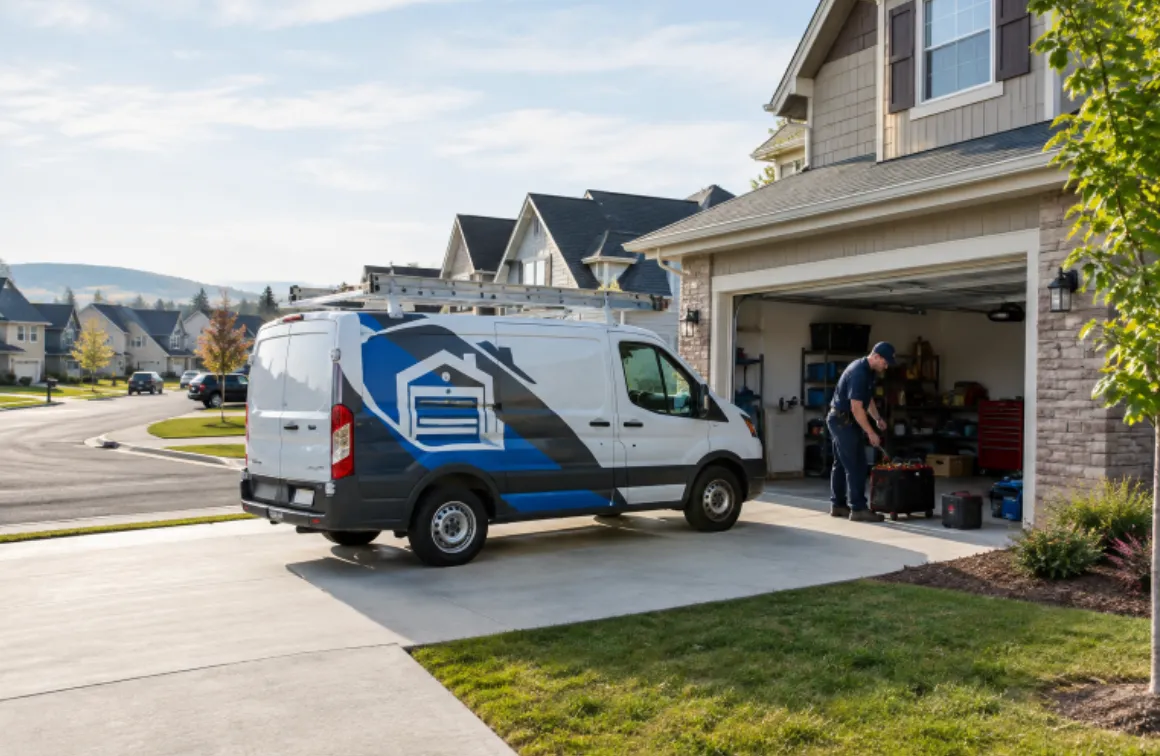
Starting a garage door service business requires more than knowing how to replace a roller or troubleshoot an opener. Before investing in a vehicle, inventory, or advertising, prospective owners should evaluate local demand, safety responsibilities, finances, and the day-to-day systems required to serve customers reliably. Those comparing different entry paths may want to explore a garage door franchise while also understanding how Garage Door Business Ownership fits alongside independent ownership, partnerships, or buying an established operation. A practical plan should reflect the owner’s skills, available capital, service area, and willingness to handle emergency calls, customer communication, scheduling, and paperwork. The goal is not to offer every possible repair immediately. It is to build a service operation capable of completing its promised work safely and profitably.
Check Local Market Demand
Industry interest alone does not prove that a particular territory can support a new provider. Review the number and type of nearby homes, rental properties, warehouses, and small commercial buildings. Then study existing providers, their service areas, customer reviews, hours, and estimated response times. Older housing, long travel distances between towns, and limited same-day availability may reveal needs worth investigating. Demand should be viewed through the lens of garage door business operations, not just population. Readers exploring this field should consider whether they can reach enough customers without spending excessive time and fuel traveling between calls. Resources like those available through franchise opportunity websites can provide insights into regional market viability.
Choose a Business Model
There are several ways to enter the field, and the lowest initial price is not always the best fit. An independent company offers control over branding, pricing, suppliers, and service selection. A partnership can spread duties and investment, but needs clear written responsibilities. Buying an existing company may provide equipment and customers, while a franchise model can involve established systems and contractual obligations. Compare training, fees, supplier requirements, territory rules, exit terms, and flexibility before committing.
List Startup and Monthly Costs
Separate one-time purchases from recurring operating expenses so the initial investment does not hide the cost of staying open. Helpful small-business planning resources are available through the SBA’s guidance for small-business owners, which covers market research, startup costs, registration, permits, insurance, and business structure.
- One-time costs may include registration, tools, vehicle setup, shelving, initial inventory, and training.
- Recurring costs may include insurance, fuel, software, phone service, payroll, storage, taxes, and advertising.
- A cash reserve can help cover slow weeks, warranty visits, vehicle repairs, and replacement tools.
Decide Which Services to Offer
A focused service menu makes pricing, training, and inventory easier to manage. A new company might begin with inspections, opener work, weather seal replacement, rollers, cables, and basic repair calls before adding complex replacements or commercial overhead-door work. Offering fewer services at launch can be more responsible than accepting jobs without the tools, parts, or experience to complete them safely.
Plan Tools, Vehicles, and Inventory
Field work depends on organized equipment. Common needs include hand and power tools, measuring devices, ladders, appropriate winding tools, personal protective equipment, mobile estimating tools, and labeled storage for frequently used parts. Stock levels should reflect the services actually offered. If a technician arrives without a compatible spring, cable, remote, or roller, the job may require a second trip and disrupt the customer’s schedule.
Review Legal and Insurance Needs
Requirements may differ by state, county, city, and job type. Before accepting paid work, choose a legal structure, register the business, confirm tax obligations, check contractor or trade licensing rules, and determine whether permits are required. General liability coverage, commercial auto coverage, and workers’ compensation obligations should be discussed with qualified local insurance and legal professionals.
Build a Safety and Training Plan
Garage door systems can involve heavy components, moving parts, electrical equipment, and stored spring energy. Written procedures should address power isolation, ladder inspection, work-area control, tool inspection, lifting practices, and technician training. OSHA notes that there are no specific standards for overhead doors alone. Still, general industry or construction requirements may apply depending on the work being performed, as explained in its guidance for overhead-door repair and installation.
Set Customer Service Standards
Dependability is often visible in simple habits. Set expectations for answering calls, confirming arrival windows, explaining findings in plain language, providing written estimates, protecting the work area, and reviewing maintenance needs after a repair. A homeowner dealing with a door that will not close may value a clear explanation and dependable arrival time as much as the quoted price.
Prepare Marketing and Technology Systems
Basic systems should help customers find the business and help the owner avoid missed opportunities. Priorities include a mobile-friendly website, accurate service-area information, a local business profile, call handling, appointment requests, digital estimates, invoicing, payment processing, review requests, and customer service histories. Quick responses and accurate information are more useful than complicated marketing systems that no one maintains.
Complete a Financial Review
Test the idea using conservative, expected, and strong sales scenarios. Estimate jobs per week, average ticket value, parts and labor per job, vehicle costs, insurance, software, payroll or owner draw, taxes, debt payments, and the break-even point. A durable plan should still function when the schedule is not full every day.
Use a 90-Day Launch Plan
Days 1 to 30: Build the Foundation
Choose the service area, confirm licensing and insurance needs, register the business, and create a realistic budget.
Days 31 to 60: Prepare for Field Work
Purchase essential tools, organize the vehicle, establish supplier relationships, and prepare safety forms, estimates, invoices, and customer communication templates.
Days 61 to 90: Start and Measure
Launch core customer-facing systems, accept a manageable number of jobs, and track response times, job profitability, callbacks, inventory gaps, and customer feedback.
Perform a Final Readiness Check
Before launch, confirm that there is sufficient working capital for the first few months, reliable access to parts, clear answers on licensing and insurance, safe procedures for every advertised service, and a process for calls, estimates, payments, and follow-up. Careful planning, safe work practices, clear pricing, and consistent communication create a stronger starting point than speed alone.
Conclusion
Starting a garage door service business requires careful planning beyond technical repair skills. Understanding local demand, choosing a suitable business model, controlling costs, and establishing safe work procedures can create a stronger foundation for the company. New owners should also ensure that licensing, insurance, tools, inventory, scheduling, pricing, and customer communication are in place before taking on a full workload. Beginning with a focused range of services can make training, inventory management, and quality control easier to handle. By gradually testing the business, tracking financial and service performance, and improving systems based on real customer needs, owners can build an operation that is organized, safe, and prepared to grow over time.

David Weber is an experienced writer specializing in a range of topics, delivering insightful and informative content for diverse audiences.