
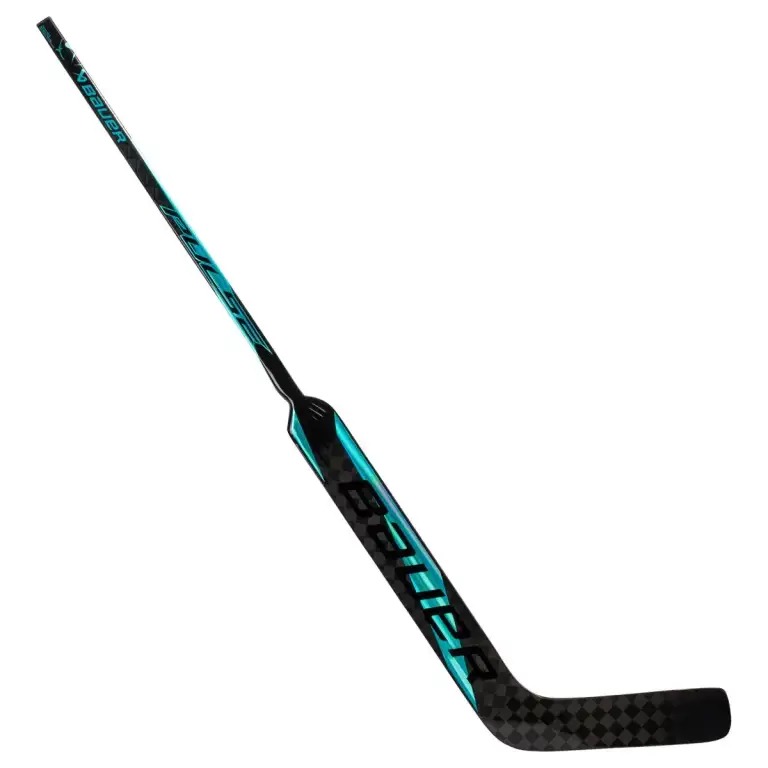
The modern ice hockey goaltender is a marvel of biomechanical engineering. Clad in highly articulated, shock-absorbing armor, today’s netminder looks more like a mechanized titan than the unmasked, sweater-wearing pioneers of the early 20th century. Over the decades, as the speed of the game increased and the curve of the player’s blade allowed for terrifyingly unpredictable shots, the goaltender’s protective equipment naturally grew in size to cover as much of the four-by-six-foot net as legally possible.
Yet, amid this historical trend of “bigger is better,” a quiet, highly counterintuitive revolution is taking place in the crease. If you look closely at the elite professionals operating at the highest levels of the sport, you will notice a fascinating geometric anomaly: they are deliberately downsizing their primary weapon.
To understand why the world’s best goaltenders are suddenly dropping their paddle sizes—often by an inch or more—you have to examine the ruthless physics of the modern “butterfly” style and the anatomical puzzle of the human arm.
The Geometry of the Butterfly
For decades, the “stand-up” style dominated the NHL. Goaltenders stayed on their feet, relying on kick saves to stop low shots. In this era, a long paddle was a massive advantage. It allowed the goaltender to maintain an upright posture while keeping the blade firmly planted on the ice to intercept passes through the crease.
However, the game evolved. The stand-up style was eradicated by the “butterfly”—a technique where the goaltender drops violently to both knees, flaring their heavy leg pads outward to build an impenetrable, horizontal wall along the ice.
The butterfly is a highly unnatural, highly compressed physical posture. When a goaltender drops into this stance, their entire center of gravity plummets. This is where the historical reliance on a long paddle suddenly becomes a massive biomechanical liability.
The “Six-Hole” Vulnerability
Every goaltender is taught to protect the “five-hole”—the gap between the leg pads. But when a butterfly goaltender uses a paddle that is too long for their body mechanics, they inadvertently create a “six-hole.”
When the goaltender drops to their knees, the bottom of the blade hits the ice. If the paddle is too long, the shaft is forced upward. Because the goaltender’s hand is locked onto the top of the paddle, this upward force pushes the blocker arm high and away from the torso.
This creates two catastrophic vulnerabilities. First, it opens a massive, visible gap between the goaltender’s ribs and their blocker arm—a prime target for a savvy sharpshooter. Second, it misaligns the blocker board itself. Instead of facing the shooter to safely deflect the puck into the corner, the blocker gets tilted backward. A puck striking a backward-tilted blocker will ramp upward, often deflecting dangerously off the goaltender’s own mask or dropping directly into the crease for an easy rebound goal.
The Downsizing Solution
To close these gaps, goaltending coaches and biomechanics experts began analyzing the exact angles of the blocker arm during the butterfly drop. The realization was striking: by sacrificing an inch or two of paddle length, the goaltender achieves total anatomical synergy.
With a shorter paddle, the blocker hand rests lower when the goaltender hits the ice. The elbow tucks tightly against the ribs, completely sealing the “six-hole.” Furthermore, the blocker board remains perfectly perpendicular to the ice, allowing the goaltender to dictate exactly where the rebound goes.
When analyzing the evolution of goalie sticks, it becomes evident that the shift isn’t just about weight reduction; it’s about biomechanical harmony. The shorter paddle ensures that the blade rests perfectly flush on the ice without requiring the goaltender to contort their shoulder or compromise their upper-body seal.
Sealing the Ice and the “Ramp” Effect
Beyond the blocker arm, paddle sizing heavily influences the behavior of the blade itself. A paddle that is too long forces the goaltender to hold the shaft at a steeper, more vertical angle.
When the shaft is held too vertically, the heel of the blade lifts off the ice. This exposes the “ramp”—the angled portion of the blade. If a high-velocity slap shot strikes a blade that is not sitting flush, the puck will slip under the heel and slide directly into the net, or ramp up the shaft and over the goaltender’s shoulder.
A shorter paddle naturally forces the goaltender to hold their hand slightly further out and lower, bringing the shaft to a more acute angle relative to the ice. This ensures the entire bottom edge of the blade is fully sealed against the playing surface. In a game where a fraction of an inch determines whether a puck crosses the goal line, a flush blade is the ultimate failsafe against a broken play.
The Material Science Catalyst
This trend toward downsizing wouldn’t be possible without a parallel revolution in material science.
In the era of wooden ash and heavy foam-core construction, a shorter paddle meant less mass, which translated to violent, painful vibrations ringing up the goaltender’s arm when struck by a 100-mph shot. Today’s shift toward aerospace-grade, woven carbon fiber composites has solved this issue. Modern carbon construction is incredibly stiff and absorbs kinetic energy efficiently. This allows manufacturers to build shorter, thinner, and lighter profiles that can easily withstand the impact of vulcanized rubber without shattering or transferring concussive force to the goaltender’s wrist.
Furthermore, this ultra-lightweight architecture has unlocked a new dimension of the position: puck handling. A shorter, lighter shaft is infinitely easier to wield with one hand. Modern elite goaltenders aren’t just stopping the puck; they are acting as a third defenseman, firing tape-to-tape breakout passes to their forwards. A properly sized, lightweight tool gives them the leverage and the flex profile necessary to snap the puck up the glass under heavy forechecking pressure.
The Mastery of the Crease
Ice hockey is a sport defined by chaos. Pucks deflect off skates, bodies crash the net, and visual tracking is constantly obscured by traffic. In this chaotic environment, a goaltender cannot afford to fight their own equipment.
The trend of downsizing the paddle proves that mastery of the crease is no longer about simply occupying space. It is an exact science. By aligning the geometry of their equipment with the physiological demands of the butterfly stance, today’s elite netminders have eliminated the microscopic gaps in their armor, proving that sometimes, the key to building an impenetrable wall is knowing exactly what to cut away.

At Engrnewswire, we are passionate about helping brands grow through smart SEO, GEO, and AEO strategies, supported by High-quality backlinks. With over 2k+ contributor accounts worldwide. We ensure your content reaches the right audience while building lasting authority.