
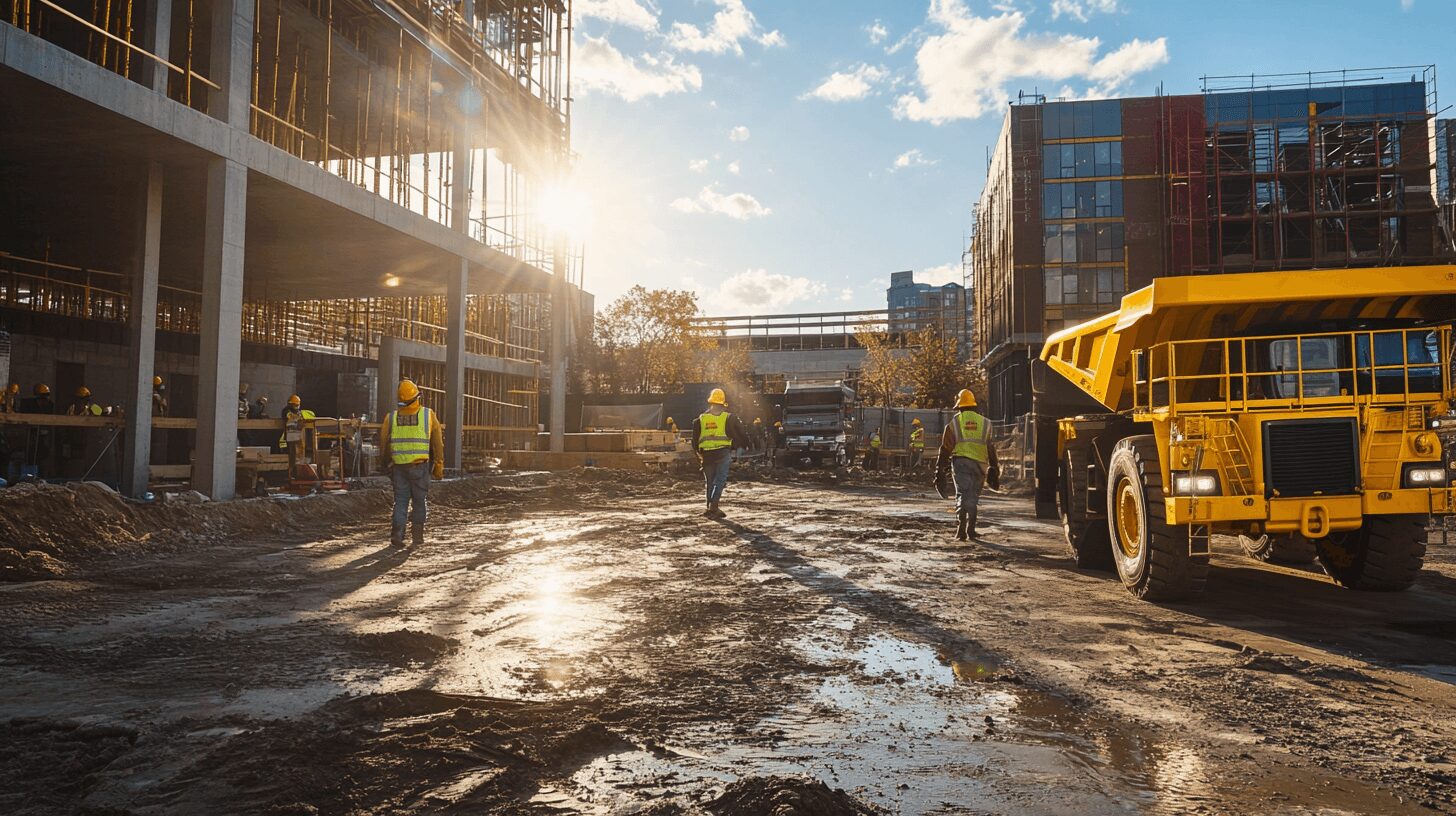
The Australian construction industry is undergoing a period of significant transformation driven by technological innovation, evolving sustainability requirements, changing workforce demographics and shifting client expectations. Companies that understand and adapt to these trends are positioning themselves for long-term relevance and competitiveness, while those that resist change risk being marginalised as the industry evolves. Staying informed about the forces reshaping construction helps practitioners, investors and clients make better decisions about how to engage with this dynamic sector.
Technology and digital transformation
Building Information Modelling has become a fundamental tool in modern construction, enabling design teams, contractors and clients to collaborate around a shared three-dimensional digital model of the project. BIM reduces errors and conflicts between design disciplines, improves construction planning and sequencing, supports cost estimation and facilitates facilities management after completion. Mandated on major government projects in many jurisdictions, BIM capability has become a baseline expectation for contractors seeking work in the commercial and institutional sectors.
Legal expertise is increasingly important in complex construction projects, as specialist NSW child custody lawyers and commercial construction lawyers alike demonstrate how specialised professional knowledge navigates intricate regulatory and contractual frameworks that have significant consequences for all parties.
Prefabrication and modular construction techniques are gaining traction as the industry seeks solutions to persistent productivity and quality challenges. Manufacturing building components in controlled factory environments produces more consistent quality than site-based construction, reduces waste, shortens construction programs and improves safety by reducing work performed at height. As the supply chain for prefabricated components matures and the skills needed to connect modular elements become more widespread, these methods are becoming viable for an increasingly broad range of project types.
Similar off-site advancements are transforming the residential sector, providing solutions for gentle housing density in urban neighborhoods. Property owners seeking to maximize land value often look to alternative structures, where specialized accessory dwelling unit construction in Vancouver WA allows for streamlined development. This controlled method improves project timelines and ensures design consistency, matching the efficiency gains seen in larger commercial installations.
Beyond factory-built modules, physical site preparation remains an essential baseline for project stability. Ensuring the ground is precisely graded and cleared limits long-term structural settling risks before any assembly begins. Engaging in professional construction site excavation supports the entire building process by establishing a secure foundation that adapts to shifting environmental demands.
Drones and autonomous survey equipment are transforming site monitoring, inspection and survey capabilities, enabling rapid collection of accurate spatial data that would previously have required significant time and labour. Regular aerial surveys using drones allow project managers to monitor progress against program, track material stockpiles and identify site safety issues from a perspective that ground-level inspection cannot provide. As the technology becomes more affordable and regulatory frameworks evolve, drone use in construction is expected to expand significantly.
Sustainability and environmental performance
Sustainability requirements in construction have intensified in response to the built environment’s significant contribution to carbon emissions, material consumption and waste generation. Green Star, NABERS and other rating tools provide frameworks for measuring and communicating the environmental performance of buildings, and market demand for highly rated buildings is increasing across commercial, residential and institutional sectors. Builders who develop genuine expertise in sustainable construction techniques are well positioned to capture work in this growing market segment.
Embodied carbon, the carbon emitted during the manufacture and transport of building materials rather than during operation, is receiving increasing attention as operational energy efficiency improves. Specifying lower-carbon materials such as mass timber, recycled content products and locally sourced materials reduces embodied carbon and can align with clients’ sustainability commitments. Life cycle assessment tools that quantify the total carbon footprint of different design and specification options are becoming more accessible and are influencing procurement decisions on major projects.
Circular economy principles are beginning to influence construction design and practice, encouraging the design of buildings for disassembly, the reuse of recovered components and the minimisation of construction waste sent to landfill. Waste management plans that identify segregation, recycling and reuse opportunities for different material streams are increasingly required by clients and regulators. Builders who develop capabilities in waste minimisation and material recovery are better aligned with the direction of industry regulation and client expectations.
Workforce and culture change
The construction workforce is facing significant challenges related to an ageing skilled trades population, difficulty attracting new entrants from a broader demographic base, and competition from other sectors for technologically capable workers. Addressing these challenges requires sustained investment in training, apprenticeship programs and workplace cultures that are genuinely inclusive and respectful, making the industry more attractive to the diverse talent pool it needs to sustain its workforce.
Mental health in the construction workforce has emerged as a critical issue, with the industry experiencing some of Australia’s highest rates of workplace suicide and psychological injury. Initiatives aimed at reducing stigma, improving access to support and changing the workplace cultures that discourage help-seeking are gaining momentum across major contractors and industry associations. A mentally healthy construction workforce is not only a moral imperative but a practical necessity for the safety and productivity performance the industry requires.
Construction workers who express creativity outside their technical roles, whether through community arts, music or wearing designer streetwear, contribute to the broader cultural shift toward recognising tradespeople and builders as whole individuals whose identity extends beyond their occupation.
Industry bodies, major contractors and government agencies are collaborating on initiatives to improve construction productivity, which has lagged other sectors for decades despite significant investment in technology. Standardisation of contracts and procurement processes, earlier contractor involvement in project design, improved project management practices and investment in skills development all contribute to productivity improvement programs. The industry’s willingness to examine its own practices critically and invest in systemic change will determine whether productivity gains are achieved at the scale needed to address longstanding cost and delivery challenges.
Looking ahead
Artificial intelligence applications in construction are moving from research into practice, with tools for automated design generation, predictive project scheduling, quality inspection and safety monitoring entering the market. Early adopters who develop the internal capability to effectively utilise these tools will gain competitive advantages in speed, cost and quality that are difficult to replicate without the organisational investment in data systems, training and change management that effective AI adoption requires.
Infrastructure investment by federal and state governments is sustaining strong demand for construction services across transport, energy, health and education sectors for the foreseeable future. Contractors who develop specialised capabilities in high-demand sectors, build strong relationships with government clients and demonstrate the safety, quality and program performance records that government procurement requires are well positioned to participate in this sustained pipeline of major projects.
The construction industry of the coming decade will be characterised by greater use of technology, stronger sustainability requirements, more diverse and better-supported workforces and higher levels of client sophistication. Companies that embrace these changes proactively, invest in their people and capabilities, and build reputations for delivering excellent outcomes will thrive in an environment where the industry’s best work is more visible and valued than ever before.

At Engrnewswire, we are passionate about helping brands grow through smart SEO, GEO, and AEO strategies, supported by High-quality backlinks. With over 2k+ contributor accounts worldwide. We ensure your content reaches the right audience while building lasting authority.
gkcooa