
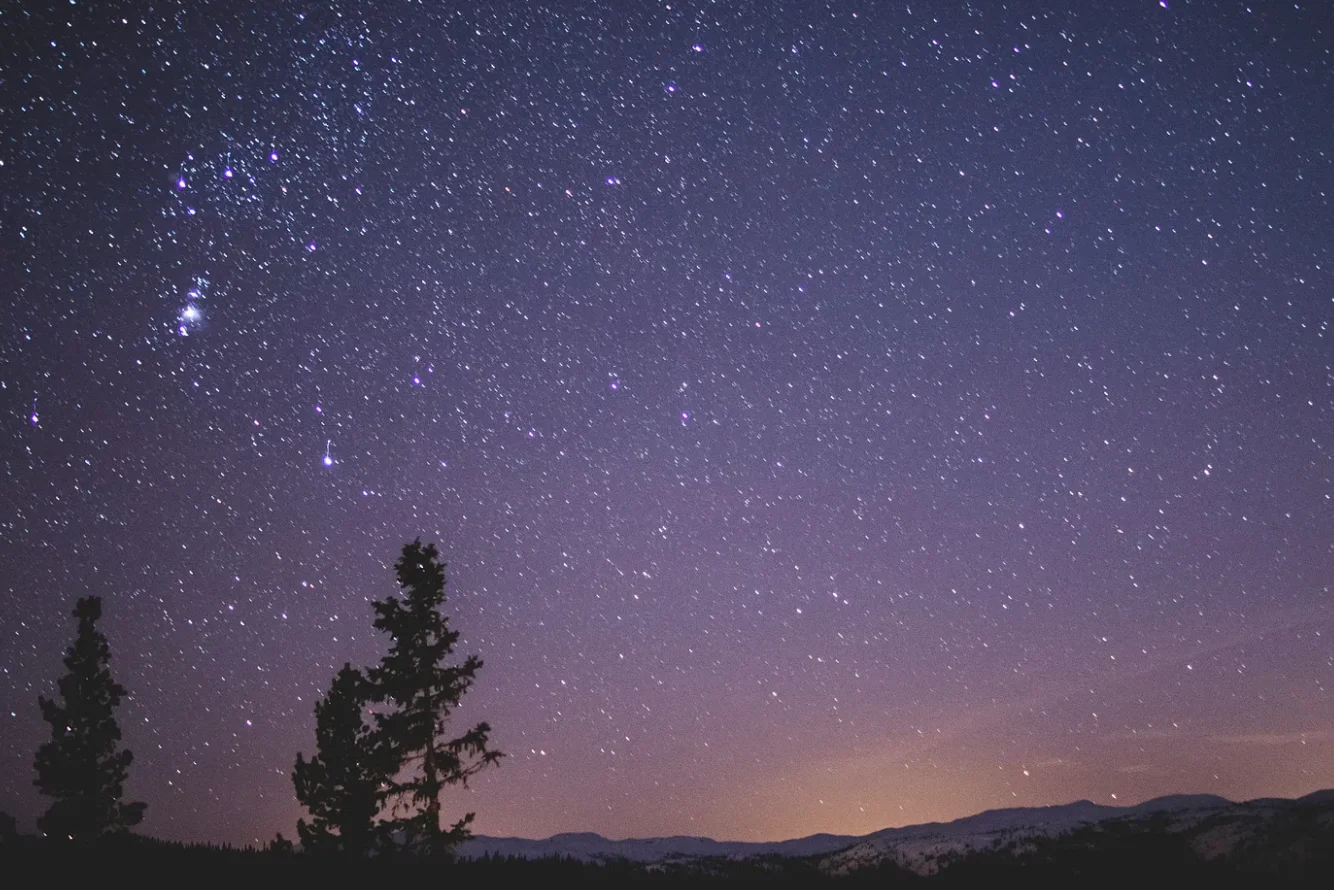
Valerie Varnuska is a Westbury, New York resident whose interests span astronomy, natural history, and the study of Earth and human development. Valerie Varnuska closely follows scientific discoveries related to the cosmos and often reflects on the immense timescales involved in observing distant stars. Her interest in astronomy includes understanding how light from celestial objects represents events that occurred millions or even billions of years ago. Alongside her focus on space, she studies subjects such as geology, paleoecology, and paleontology, as well as the evolution of human cultures and artifacts. This broad scientific curiosity connects directly to topics like stellar formation and collapse, where long timelines and natural processes shape the universe. Her perspective highlights how the life cycle of stars can be understood through observation, science, and an appreciation for the history of the cosmos.
Understanding the Life and Death of a Star
Stars, like humans, are born, and they die. Their lifespan, however, stretches millions and even billions of years. Also, like humans, stars have distinct traits.
The life of a star begins with gravity pulling nebulae, a dense cloud of gas (hydrogen) and dust. As the pressure rises due to the gravitational pull, the gas heats up, and the star begins to glow. The dust close to the star’s surface, however, can make a star invisible initially.
As gravity continues to tug at the center of the infant star, its center heats up, sometimes to over 18 billion degrees Fahrenheit. At such astounding temperatures, coupled with the pressure, hydrogen atoms collide violently and fuse together, forming helium, a process called nuclear fusion.
At this point, a star becomes a main-sequence star, marked by a state of equilibrium, where the inward gravitational force and the outward push from nuclear fusion are even. Main-sequence stars spend 90 percent of their lifetime in a state of equilibrium. Astronomers estimate that the sun, a star, has been in this state for 4.6 billion years and is halfway through its lifetime.
Energy from nuclear fusion reaches the surface of the star as starlight. The pressure from the gravitational pull combines with matter blown off the star’s surface to sweep away the surrounding cloud of dust and gas, revealing the star.
Some stars are born brighter than others. How bright a star is depends on how much energy it emits. Also, because the core temperatures of stars differ, the color of stars can vary. Hot stars have a hue of white, while cooler stars have traces of orange or red.
A star’s lifespan is a function of its mass. The heavier a star, the fiercer the gravitational pull at its core, and the higher its temperature. The faster a star’s core burns, the faster it burns through its hydrogen reserve. Massive stars are relatively short-lived. Low-mass stars can burn steadily for billions of years.
Eventually, however, all stars run out of their nuclear fuel. Old age ensues, and death is imminent. Because gravity is constant, the equilibrium the star has enjoyed for most of its life shifts. The pull overpowers the outflowing energy.
The star collapses under its own weight. Meanwhile, hot gases on the star’s surface expand and cool off, turning it into what astronomers call a red giant. One known red giant is Betelgeuse. The expansion of gases on its surface made it 600 times larger than the sun.
Red giants lose their outer mass and become white dwarfs, characterized by small, dense bodies. Some white dwarfs may absorb and retain the excess energy from neighboring active stars, giving them a fleeting glow. White dwarfs produce no energy but continue emitting light as they cool off. Eventually, all stars stop shining.
Even in death, stars look different. White dwarfs fade away as they cool over billions of years. Because their cores no longer produce energy, they turn black. Astronomers call such stars black dwarfs.
More massive stars end their lives much more dramatically. After expanding into red supergiants, their cores continue fusing heavier elements until iron forms in the center. Because iron cannot release energy through fusion, the core suddenly collapses under its own gravity. This collapse triggers a powerful explosion known as a supernova, which blasts the star’s outer layers into space. The remaining core may become an extremely dense neutron star. If the original star was massive enough, however, it could collapse further to form a black hole, an object whose gravitational pull is so strong that not even light can escape.
The galaxy, as remote as it may seem, is subject to the forces of nature. Old stars must make room for new ones. Subsequent generations of stars are born out of old elements of dead stars in the cosmos. That all stars must die is an intriguing finding, but it poses the question of what will replace the sun when its time has come.
About Valerie Varnuska
Valerie Varnuska is a Westbury, New York based enthusiast of astronomy, natural sciences, and mechanical systems. She follows developments in space science and studies topics such as geology, paleoecology, and human cultural history. Her interests also include robotics, machinery, and locomotive history, reflecting a curiosity about how complex systems function. She spends time exploring natural environments and dark sky locations, where she can observe the night sky and reflect on the scale and history of the universe.

David Weber is an experienced writer specializing in a range of topics, delivering insightful and informative content for diverse audiences.