
Japanese sayings have inspired people for centuries by sharing powerful wisdom through simple yet memorable words. Rooted in rich Japanese culture, these timeless expressions teach valuable lessons about patience, kindness, resilience, and personal growth. Many Japanese proverbs have been passed down from generation to generation, helping people navigate life’s challenges with confidence and humility.
Whether you are learning the Japanese language, exploring meaningful quotes, or searching for daily inspiration, these traditional sayings offer practical guidance that remains relevant today. In this article, you’ll discover the origins, meanings, English translations, and cultural significance of some of the most famous Japanese sayings, while gaining a deeper appreciation for Japanese wisdom and its lasting influence around the world.
| Feature | Why It Matters |
| Origin | Passed through generations for hundreds of years |
| Language | Written in Japanese with Romaji available for learners |
| Purpose | Teach wisdom, character, and practical decision-making |
| Popularity | Used in schools, books, speeches, anime, and daily conversation |
| Main Themes | Success, Love, Friendship, Happiness, Respect, and perseverance |
What Are Japanese Sayings? Their Meaning and Cultural Importance
Understanding Japanese Sayings
Every culture treasures memorable expressions, yet Japanese sayings stand apart because they combine simplicity with remarkable depth. Rather than offering direct advice, many sayings invite you to pause and reflect. A single sentence often captures years of experience, making these expressions easy to remember but difficult to forget.
Japanese society values harmony, discipline, gratitude, and continuous improvement. These values naturally appear throughout Japanese wisdom, helping people make thoughtful decisions in both personal and professional life. Even today, parents, teachers, and business leaders continue sharing these expressions with younger generations.
What Are Japanese Proverbs Called?
The most common term for Japanese proverbs is Kotowaza. These traditional expressions communicate practical wisdom learned through generations. Another important category is Yojijukugo, which refers to elegant four-character idioms made from Chinese characters. Although both contain valuable messages, they serve different purposes in the Japanese language.
Difference Between Kotowaza, Yojijukugo, and Idioms
Understanding these categories helps you appreciate the richness of Japanese cultural expressions.
| Term | Meaning | Example Use |
| Kotowaza | Traditional proverb teaching wisdom | Daily advice and moral lessons |
| Yojijukugo | Four-character idiom with deep symbolism | Literature, education, formal writing |
| Japanese idioms | Everyday figurative expressions | Casual conversation |
While Kotowaza often tells a complete lesson, Yojijukugo usually condenses a profound idea into only four characters. Meanwhile, ordinary Japanese idioms make conversations more colorful and expressive.
Why Japanese Proverbs Are Still Popular?
Modern technology has changed communication, yet people still repeat famous Japanese sayings because human challenges remain unchanged. Everyone experiences failure, uncertainty, joy, hope, and change. These timeless expressions provide calm guidance during each stage of life.
Another reason for their popularity lies in their flexibility. A single proverb may inspire students before exams, comfort families during difficult times, or encourage entrepreneurs facing setbacks. That universal appeal explains why these sayings continue spreading across different cultures.
The Role of Japanese Wisdom in Daily Life
The beauty of Japanese wisdom comes from its practicality. Rather than focusing on impossible ideals, these expressions encourage steady improvement. Many sayings remind people that success rarely arrives overnight. Instead, consistent effort creates lasting results.
These teachings also encourage humility, kindness, gratitude, and thoughtful behavior. Such qualities remain valuable whether you live in Japan or anywhere else in the world.
Ten Famous Japanese Sayings About Wisdom and Culture
| Japanese Saying | Pronunciation (Romaji) | English Translation | Meaning | Cultural Context |
| 七転び八起き | Nana korobi ya oki | Fall seven times, stand up eight. | Real strength comes from rising after every failure instead of avoiding difficult challenges completely. | Symbol of perseverance. |
| 猿も木から落ちる | Saru mo ki kara ochiru | Even monkeys fall from trees. | Experts still make mistakes because nobody remains perfect forever despite years of experience. | Encourages humility. |
| 石の上にも三年 | Ishi no ue ni mo sannen | Sit on a stone for three years. | Great achievements require patience because worthwhile results rarely appear quickly or easily. | Values endurance. |
| 継続は力なり | Keizoku wa chikara nari | Continuation becomes strength. | Small daily efforts gradually produce remarkable success over long periods of dedicated practice. | Celebrates discipline. |
| 急がば回れ | Isogaba maware | If you hurry, take the longer road. | Choosing the careful path often saves time and prevents unnecessary mistakes later. | Practical decision-making. |
| 花より団子 | Hana yori dango | Dumplings over flowers. | Practical value often matters more than attractive appearances in everyday situations. | Everyday wisdom. |
| 習うより慣れよ | Narau yori nareyo | Learn by doing. | Experience teaches lessons that books alone cannot fully explain or demonstrate. | Learning through action. |
| 井の中の蛙大海を知らず | I no naka no kawazu taikai wo shirazu | A frog in a well knows nothing of the ocean. | Limited experience creates narrow thinking unless people explore the wider world. | Broadening perspectives. |
| 雨降って地固まる | Ame futte ji katamaru | After rain, the ground becomes firm. | Difficult experiences often strengthen relationships and improve future stability. | Hope after hardship. |
| 笑う門には福来る | Warau kado ni wa fuku kitaru | Happiness comes to those who smile. | A cheerful attitude attracts positive opportunities and stronger relationships over time. | Encourages optimism. |
Also Read: Southern Sayings
Famous Japanese Sayings with English Translations and Meanings
Famous Japanese Sayings
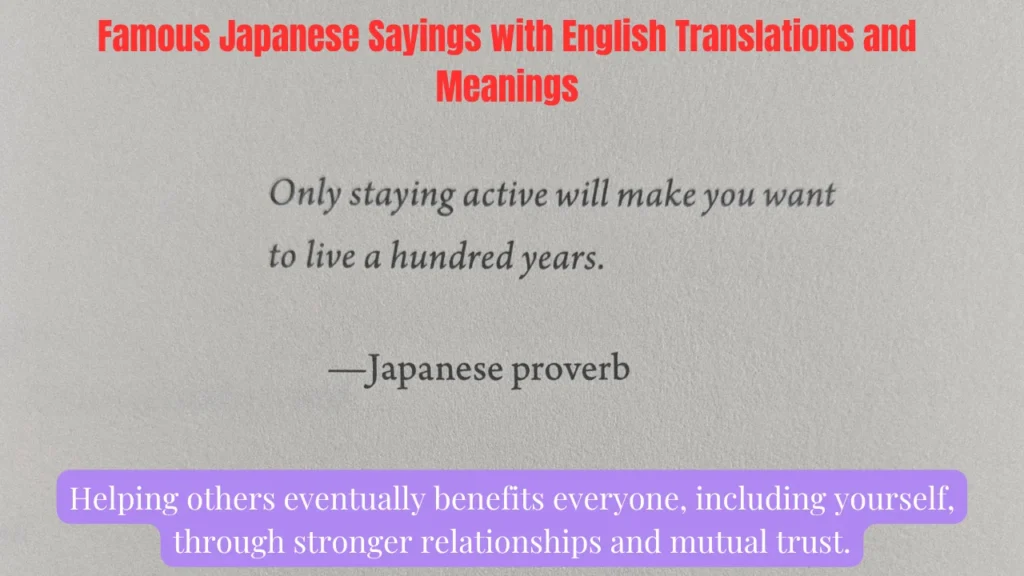
Some expressions have become famous far beyond Japan because their messages apply to every generation. These Japanese sayings speak about courage, resilience, gratitude, kindness, and hope. Their lasting popularity proves that genuine wisdom never grows old.
Many international readers first encounter these sayings through books or travel. Others discover them while studying the Japanese language. Regardless of where they first appear, their messages usually remain unforgettable.
Japanese Saying
Most traditional Japanese sayings are intentionally brief. Their short structure makes them easy to memorize while allowing each reader to discover deeper meaning through personal experience.
Pronunciation (Romaji)
Learning Romaji makes pronunciation easier for beginners. Although reading Japanese characters takes time, Romaji allows anyone to appreciate these expressions without immediately mastering the writing system.
English Translation
Every English translation captures the main message, although some poetic beauty naturally remains unique to Japanese. That subtle difference makes learning both versions especially rewarding.
Meaning
The true meaning often extends beyond the literal words. Many sayings rely on symbolism drawn from nature, farming, changing seasons, mountains, rivers, and daily experiences.
Cultural Context
Understanding Japanese culture adds another layer of appreciation. Values such as harmony, collective responsibility, lifelong learning, and quiet determination appear repeatedly throughout these expressions.
Ten Famous Japanese Sayings with English Translation
| Japanese Saying | Pronunciation (Romaji) | English Translation | Meaning |
| 情けは人の為ならず | Nasake wa hito no tame narazu | Kindness always returns. | Helping others eventually benefits everyone, including yourself, through stronger relationships and mutual trust. |
| 一期一会 | Ichigo Ichie | One time, one meeting. | Every encounter happens only once, making each shared moment deeply valuable and unforgettable. |
| 塵も積もれば山となる | Chiri mo tsumoreba yama to naru | Dust piled up becomes a mountain. | Tiny efforts become extraordinary achievements through consistent dedication and steady improvement over time. |
| 初心忘るべからず | Shoshin wasuru bekarazu | Never forget your beginner’s spirit. | Staying curious encourages lifelong learning regardless of experience or professional success. |
| 出る杭は打たれる | Deru kui wa utareru | The nail that sticks out gets hammered down. | Standing apart sometimes attracts criticism despite genuine talent or creativity. |
| 明日は明日の風が吹く | Ashita wa ashita no kaze ga fuku | Tomorrow brings its own wind. | Worrying about tomorrow changes nothing because every new day creates fresh opportunities. |
| 百聞は一見にしかず | Hyakubun wa ikken ni shikazu | Seeing once is better than hearing one hundred times. | Personal experience provides stronger understanding than endless discussion or secondhand information. |
| 能ある鷹は爪を隠す | Nou aru taka wa tsume wo kakusu | A talented hawk hides its claws. | Truly capable people rarely boast because quiet confidence speaks louder than empty words. |
| 千里の道も一歩から | Senri no michi mo ippo kara | A journey of a thousand miles begins with one step. | Every remarkable achievement starts with one simple action taken today instead of tomorrow. |
| 失敗は成功のもと | Shippai wa seikou no moto | Failure is the foundation of success. | Every mistake teaches valuable knowledge that helps create greater achievements in the future. |
Short Japanese Sayings That Carry Deep Wisdom

One-Line Japanese Sayings with Powerful Messages
Sometimes only a few words can change the way you think. Many short Japanese sayings with deep meaning prove that wisdom does not require long explanations. These expressions stay in your memory because they combine Japanese wisdom with practical advice. You can remember them easily and apply them during everyday situations.
Four-Character Japanese Sayings (Yojijukugo)
Many learners admire Yojijukugo because these four-character idioms express complete ideas using only four kanji characters. These elegant phrases appear in books, speeches, artwork, and education. Their compact style reflects the beauty of the Japanese language while carrying profound meaning.
Short Japanese Quotes About Strength and Courage
Life often presents unexpected obstacles. These Japanese quotes remind you that courage grows through action instead of comfort. Their messages encourage resilience, confidence, and quiet determination even during difficult moments.
Memorable Japanese Sayings for Daily Motivation
Many people write these wisdom quotes inside journals or display them at work because they provide daily motivation. Their messages encourage continuous improvement without demanding perfection.
| Japanese Saying | Pronunciation (Romaji) | English Translation | Meaning |
| 一日一歩 | Ichinichi ippo | One step every day. | Small daily progress eventually creates remarkable success beyond your original expectations through consistent effort. |
| 心は形を作る | Kokoro wa katachi wo tsukuru | The heart shapes reality. | Your attitude influences actions, relationships, and future opportunities more than you may realize. |
| 努力は裏切らない | Doryoku wa uragiranai | Hard work never betrays you. | Honest effort always develops valuable skills even when immediate rewards seem delayed. |
| 明鏡止水 | Meikyo Shisui | Clear mirror, still water. | A peaceful mind produces wiser decisions during stressful situations and emotional challenges. |
| 有言実行 | Yuugen Jikkou | Speak it and do it. | Keeping promises builds trust because actions always carry greater value than impressive words. |
| 一心不乱 | Isshin Furan | Wholehearted concentration. | Complete focus allows steady improvement without unnecessary distractions from outside influences. |
| 温故知新 | Onko Chishin | Learn new things from old wisdom. | Studying history helps people discover better solutions for present challenges and future goals. |
| 和を以て貴しとなす | Wa wo motte toutoshi to nasu | Harmony is precious. | Respectful cooperation strengthens families, friendships, workplaces, and communities over many generations. |
| 不言実行 | Fugen Jikkou | Actions without unnecessary words. | Quiet dedication often earns greater admiration than constant self-promotion or empty promises. |
| 前向きに生きる | Maemuki ni ikiru | Live facing forward. | Every new day offers another opportunity to grow despite yesterday’s disappointments and failures. |
Also Read: Funny British Sayings
Japanese Sayings About Life, Happiness, and Personal Growth
Life Sayings
Every generation faces different circumstances, yet Japanese sayings about life continue offering timeless guidance. These expressions encourage thoughtful choices instead of rushed decisions. They teach that meaningful growth comes through steady effort rather than sudden success.
Never Give Up
The idea of persistence appears throughout traditional Japanese sayings. People admire determination because lasting achievements require courage during difficult moments. These expressions encourage you to continue moving forward even after repeated setbacks.
Patience and Persistence
Success rarely appears overnight. Many Japanese proverbs explain that patience combined with daily effort creates extraordinary results. This belief influences education, craftsmanship, business, and personal development across Japan.
Hard Work and Discipline
Discipline remains one of the strongest values within Japanese culture. Continuous improvement matters more than short bursts of effort. This philosophy encourages lifelong learning and professional excellence.
Learning from Failure
Mistakes become valuable teachers when people choose reflection instead of discouragement. Many Japanese expressions remind readers that every failure creates another opportunity for improvement.
Happiness and Gratitude
True happiness often comes from appreciating simple blessings instead of chasing endless possessions. Gratitude strengthens emotional well-being and encourages healthier relationships.
| Japanese Saying | Pronunciation (Romaji) | English Translation | Meaning |
| 七転び八起き | Nana korobi ya oki | Fall seven times, stand up eight. | Every setback prepares you for greater achievements through courage, resilience, and renewed determination. |
| 継続は力なり | Keizoku wa chikara nari | Continuation becomes strength. | Consistent effort transforms ordinary abilities into exceptional skills through patient daily practice. |
| 今日できることは今日やる | Kyou dekiru koto wa kyou yaru | Do today’s work today. | Avoiding procrastination creates better opportunities and reduces unnecessary stress during future responsibilities. |
| 石の上にも三年 | Ishi no ue ni mo sannen | Sit on a stone for three years. | Long-term dedication eventually rewards people who remain patient despite slow progress. |
| 笑う門には福来る | Warau kado ni wa fuku kitaru | Happiness visits smiling homes. | Positive attitudes encourage stronger relationships and brighter opportunities throughout everyday life. |
| 明日は明日の風が吹く | Ashita wa ashita no kaze ga fuku | Tomorrow brings another wind. | Every difficult day eventually ends and creates fresh opportunities for growth and hope. |
| 千里の道も一歩から | Senri no michi mo ippo kara | A thousand-mile journey begins with one step. | Great dreams become reality after taking one courageous action instead of endless planning. |
| 塵も積もれば山となる | Chiri mo tsumoreba yama to naru | Dust becomes a mountain. | Tiny improvements eventually create remarkable achievements beyond what seemed initially possible. |
| 初心忘るべからず | Shoshin wasuru bekarazu | Never forget your beginner’s spirit. | Remaining curious encourages continuous learning regardless of age, knowledge, or professional success. |
| 雨降って地固まる | Ame futte ji katamaru | Rain strengthens the ground. | Difficult experiences often build stronger character and deeper personal understanding over time. |
Japanese Sayings About Love, Friendship, and Relationships
Love Sayings
Many Japanese sayings about love focus on loyalty instead of temporary emotions. They remind readers that genuine affection grows through trust, honesty, patience, and mutual understanding. Lasting relationships develop one thoughtful action at a time.
Romance
Romantic Japanese quotes often celebrate quiet devotion instead of dramatic gestures. Small acts of kindness frequently carry greater importance than expensive gifts or grand promises.
Marriage
Marriage represents partnership rather than perfection. Many Japanese proverbs encourage couples to communicate respectfully and solve challenges together with understanding.
Family
Strong families create stable communities. Parents, grandparents, and children often pass ancient Japanese wisdom through daily conversations rather than formal lessons.
Friendship
True friendship depends upon loyalty, trust, and consistent support. Genuine companions remain beside you during joyful celebrations and difficult hardships alike.
Respect
Showing respect strengthens every relationship. This principle influences homes, schools, workplaces, and public life throughout Japanese culture.
| Japanese Saying | Pronunciation (Romaji) | English Translation | Meaning |
| 一期一会 | Ichigo Ichie | One meeting, one lifetime. | Treasure every shared moment because the same experience may never happen exactly again. |
| 情けは人の為ならず | Nasake wa hito no tame narazu | Kindness always returns. | Helping others creates stronger communities and meaningful lifelong relationships built upon trust. |
| 和を以て貴しとなす | Wa wo motte toutoshi to nasu | Harmony is precious. | Peaceful cooperation creates lasting happiness inside families, friendships, and professional environments alike. |
| 親しき仲にも礼儀あり | Shitashiki naka ni mo reigi ari | Even close friends need manners. | Respectful behavior protects relationships regardless of emotional closeness or family connections. |
| 愛は育てるもの | Ai wa sodateru mono | Love must be nurtured. | Healthy relationships become stronger through continuous care, honesty, patience, and understanding together. |
| 信頼は宝 | Shinrai wa takara | Trust is treasure. | Genuine trust becomes life’s most valuable gift because it cannot easily be replaced. |
| 心を開けば道が開く | Kokoro wo hirakeba michi ga hiraku | Open your heart and new paths appear. | Honest communication builds stronger emotional connections and lasting mutual understanding. |
| 家族は人生の宝 | Kazoku wa jinsei no takara | Family is life’s treasure. | Loving family relationships provide emotional strength during joyful moments and difficult seasons alike. |
| 思いやりは力 | Omoiyari wa chikara | Compassion is strength. | Kindness demonstrates genuine courage because empathy transforms ordinary relationships into meaningful friendships. |
| 共に歩めば遠くまで行ける | Tomo ni ayumeba tooku made ikeru | Walk together to go farther. | Cooperation allows people to overcome challenges that would seem impossible alone. |
Also Read: Christian Sayings
Japanese Sayings About Death, Impermanence, and Acceptance
Understanding the Japanese View of Impermanence
One of the most beautiful ideas in Japanese culture is accepting that nothing lasts forever. This belief appears in many Japanese sayings about death and impermanence. Instead of fearing change, these expressions encourage people to appreciate every season of life. They reflect Zen philosophy, inner peace, and emotional balance through acceptance.
Japanese Sayings About Death and Letting Go
Many Japanese proverbs explain that life and death naturally belong together. These sayings do not encourage sadness. Instead, they remind you to value every moment while showing gratitude for the people around you. Their gentle wisdom helps readers face change with courage.
The Beauty of Mono no Aware in Japanese Wisdom
The idea of Mono no Aware means appreciating beauty because it is temporary. Cherry blossoms bloom for only a short time, yet millions admire them every spring. This philosophy represents Japanese wisdom, teaching that life’s fleeting moments become precious because they cannot last forever.
Finding Hope Through Acceptance and Change
Accepting change does not mean giving up. It means understanding that every ending creates room for a new beginning. These Japanese expressions encourage emotional strength and peaceful thinking during life’s greatest challenges.
| Japanese Saying | Pronunciation (Romaji) | English Translation | Meaning |
| 花は桜木人は武士 | Hana wa sakuragi hito wa bushi | Among flowers, the cherry blossom is supreme. | Like blossoms, human life becomes beautiful because its time is limited and deeply meaningful. |
| 生あるものは必ず滅ぶ | Sei aru mono wa kanarazu horobu | Everything living will eventually perish. | Accepting impermanence encourages gratitude and wiser choices throughout every stage of life. |
| 雲のように生きる | Kumo no you ni ikiru | Live like the clouds. | Adapt to changing circumstances with calmness instead of resisting every unexpected challenge. |
| 明けない夜はない | Akenai yoru wa nai | No night lasts forever. | Every difficult season eventually ends and hope returns with a brighter tomorrow. |
| 桜は散るから美しい | Sakura wa chiru kara utsukushii | Cherry blossoms are beautiful because they fall. | Temporary beauty teaches people to appreciate each precious moment before it disappears. |
| 過去は風未来は空 | Kako wa kaze mirai wa sora | The past is wind and the future is sky. | Release old regrets while remaining hopeful about tomorrow’s endless possibilities. |
| 心静かに歩む | Kokoro shizuka ni ayumu | Walk with a peaceful heart. | Inner calm creates wiser decisions even during uncertainty and emotional hardship. |
| 時は止まらない | Toki wa tomaranai | Time never stops. | Use today’s opportunities wisely because every passing moment has lasting value. |
| 別れは新しい始まり | Wakare wa atarashii hajimari | Every farewell begins something new. | Endings often become the first step toward unexpected opportunities and personal growth. |
| 命を大切にする | Inochi wo taisetsu ni suru | Value every life. | Respecting life encourages compassion, gratitude, and kindness toward every living being. |
Popular Japanese Sayings Found in Anime and Modern Culture
Anime Sayings
Many people first discover popular Japanese anime sayings through famous series and movies. Although anime creates original dialogue, writers often include traditional Japanese sayings because they express timeless wisdom naturally. This combination introduces younger audiences to valuable cultural lessons.
Inspirational Anime Quotes
Many heroes overcome fear, loss, and failure before reaching success. Their journeys reflect inspirational sayings that encourage viewers never to surrender. These messages often stay with fans long after the final episode ends.
Samurai Wisdom
Classic Samurai wisdom values courage, honor, discipline, and responsibility. Many anime characters follow these principles even in modern stories. Their actions demonstrate that character matters more than talent alone.
Zen Philosophy
Quiet reflection appears throughout many Japanese films and anime. Zen philosophy teaches mindfulness, balance, and awareness instead of constant competition. These ideas help characters grow emotionally as well as physically.
Japanese Cultural Expressions
Modern entertainment continues preserving Japanese cultural expressions by introducing ancient wisdom to international audiences. As a result, millions of viewers become interested in learning more about authentic Japanese sayings.
| Japanese Saying | Pronunciation (Romaji) | English Translation | Meaning |
| 七転び八起き | Nana korobi ya oki | Fall seven times, stand up eight. | Anime heroes often recover after repeated defeats before finally achieving their greatest victories. |
| 継続は力なり | Keizoku wa chikara nari | Continuation becomes strength. | Daily training eventually produces extraordinary abilities through determination and consistent practice. |
| 初心忘るべからず | Shoshin wasuru bekarazu | Never forget your beginner’s spirit. | Remaining humble allows continuous improvement regardless of growing experience or recognition. |
| 能ある鷹は爪を隠す | Nou aru taka wa tsume wo kakusu | A talented hawk hides its claws. | Truly powerful characters rarely boast because confidence speaks through actions instead of words. |
| 一期一会 | Ichigo Ichie | Treasure each meeting. | Every encounter shapes future friendships and unforgettable adventures throughout life’s journey. |
| 百聞は一見にしかず | Hyakubun wa ikken ni shikazu | Seeing is believing. | Personal experience always teaches more than stories or secondhand information alone. |
| 雨降って地固まる | Ame futte ji katamaru | Rain strengthens the ground. | Difficult experiences often create stronger teams and lasting friendships after conflicts disappear. |
| 明日は明日の風が吹く | Ashita wa ashita no kaze ga fuku | Tomorrow brings another wind. | Hope remains alive because every new day creates another opportunity to succeed. |
| 努力は裏切らない | Doryoku wa uragiranai | Hard work never betrays you. | Honest effort always develops valuable skills regardless of immediate results or recognition. |
| 心を強く持つ | Kokoro wo tsuyoku motsu | Keep your heart strong. | Emotional resilience allows people to overcome fear, disappointment, and uncertainty with confidence. |
How to Use Japanese Sayings in Everyday Life?
How to Pronounce Japanese Sayings?
Learning Romaji first makes pronunciation much easier for beginners. Listen to native speakers whenever possible because correct pronunciation helps preserve the original beauty of the Japanese language. Practicing slowly also improves confidence over time.
When to Use Japanese Proverbs?
Many Japanese proverbs fit naturally into conversations, speeches, classroom discussions, and business presentations. Choosing the right expression for the situation shows thoughtful communication rather than simply repeating memorable quotes.
Japanese Sayings for Tattoos
Many people choose Japanese sayings for tattoos because they carry personal meaning. However, always verify the correct Japanese characters before making a permanent decision. Consulting a native speaker helps avoid translation mistakes.
Japanese Sayings for Instagram Captions
Short Japanese quotes work beautifully as social media captions. Their thoughtful messages inspire readers while adding cultural depth to photographs, travel memories, and personal reflections.
Japanese Sayings for Motivation
Reading Japanese sayings for motivation every morning encourages positive thinking. Many successful people display these expressions at home or in the workplace because daily reminders strengthen long-term commitment and discipline.
| Situation | Recommended Type of Saying |
| Daily Motivation | Japanese sayings about success and perseverance |
| Social Media | Short Japanese sayings with deep meaning |
| Tattoo Design | Timeless Yojijukugo or Kotowaza |
| Business Speech | Famous Japanese sayings with English translation |
| Personal Journal | Japanese sayings about life |
| Family Events | Japanese sayings about love |
Frequently Asked Questions
What are common Japanese phrases?
Common Japanese phrases include “Ohayou” (Good morning), “Arigatou” (Thank you), “Konnichiwa” (Hello), and “Sumimasen” (Excuse me). These everyday expressions are widely used in daily conversations across Japan.
What does “I suki you” mean?
“I suki you” is an incorrect phrase. The correct expression is “Suki da yo” (好きだよ), which means “I like you,” while “Aishiteru” (愛してる) means “I love you” and is used for deep romantic feelings.
Why do Japanese say “oi oi oi”?
“Oi, oi, oi!” is an informal expression used to grab someone’s attention or show surprise, concern, or disbelief. Its meaning depends on the speaker’s tone and the situation.
What are some Japanese slangs?
Popular Japanese slang includes “Yabai” (awesome or terrible), “Maji?” (Really?), “Sugoi” (Amazing), “Kawaii” (Cute), and “W” (used online to represent laughter, similar to “LOL”).
What is a famous Japanese line?
One of the most famous Japanese lines is “Nana korobi ya oki” (七転び八起き), meaning “Fall seven times, stand up eight.” It symbolizes perseverance, resilience, and never giving up despite repeated failures.
Also Read: Muslim Sayings
Conclusion
Japanese sayings continue inspiring millions because they transform everyday experiences into timeless wisdom. These remarkable expressions teach perseverance, respect, friendship, love, happiness, and lifelong learning through simple yet unforgettable words. Whether you admire Zen philosophy, appreciate Samurai wisdom, or simply enjoy meaningful wisdom quotes, these teachings remain valuable across every culture and generation.
As you explore more famous Japanese sayings, you will discover that each expression offers more than a clever sentence. It provides a practical guide for living with courage, kindness, humility, and purpose. By applying even one of these timeless lessons each day, you can bring the enduring spirit of Japanese culture into your own life while gaining a deeper appreciation for one of the world’s richest traditions of wisdom.

David Weber is an experienced writer specializing in a range of topics, delivering insightful and informative content for diverse audiences.
2 thoughts on “Japanese Sayings: Timeless Words of Wisdom, Meaning, and Everyday Inspiration”