
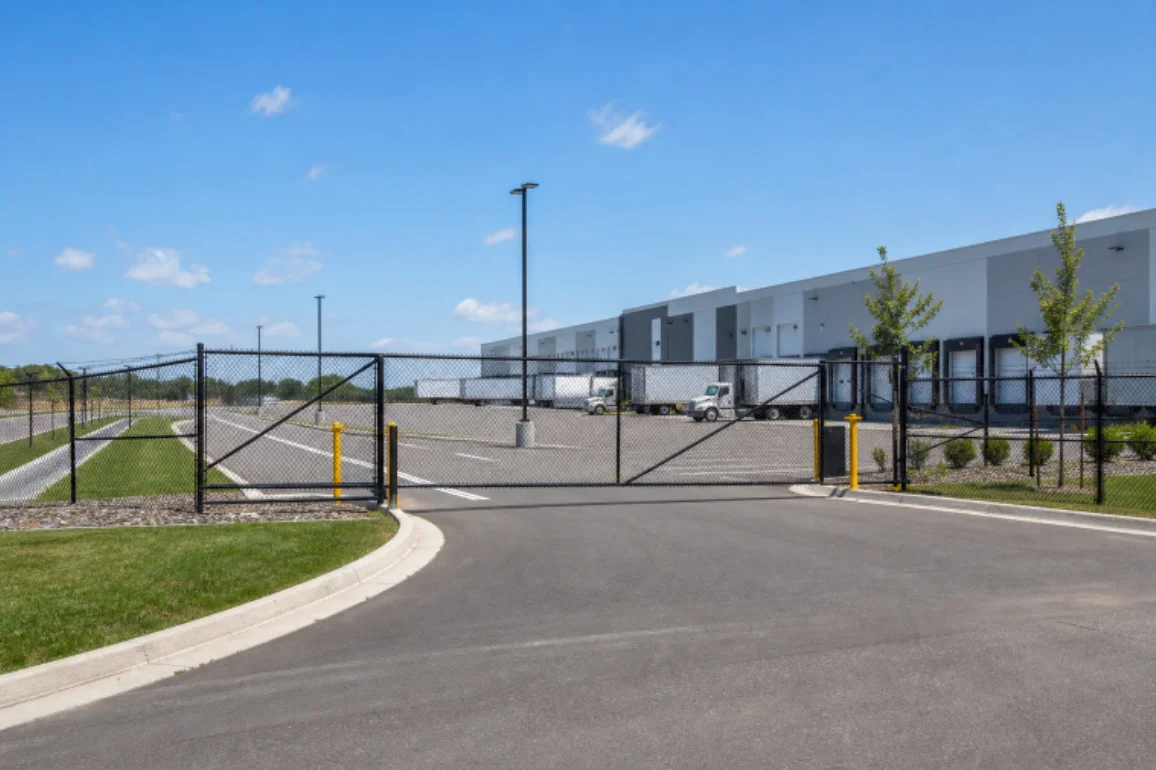
Commercial and industrial properties need more than a boundary line. They need a perimeter that protects equipment, manages vehicle movement, directs visitors, separates restricted areas, and supports how the site operates every day. Triangle Fence helps businesses plan practical fencing, gates, screening, and access points for those real-world needs.
Founded in 1982 by Jameson Redding’s father and now led by Jameson, Triangle Fence is a family-owned North Carolina contractor serving commercial and industrial customers across North Carolina, South Carolina, Tennessee, and Virginia. The company also evaluates occasional larger projects farther afield, including those in Texas, when the scope is a good fit.
Why Commercial Property Security Starts at the Perimeter
A fence is not a complete security program, but it is often the foundation for one. It establishes a visible boundary, reduces casual access, directs pedestrians and vehicles to designated entry points, and creates a clearer separation between public, employee, delivery, and restricted areas.
Well-planned fencing works alongside lighting, cameras, alarms, signage, visitor procedures, and trained personnel. The goal is not simply to put material around a property. The goal is to make access more deliberate, improve visibility where it matters, and give staff more control over how the site is used.
NIST guidance on physical access controls and perimeter security describes how these controls restrict personnel entry and exit from areas and can include controlled barriers, entry points, and screening measures. For a business owner, that reinforces an important point: fence height, layout, gate placement, and construction details should reflect the risks and operations of the individual property.
Commercial and Industrial Fencing Services for Complex Sites
Triangle Fence can help identify the right combination of perimeter fencing, privacy features, and access solutions for each site. Common project needs include:
- Commercial perimeter fencing: Defines property edges, employee areas, customer zones, parking areas, and controlled entrances.
- Industrial security fencing: Protects equipment yards, utility areas, outdoor materials, construction sites, manufacturing facilities, and restricted operations.
- Chain-link fencing: Offers a durable, visible enclosure for warehouses, storage yards, utilities, and active job sites.
- Privacy and screening fencing: Helps conceal dumpsters, loading areas, outdoor storage, service equipment, or operations near neighboring properties.
- Vehicle and pedestrian gates: Create managed access for employees, vendors, visitors, deliveries, and emergency responders.
- Custom fencing: Addresses unusual layouts, slopes, phased construction, special security goals, and future expansion.
Matching Fence Materials to the Property
Material selection should follow a site review, not a catalog preference. Triangle Fence can evaluate exposure, traffic, security objectives, maintenance expectations, appearance requirements, and budget before recommending a solution.
Common Material Considerations
- Galvanized or vinyl-coated chain link: A practical choice when durability, visibility, and cost control are priorities. Wire gauge, mesh opening, framework, height, and security toppings can all affect performance.
- Ornamental metal, steel, or aluminum: Often suited to properties that need a more formal appearance, controlled visibility, or a more robust perimeter design.
- Privacy fencing and screening: Useful around equipment yards, waste areas, loading zones, and other areas where visual separation is important. Wind exposure, drainage, opacity, and maintenance should be considered.
- Wood or specialty materials: May meet certain visual or operational goals, but should be selected with local weather, maintenance requirements, impact risk, and longevity in mind.
The Security Industry Association’s perimeter security barrier guidance emphasizes defining the threat and the intended barrier function before selecting products. That approach helps businesses avoid treating every fence as though it has the same job.
Designing Gates and Access Points That Work
Even a strong perimeter can underperform when its gates are poorly located, too narrow, difficult to monitor, or unable to handle daily traffic. Gate planning should address both security and operations.
- Identify entry needs for employees, visitors, delivery drivers, vendors, and emergency responders.
- Separate pedestrian access from vehicle access when the layout allows.
- Size openings for trucks, trailers, forklifts, service vehicles, and anticipated future equipment.
- Review swing clearance, slopes, drainage, turning radii, and nearby structures.
- Coordinate locks, access controls, cameras, intercoms, and lighting with the gate location.
- Maintain emergency access without creating bottlenecks during busy operating hours.
Building a Layered Security Plan
Fencing is most effective as part of a layered plan. The fence marks the boundary and discourages casual entry. Gates concentrate access at specific points. Clear sightlines support staff observation and cameras. Lighting, alarms, procedures, and response plans provide additional protection.
For higher-risk sites, the design discussion may also include anti-climb features, controlled clear zones, appropriate screening, stronger hardware, and protection for vulnerable areas such as material storage, utility equipment, loading zones, or isolated side yards. The right level of protection depends on the property, not a one-size-fits-all specification.
Managing Site Conditions and Avoiding Common Mistakes
Commercial fencing projects often involve property lines, easements, utilities, drainage paths, grade changes, soil conditions, existing buildings, and active operations. Triangle Fence can coordinate with owners, facility managers, general contractors, surveyors, and other project stakeholders to address these conditions before they become installation problems.
Businesses can avoid common fencing mistakes by confirming boundaries before work begins, planning for delivery and turning movements, preserving visibility near driveways, allowing for maintenance access, and considering future expansion. Stored materials, debris, and vegetation should also be kept away from the fence line where possible.
What to Include in a Triangle Fence Request
A complete Triangle Fence request helps create a clearer starting point for site review and project planning. Include the property address, facility type, approximate fence length and height, desired materials or security goals, gate sizes and quantities, privacy needs, site plans or photos, known easements or utilities, target completion date, and operational restrictions.
For commercial and industrial businesses, a professional site evaluation is more useful than choosing a fence based solely on initial price. Triangle Fence can help align the perimeter with the property’s security requirements, traffic patterns, appearance goals, schedule, and long-term operational needs.

David Weber is an experienced writer specializing in a range of topics, delivering insightful and informative content for diverse audiences.
The VIP treatment here is on another level. I feel valued as a player and the rewards are generous. Highly suggest joining idsgcvip.
Just downloaded the app and it is working perfectly on my Android. No lag and very easy to navigate. Highly recommend winplusappapk for anyone who prefers mobile gaming.
Really liking the vibe of this platform. The registration process was quick and I was playing in minutes. rusia777 is definitely my new favorite hangout.